A few weeks ago a large maple tree trunk fell. This wasn’t a surprise since it had been looking well past its prime for as long as we’ve been doing bluff restoration. We think it succumbed to heart rot: “Heart rot is a fungal disease that causes the decay of wood at the center of the trunk and branches. Fungi enter the tree through wounds in the bark and decay the heartwood. The diseased heartwood softens, making trees structurally weaker and prone to breakage. A good indication of heart rot is the presence of mushrooms or fungus conks on the tree. . . The fungi only target the nonliving wood tissue of the heartwood and do not affect the living sapwood. Initially, infected heartwood is discolored but not structurally compromised. As the fungi grow they decay more wood and the tissue becomes increasingly soft and weak. The tree can still grow around the decayed heartwood because the live wood tissue is not affected. The growth around decayed areas of heartwood creates structural weaknesses in the tree. Trees with extensive decay are more susceptible to broken branches and trunks.” (Wikipedia)
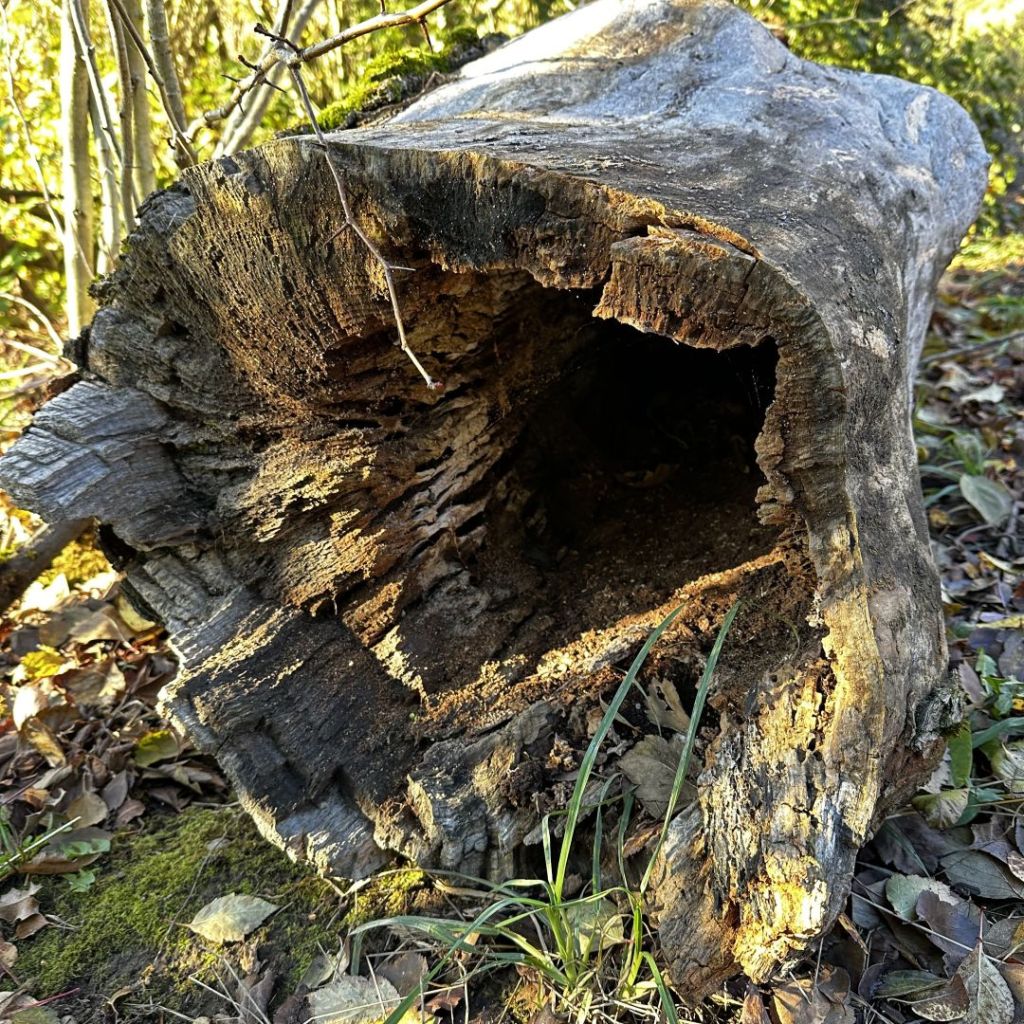
Heart rot in recently downed maple
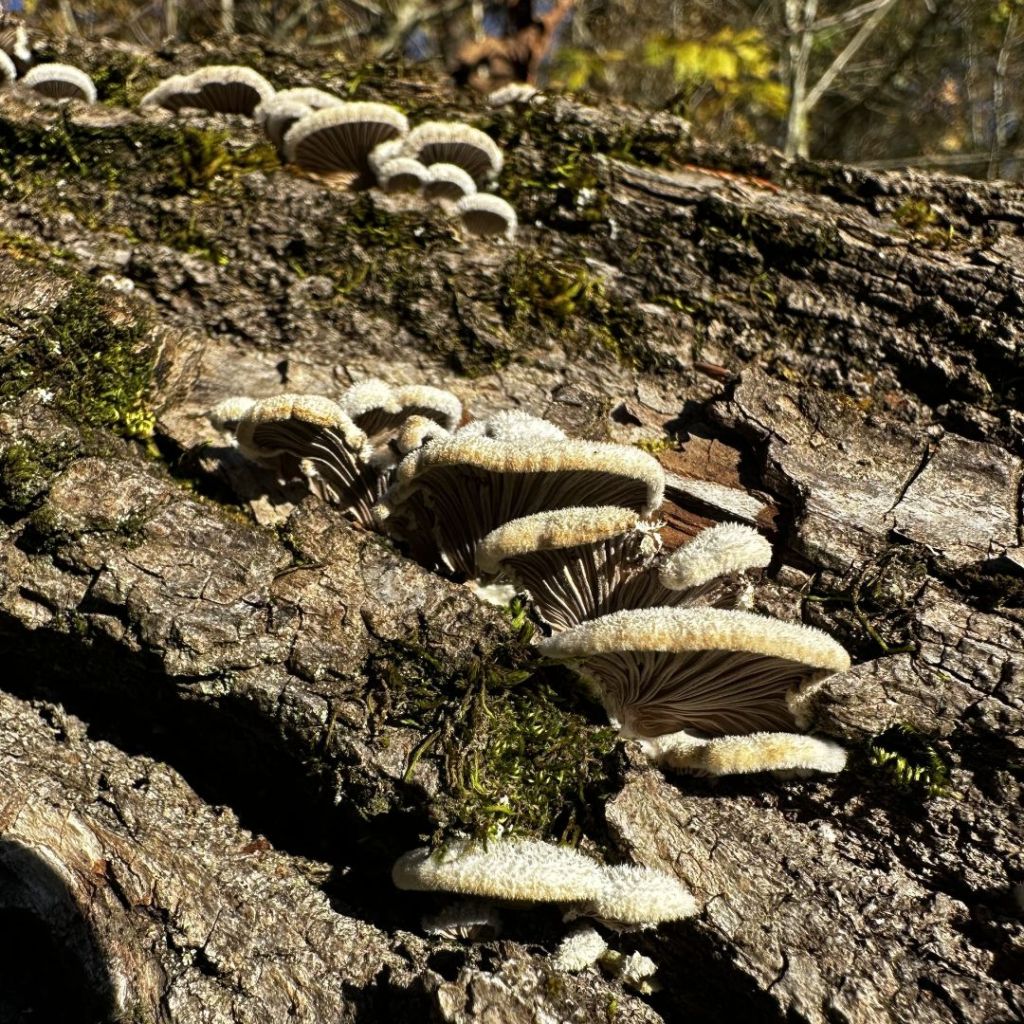
Good indication of heart rot – fungi

 Rose City Bluff Restoration