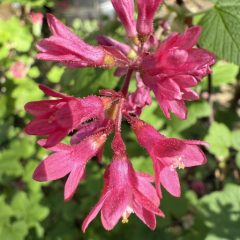
A walk along the Bluff this month will reveal that the pollinators are taking full advantage of what the Rose City Bluff Restoration community of growers and fall planters have done to increase the supply of native flowering plants. It is impossible to miss all the bumblebees visiting the California poppies, goldenrod, and other flowers. A close look at our goldenrod (Solidago) has given us an appreciation of the smaller pollinators as well. These tiny bees or flies are no more than 8mm long, but they are as beneficial as the big bumblebees. Here are three examples that we recently found on the goldenrod.
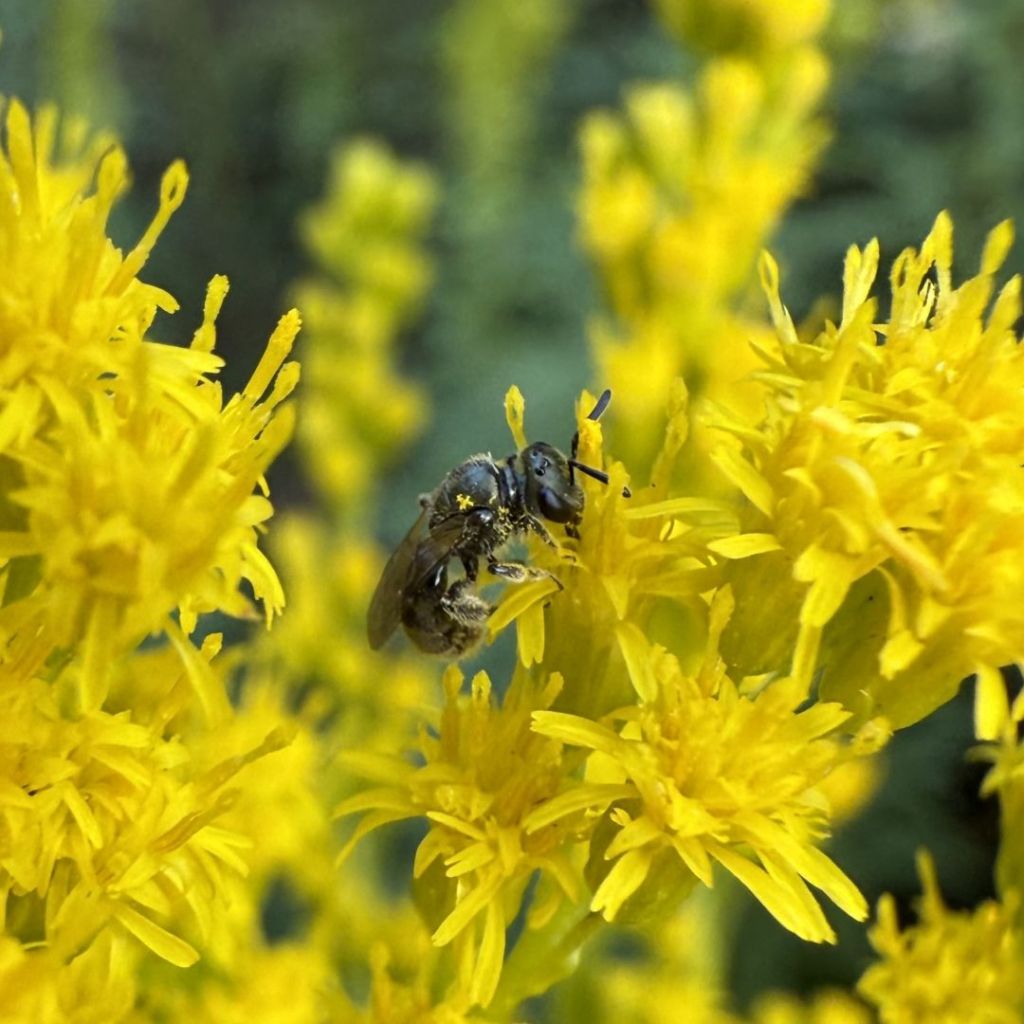
First up, a little bee in the genus Lasioglossum, commonly called sweat bees for their attraction to perspiration. We have trouble remembering the scientific names, but in this case consider that in botany the prefix lasio means “hairy” and glossum is of course “tongue.”
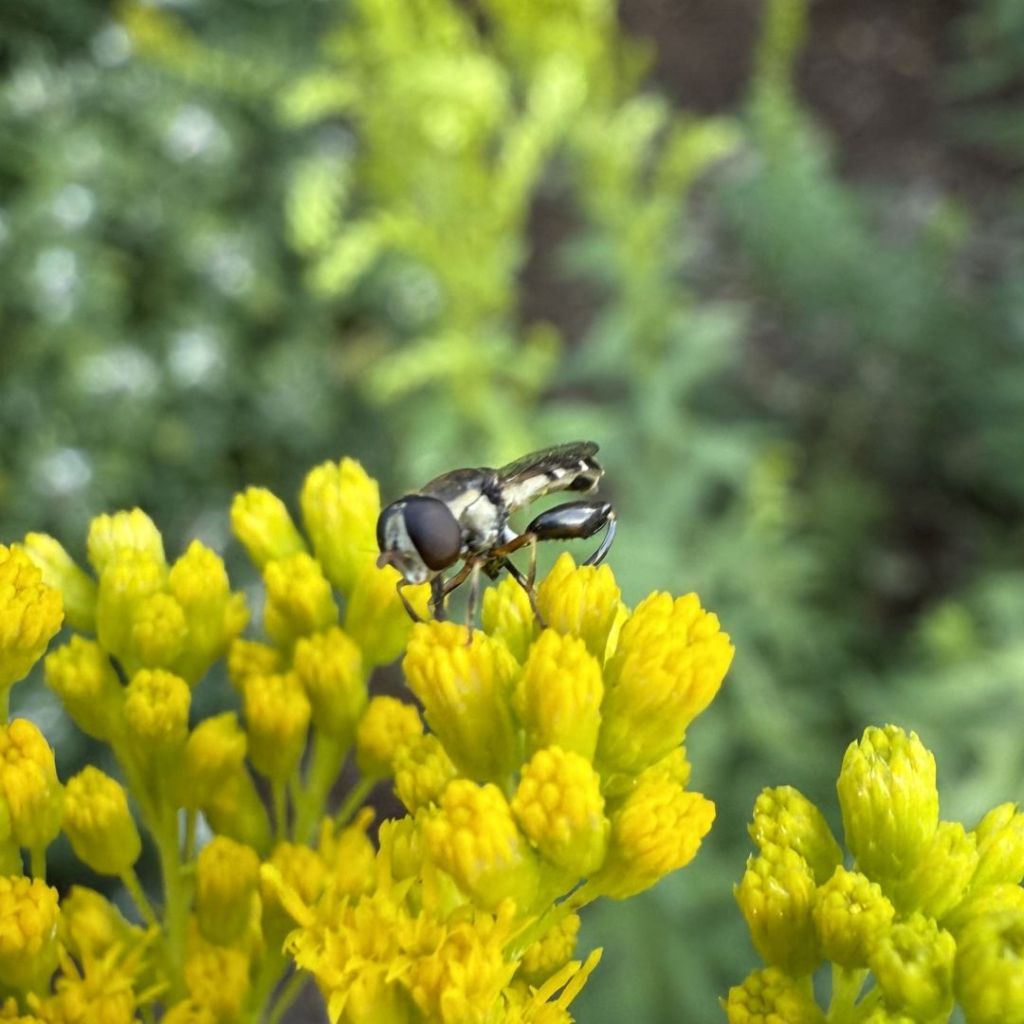
Our second example is a hoverfly, the Syritta pipiens, in the family of Syrphidae, commonly called hover or flower flies. This species is known as the thick-legged hoverfly or common compost fly, because its larvae develop in decaying organic material such as manure and garden compost.
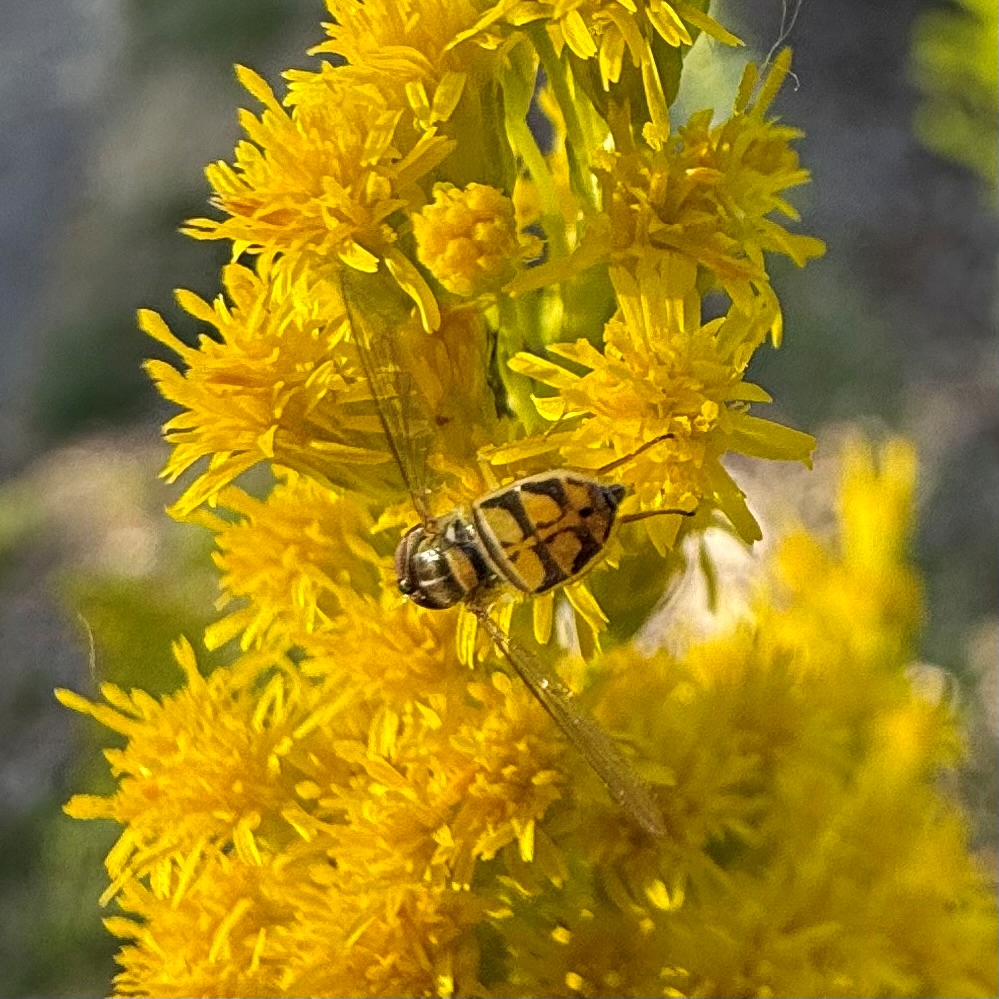
Thirdly, we have another hoverfly, the Toxomerus marginatus, common name margined calligrapher fly. The abdomen markings give away its name.

 Rose City Bluff Restoration