Locomotion: We have briefly looked at tiny pollinators found on the Bluff goldenrod flowers. The margined calligrapher fly and the common compost fly we observed are both hoverflies, known for their ability to hover in mid-air. They approach and hover before goldenrod flowers, as if evaluating where to land. We now want to point out a couple of other species with interesting locomotion abilities. Both of our examples were observed on Queen Anne’s Lace, also known as wild carrot (Daucus carota). It’s a Rank C nuisance plant on the Portland Plant List, but it’s ubiquitous here in Portland and elsewhere.
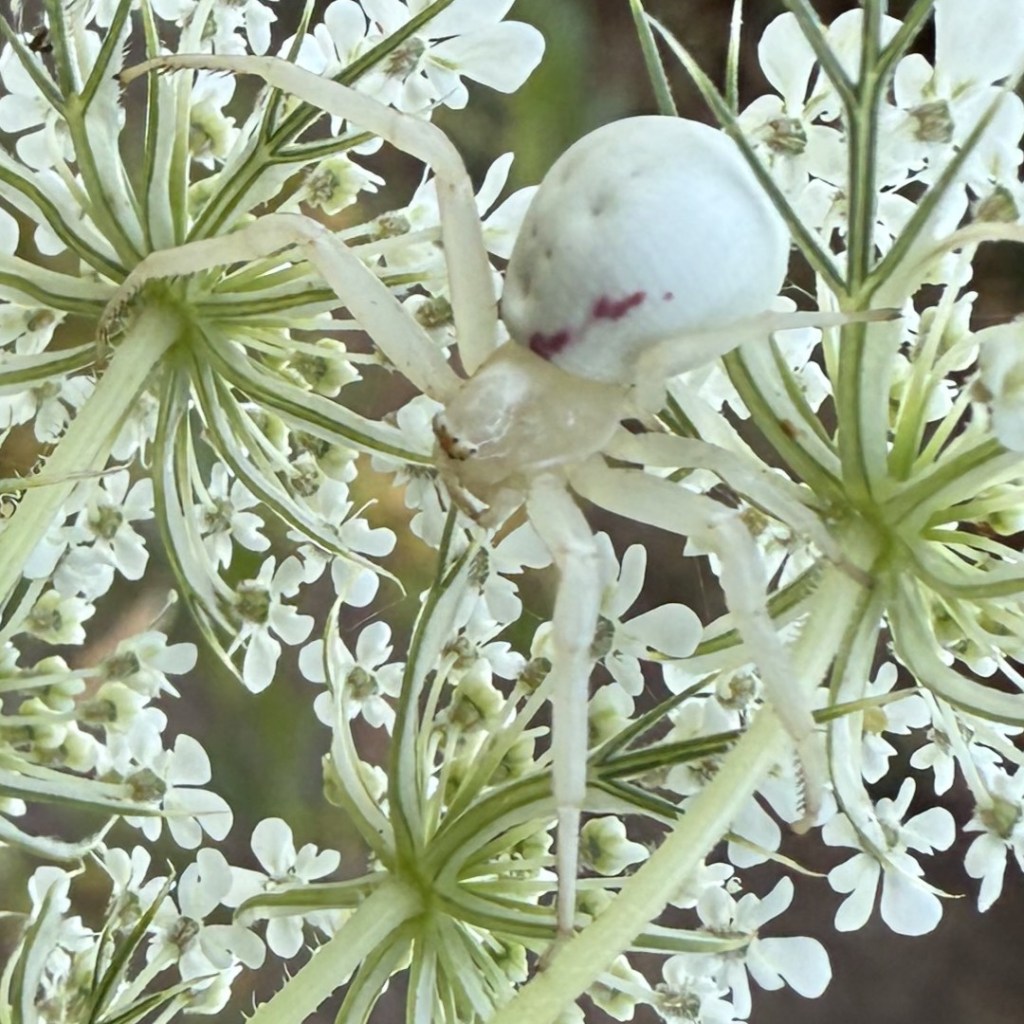
Our first example is Misumena vatia, commonly called the goldenrod crab spider. We spotted it on Queen Anne’s lace though it is a frequent visitor to goldenrod and milkweed. It’s called a crab spider for its unique ability to walk sideways. They also can change their color to blend with their surroundings. Hence, we saw a mostly white spider on the white flower.
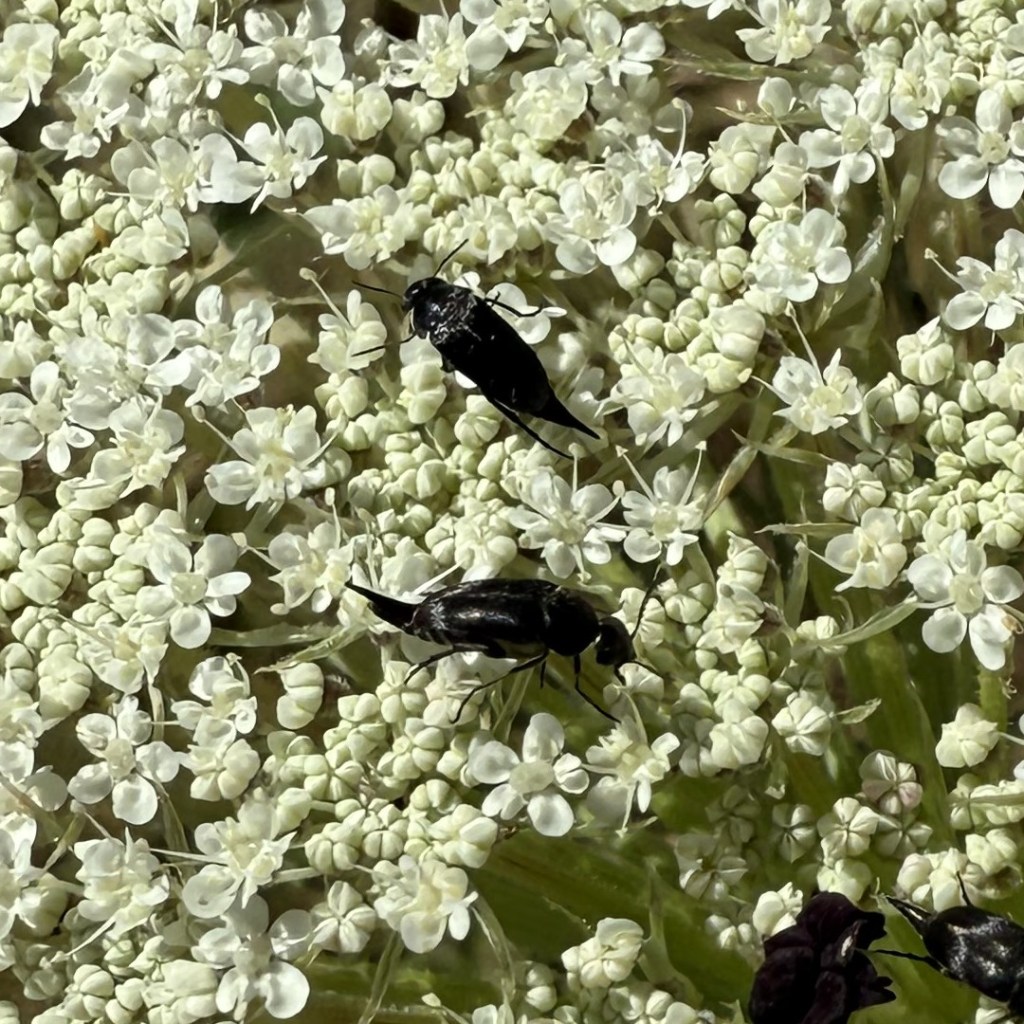
Our second example, also seen hanging out on Queen Anne’s lace, is a tiny tumbling flower beetle in the family, Mordellidae. We’re not beetle-smart enough to know what species we observed. We may have a tumbling nun (Mordella melaena). It appears unimpressive at first — simply small and solid black. However, tumbling flower beetles possess an interesting locomotion skill. Their name comes from their erratic escape movements. The apparent tumbling movements are a series of very rapid jumps powered by one leg. A different left or right leg used as the leverage for take-off changes the direction of the jump.

 Rose City Bluff Restoration