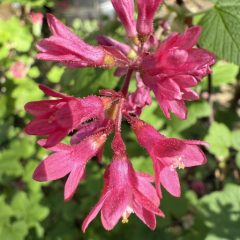
Take a walk down NE 72nd Drive — right after the sharp curve coming off NE Sacramento — and you will come upon a one-person restoration effort that has turned into something unexpected. The city created an opportunity when they cut down a blackberry thicket to survey the land for the Rose City Recreational Trail Project. A community volunteer took advantage of the potential for the area by digging out the blackberry roots and adding native plants like Oregon grape. Neighbors offered more native plants from their yards. And now the project has taken an exciting turn. Bigleaf maple seedlings have popped up everywhere! Now, this little restoration project is starting to look like a pocket forest in the making!
So, what is a “pocket forest“? Inspired by the work of Japanese botanist Akira Miyawaki, pocket forests are densely planted mini forests of native trees and shrubs designed to restore biodiversity and ecosystem health, fast. These urban forests grow quickly, support pollinators and birds, and help people reconnect with nature right in their neighborhoods.
Groups like SUGi are creating pocket forests around the world to boost biodiversity, improve soil, and even bring communities closer together. As they put it: “We create ultra-dense, biodiverse pocket forests of native species only.” SUGi’s projects are restoration rooted in community and climate resilience.
The 72nd Drive project will not be a true Miyawaki-method forest which requires planting the area with year-old saplings spaced approximately two feet apart, all at the same time with a variety of native species so no saplings of the same species are adjacent to each other. The close spacing is meant to create competition for sunlight, encouraging plants to grow up quickly rather than out. Nevertheless, we are excited about the potential for the 72nd Drive project to teach us something new about restoration work.
Why does this matter for us? As local temperatures rise, there is growing concern about heat islands. In our community that includes NE 82nd Avenue. On July 22, Oregon Metro, Oregon Walks, and APANO hosted a community workshop to brainstorm ways to cool down 82nd Avenue for residents’ health and safety. Pocket forests might be one powerful answer. They are shady, green, and filled with life — everything a street or neighborhood needs to breathe a little easier in the summer heat.
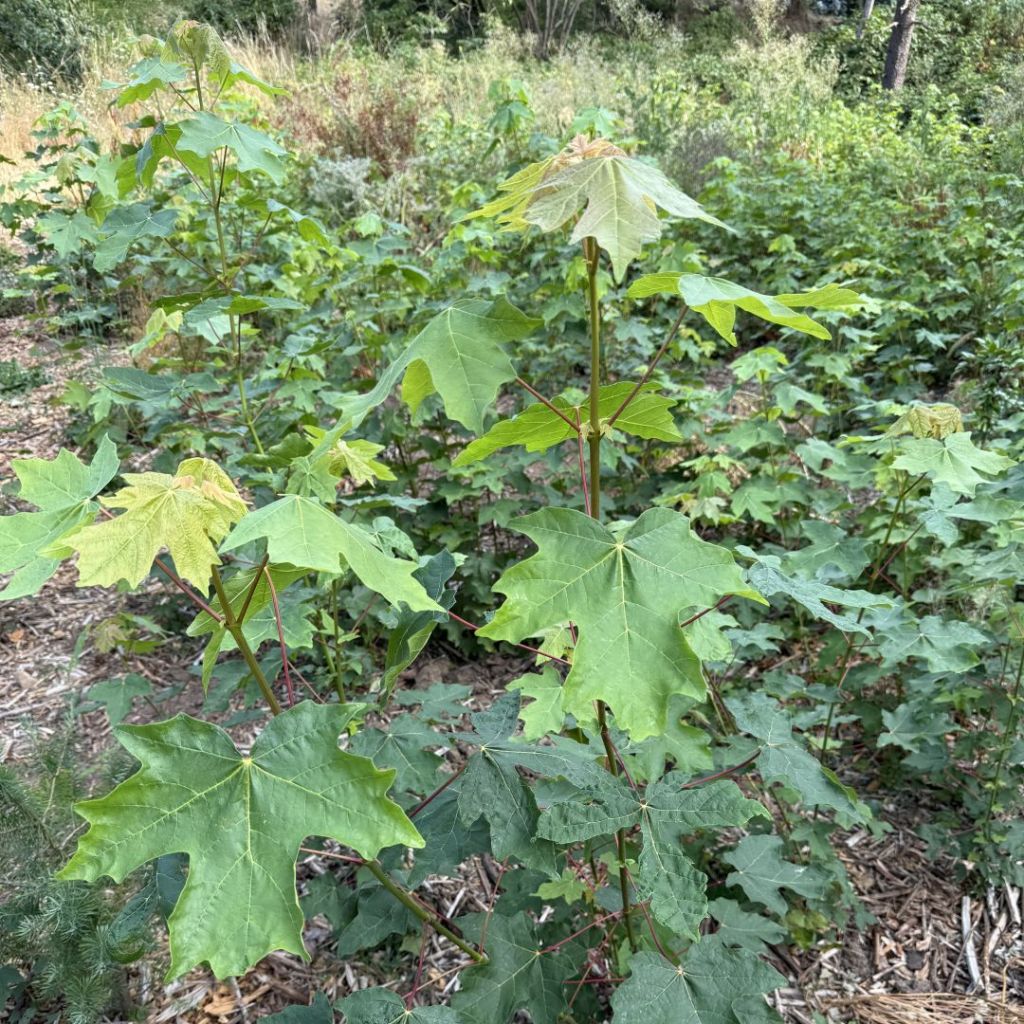

 Rose City Bluff Restoration