
Rose City Bluff Restoration started in 2018 as a group of guerrilla gardeners who hoped to rescue a neglected area where native plants were threatened by Himalayan blackberries. In 2019, we took a step forward by reaching out to the landowners and forming partnerships that allowed us to work together. This transition, familiar to many grassroots organizations, has helped us deepen our impact and strengthen our ties within the community.
Once a group like RCBR is working with the permission of the land owners it is no longer guerrilla. Still, we find the whole decentralized practice of guerrilla gardening and the issues surrounding it to be of interest. Legality and property ownership, maintenance and sustainability, ecological considerations, and community relations – these issues carry over from our first years to inform our work today, actively changing how we work, prompting practices to ensure the issues are addressed. We applaud guerrilla gardeners and their ethos. Their guiding principle is still applicable to RCBR today – take neglected land and make it grow.
Guerrilla gardening uses or improves land without permission. This can conflict with property rights, municipal regulations, and zoning or land-use. The practice often occurs in vacant, blighted, or abandoned spaces, neglected public land, or areas with no active use or caretaking. Guerrilla gardeners argue that unused land is a wasted resource, and communities have a moral right to improve their environment.
Guerrilla gardening sits in a gray zone between civil disobedience, community care, and environmental stewardship. Its ethics depend heavily on intent, impact, and context. Ethical guerrilla gardening typically involves community-benefiting motives, such as beautification, food production, pollinator support, or environmental restoration. Good intentions do not guarantee good outcomes, but they influence ethical evaluation.
Poorly planned guerrilla gardening can do ecological harm. Ethical guerrilla gardening means choosing native or non-invasive species, supporting pollinators and local biodiversity, avoiding monocultures, not introducing pests or diseases, avoiding harm to urban wildlife habitats.
Guerrilla gardening should uplift communities, not impose an aesthetic or ideology on them. Ethical practice involves understanding who uses the space, respecting local cultural and aesthetic norms, asking neighbors (even informally) what they want, avoiding gentrification effects, recognizing that “beautification” can mean different things to different people.
Ethical guerrilla gardeners take responsibility for ongoing maintenance. Otherwise, plants die, succumb to weeds, or create hazards, and neighbors or city crews inherit the burden. If you plant it, you should maintain it (or ensure someone will).
Guerrilla gardening is a moral response to systemic neglect. The goal is stewardship, not control. Ethical guerrilla gardening invites community participation. In summary, ethical guerrilla gardening balances care for land and community with respect for ecology and the local social context. It is ethically strongest when driven by stewardship, inclusivity, and long-term commitment.
Before planting, guerrilla gardeners should ask:
- Does this help the community or environment?
- Does it harm anyone?
- Is this the right plant for the place?
- Will we maintain it long-term?
- Do neighbors or users of the space support it?
- Is this safe and mindful of public use?
- Is the action proportional to the problem?
If guerrilla gardening appeals to you, come join us on any Sunday morning. We take care of all the bureaucratic issues. Help us make the once neglected Bluff grow with native plants.
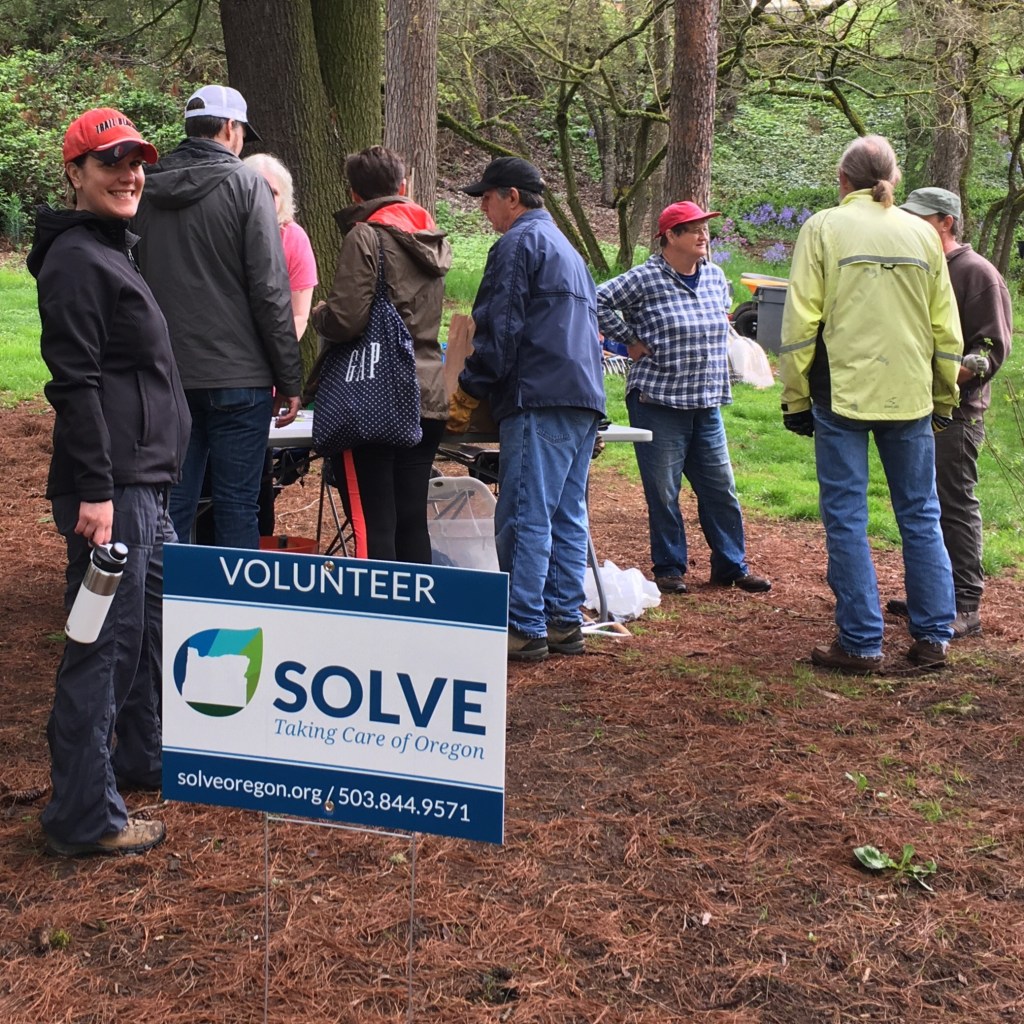
SOLVE Earth Day event, 5/20/2019. Photo by Joe Saraceno.
Some of this post originated with ChatGPT.

 Rose City Bluff Restoration
another great email/post! A great read. Cheers!
LikeLike