“Holdover species” is an informal descriptive term with slightly different meanings in evolutionary biology or conservation to describe organisms that survive extinctions or persist after habitat degradation. Holdover species is not a formal biological term but generally refers to animals or plants that survived an era during which many other species did not, such as woolly mammoths surviving an Ice Age in isolated spots. In the era of the Columbian Exchange, the massive transfer of plants and animals between the Americas (New World) and Afro-Eurasia (Old World), holdover species may refer to species that survive aggressive invaders that outcompete native plants. Other related terms for areas with holdover species include remnant natural area and refugium. In conservation and restoration work, a holdover native species may persist at low abundance through disturbance or invasion, maintaining the capacity to re-expand once suppressive pressures are removed.
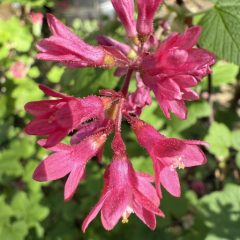
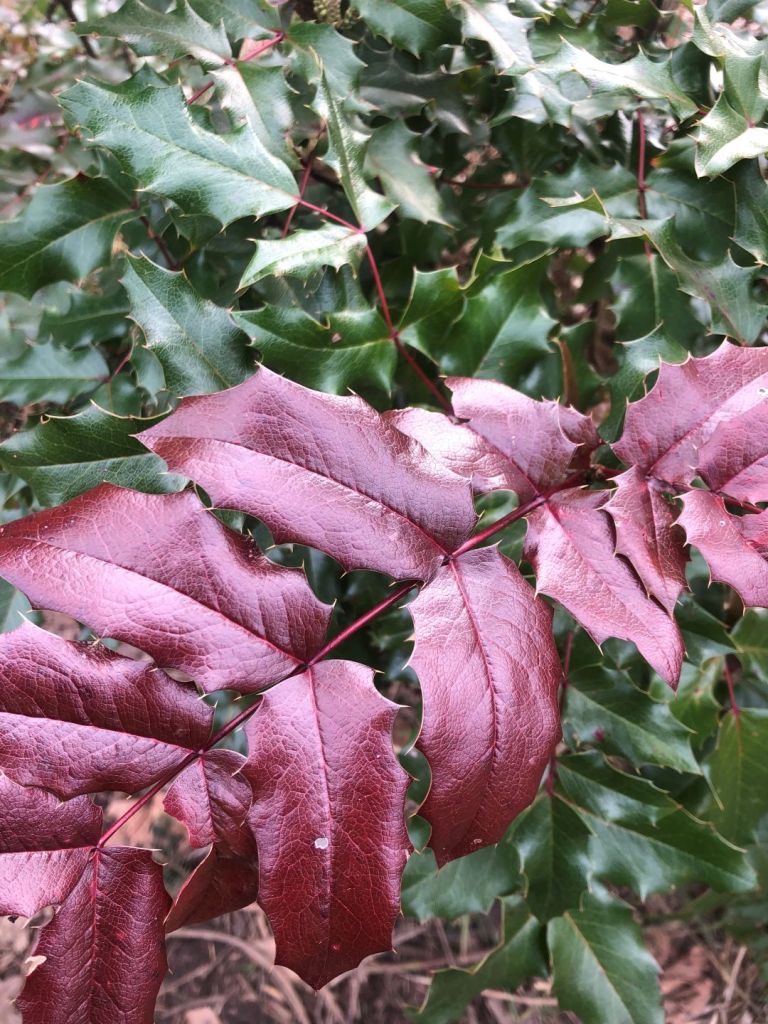
Though the current Rose City Bluff time frame is short (twenty-five years since the first restoration), we are co-opting the term holdover species to describe our experience with Berberis aquifolium (Oregon grape). Starting in 2018, as Rose City Bluff Restoration volunteers began to clear the Bluff of Himalayan blackberry, they repeatedly found surviving Oregon grape shrubs under blackberry thickets. In 2001–2002, the golf course maintenance supervisor, Jim Heck, initiated a project to remove blackberry from the Bluff and replace it with native plants, including Oregon grape. Unfortunately, the necessary maintenance was not done and the blackberry came back. Seventeen years later the impetus for the first RCBR work party was to clear blackberry thickets from around the remnants of Jim Heck’s project. Over the next few years volunteers found Holodiscus discolor (ocean spray), Ribes sanguineum (red flowering currant), Symphoricarpos (snowberry), and other native plants surviving amongst the blackberry. The most common holdover species, though, was Berberis aquifolium, the Oregon grape.
That Oregon grape would be the Bluff’s most successful holdover species (other than the fact that Heck may have planted more of them) is not hard to understand because it is built for long-term survival under stress rather than rapid competition. Certain traits explain their continued presence in blackberry thickets. Oregon grape evolved as a forest understory shrub. Its thick, leathery evergreen leaves photosynthesize efficiently at low light levels, so it tolerates shade. A little filtered light under a blackberry thicket is enough to keep it alive though not thriving. Tough evergreen leaves resist abrasion from canes and drought stress created by blackberry’s shallow but aggressive roots. Oregon grape spreads slowly via woody rhizomes. Above ground stems may be suppressed or shaded for years, but the underground system can stay alive. Once light returns, it responds quickly. Blackberry dominates by exploiting disturbed, nutrient rich soils. Oregon grape, by contrast, tolerates poor, compacted, and dry soils, letting it survive where competition is intense but resources are scarce. Oregon grape is a high value holdover species. If blackberry is removed carefully, these suppressed plants can rebound and help anchor the native shrub layer. If the blackberry canopy is removed, Oregon grape can send out new shoots, flower within one to two seasons, and expand into newly opened space.

 Rose City Bluff Restoration