
Several of our Rose City Bluff Restoration volunteers were fortunate enough to grow up on or near farmland. Two of our volunteers had the following surprisingly comparable stories to tell about participating in the farm community as kids. Farm kids grow up to be some of the hardest working restoration volunteers.
Wendell Berry had this to say about farm kids: “An important source of instruction and pleasure to a child growing up on a farm was participation in the family economy. Children learned about the adult world by participating in it in a small way, by doing a little work and making a little money — a much more effective, because pleasurable, and a much cheaper method than the present one of requiring the adult world to be learned in the abstract in school.” [Wendell Berry. “Sanitation and the Small Farm.” The Gift of Good Land: Further Essays on the Culture of Agriculture. Counterpoint Press. 1977.]
As told by an RCBR volunteer from their experience in the 1960s: A group of Gore Hill farmers in central Montana routinely had their winter wheat cleaned at their local grain elevator before the Fall planting season. In the summer of 1960, they discovered that rye, which grows taller than wheat, was showing up in their wheat fields. Upon further investigation, they learned that there was a hole between the granary’s wheat and rye bins. The only way to get top dollar for their crop was to walk the fields and pull the rye by hand.
Between 1961 to 1966, a farmer’s wife turned this unfortunate grain elevator mishap into a collaborative working opportunity for her four kids, the neighbor kids and friends from town. Every July the Rye Crew, ages 10 to 18, earned 50 cents an hour walking and pulling rye out of 1200 acres of wheat fields. The morning shift was 6:00 to 9:00 before it got hot and then they were back in the fields from 5:30 to dark. Each year the crew members returned, often bringing more of their friends, and eventually the fields had less and less rye. It was a win-win for the kids who loved getting paychecks and the farmer who received full price for his winter wheat.
As told by another RCBR volunteer from their experience in the early 1970s: I believe “roguing” is the general verb for what we’re talking about. [In agriculture, roguing is manually removing undesirable plants (rogues) from a crop field to ensure the quality and uniformity of the crop.] Seed crops are usually worth more than crops grown for other purposes (milling, malting, stock feed, etc.), but the purity must be good. Roguing out the wild oats from crops of wheat or barley was done to maintain the purity of the harvest, to give the possibility of selling it as seed.
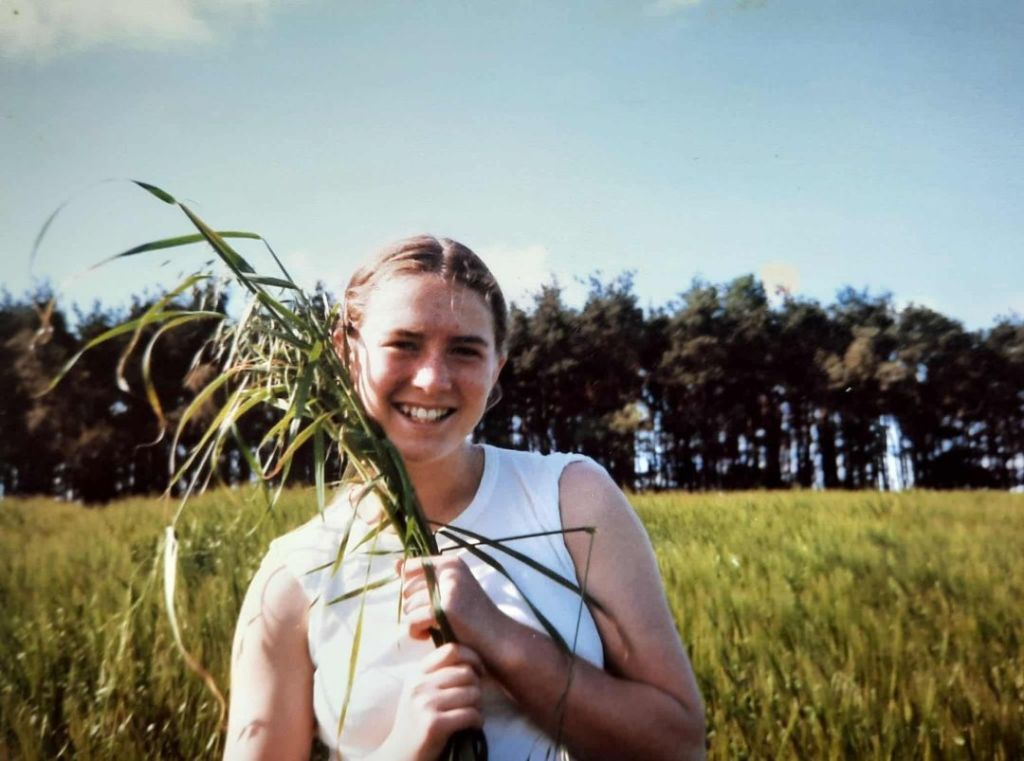
Wild oats are a particular problem because they ripen among the intended crop, and the grain size is similar enough that they’re difficult to separate out mechanically. Fortunately, they stand a little higher than the wheat and barley, and catch the light a little differently, so they’re visible. Any available kids were corralled and given the job of walking the fields, about ten yards apart, scanning for and pulling out any wild oat plants before they could ripen. We’d each have a big plastic fertilizer bag strung over one shoulder with baler twine, and we’d stuff the wild oats into the sack as we waded through the grain crops. It was after doing that for a day that we could close our eyes and still see after-images of wild oats, swaying in the breeze.
I was doing this in the early 70’s, but I expect it’s an ongoing practice. Our gang of kids were aged 10-15, I’d guess. The farm was our employer. (The hourly rate was not good, but we did it.) The wild oats were probably introduced in contaminated seed. Once in the soil, the seeds can lay dormant for several years, so roguing a crop one year wouldn’t ensure a clean crop the next time.

 Rose City Bluff Restoration