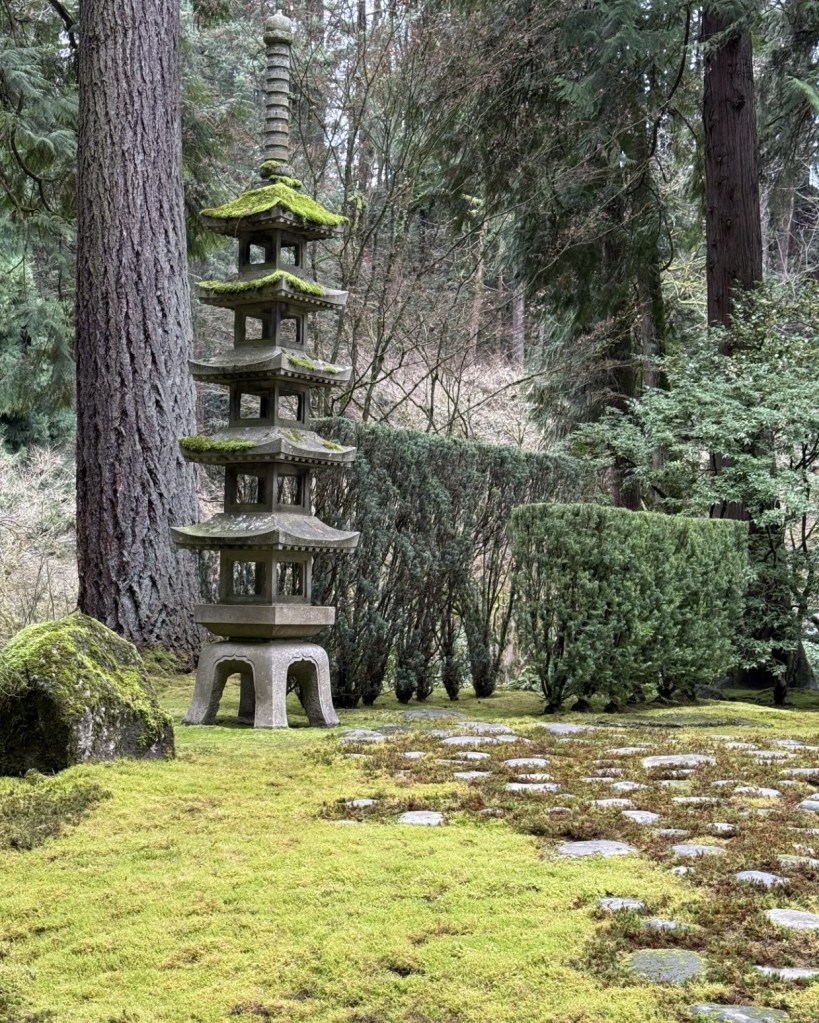
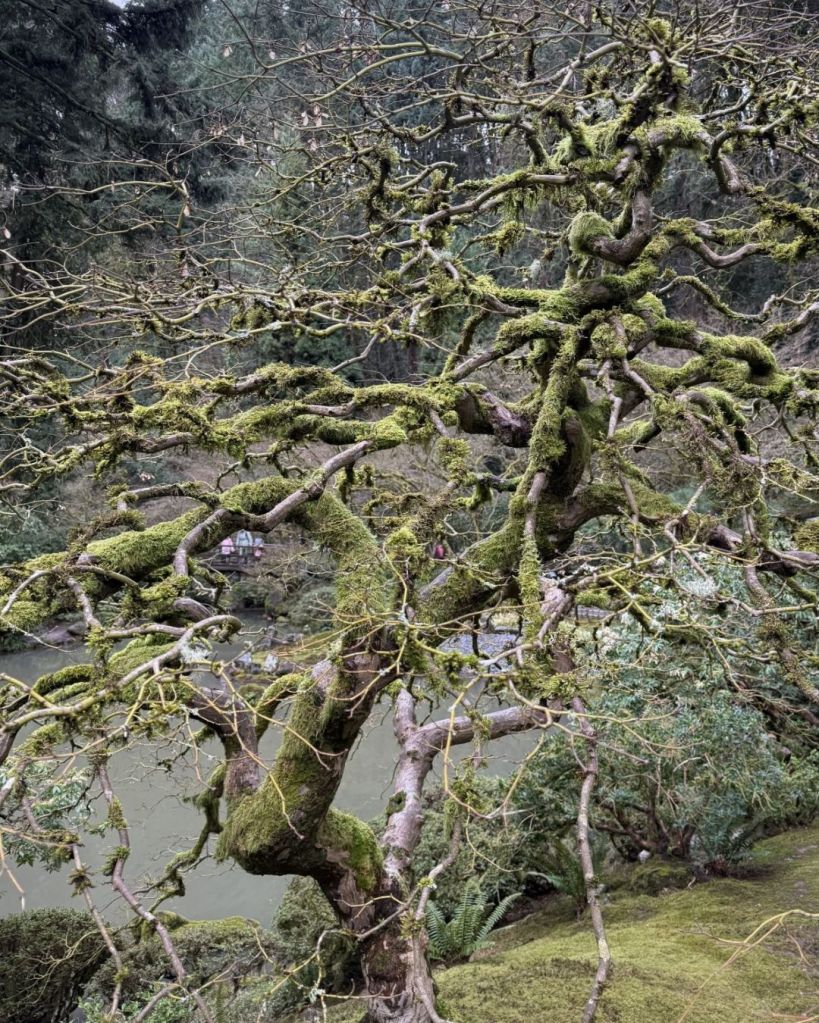
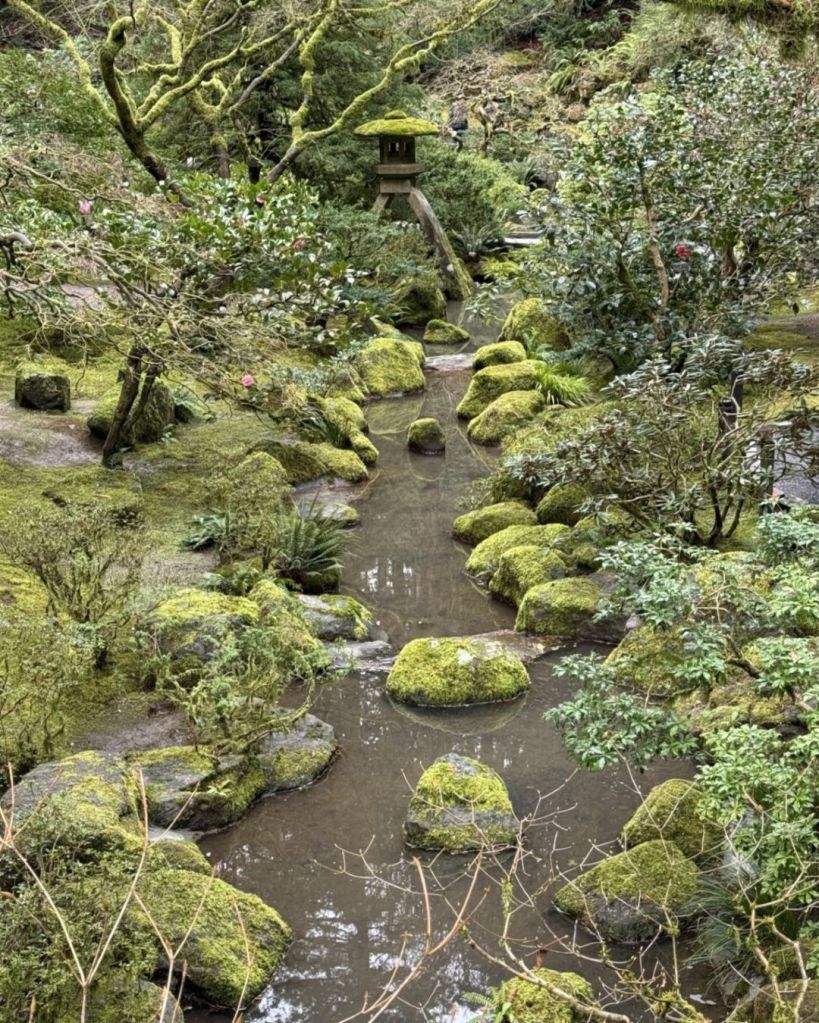
Last week was Moss Appreciation week at the Portland Japanese Garden. In winter, the moss takes center stage. The deciduous and flowering plants recede, letting the abundant mosses stand out.
Moss is the unifying element of a Japanese Garden. Japanese gardens are designed with four essential elements: stones (ishi), water (sui), plants (shokubutsu), and ornaments (tenkeibutsu). Moss connects these elements, creating a sense of age, tranquility, and wabi-sabi (beauty in imperfection).
“When visiting some of the best moss gardens in Japan, expectations of the equivalent elsewhere are high, to say the least. Are there any gardens in other countries that can match these wonders? Portland Japanese Garden can do just that.” (Ulrica Nordström, Moss: From Forest to Garden, 2019)
“Whether it’s the swaths of green that appear in its Tea Garden and Natural Garden, the incidental growth seen in the Sand and Stone Garden, or the artful arrangement into cup and gourd in its Flat Garden, moss is a unifying and reassuring element of Portland Japanese Garden. Described as “the essence of the Japanese garden” by Josho Toga, formerly Head Priest of Tenryu-ji Temple in Kyoto, the Garden’s tranquility is, in part, expressed by this cherished plant.” (Will Lerner, An Exploration of Moss: The Rhythm of Portland Japanese Garden)
A recent study published in Nature Geoscience suggests that moss might also be important to climate change mitigation. Moss contributes to carbon sequestration, is a soil stabilizer, a water retainer, and a habitat for small creatures.

 Rose City Bluff Restoration