Holdover Species

“Holdover species” is an informal descriptive term with slightly different meanings in evolutionary biology or conservation to describe organisms that survive extinctions or persist after habitat degradation. Holdover species is not a formal biological term but generally refers to animals or plants that survived an era during which many other species did not, such as woolly mammoths surviving an Ice Age in isolated spots. In the era of the Columbian Exchange, the massive transfer of plants and animals between the Americas (New World) and Afro-Eurasia (Old World), holdover species may refer to species that survive aggressive invaders that outcompete native plants. Other related terms for areas with holdover species include remnant natural area and refugium. In conservation and restoration work, a holdover native species may persist at low abundance through disturbance or invasion, maintaining the capacity to re-expand once suppressive pressures are removed.

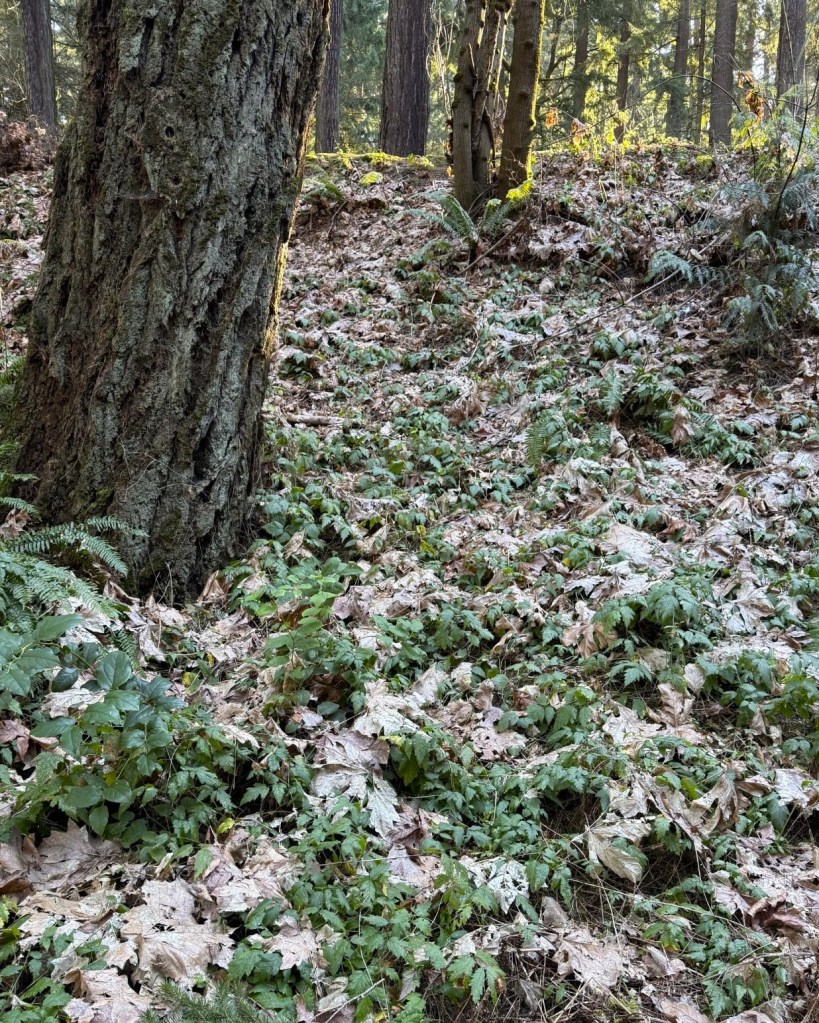
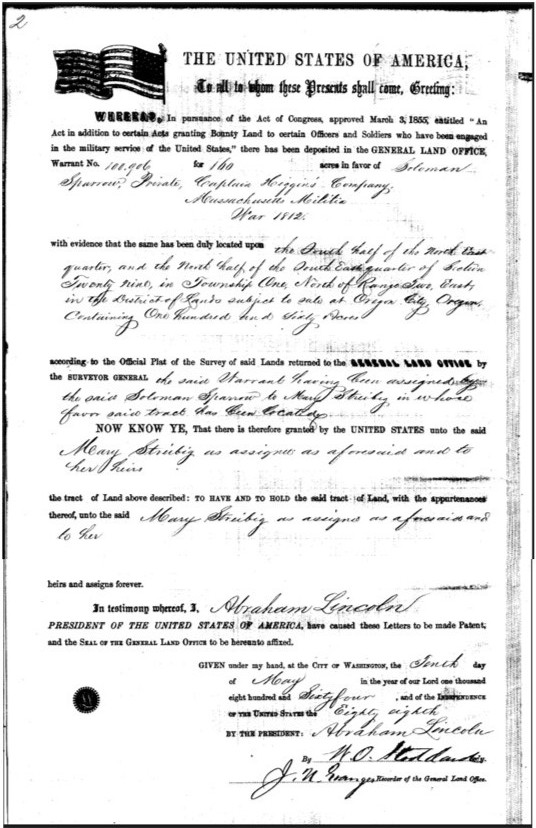
Though the current Rose City Bluff time frame is short (twenty-five years since the first restoration), we are co-opting the term holdover species to describe our experience with Berberis aquifolium (Oregon grape). Starting in 2018, as Rose City Bluff Restoration volunteers began to clear the Bluff of Himalayan blackberry, they repeatedly found surviving Oregon grape shrubs under blackberry thickets. In 2001–2002, the golf course maintenance supervisor, Jim Heck, initiated a project to remove blackberry from the Bluff and replace it with native plants, including Oregon grape. Unfortunately, the necessary maintenance was not done and the blackberry came back. Seventeen years later the impetus for the first RCBR work party was to clear blackberry thickets from around the remnants of Jim Heck’s project. Over the next few years volunteers found Holodiscus discolor (ocean spray), Ribes sanguineum (red flowering currant), Symphoricarpos (snowberry), and other native plants surviving amongst the blackberry. The most common holdover species, though, was Berberis aquifolium, the Oregon grape.

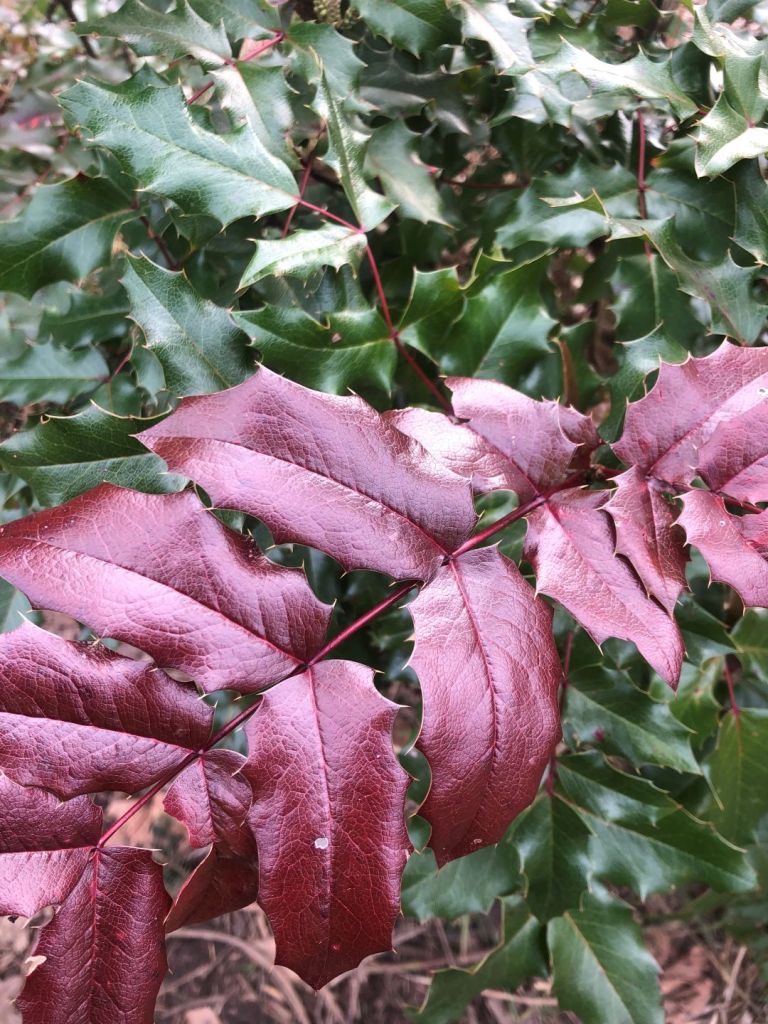
That Oregon grape would be the Bluff’s most successful holdover species (other than the fact that Heck may have planted more of them) is not hard to understand because it is built for long-term survival under stress rather than rapid competition. Certain traits explain their continued presence in blackberry thickets. Oregon grape evolved as a forest understory shrub. Its thick, leathery evergreen leaves photosynthesize efficiently at low light levels, so it tolerates shade. A little filtered light under a blackberry thicket is enough to keep it alive though not thriving. Tough evergreen leaves resist abrasion from canes and drought stress created by blackberry’s shallow but aggressive roots. Oregon grape spreads slowly via woody rhizomes. Above ground stems may be suppressed or shaded for years, but the underground system can stay alive. Once light returns, it responds quickly. Blackberry dominates by exploiting disturbed, nutrient rich soils. Oregon grape, by contrast, tolerates poor, compacted, and dry soils, letting it survive where competition is intense but resources are scarce. Oregon grape is a high value holdover species. If blackberry is removed carefully, these suppressed plants can rebound and help anchor the native shrub layer. If the blackberry canopy is removed, Oregon grape can send out new shoots, flower within one to two seasons, and expand into newly opened space.

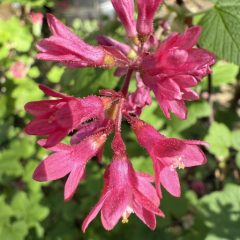
Berberis aquifolium (photo by Greg Shepherd)

Knotweed vs. Blackberry

Although the City of Portland does not include Japanese knotweed (Reynoutria japonica) on its Required Eradication List, Portland is nevertheless concerned about its spread because it is so extraordinarily difficult to eradicate. Knotweed is spread primarily by fragments, especially of roots and stem nodes. Frequent cutting helps but requires that every fragment be removed and disposed of. Digging is not recommended since it can regrow from small fragments. Under the right circumstances, licensed professionals may apply glyphosate-based herbicides, but this is not an option for our volunteers. A Rose City Bluff Restoration volunteer has been tackling our single patch of knotweed without using chemicals for seven years.

Knotweed is native to Japan and other parts of Asia where it is not a nuisance because it has natural predators and grows in a highly competitive ecosystem. A range of native soil fungi and plant diseases attack various parts of the knotweed plant, suppressing its spread. Grass like bamboo limits knotweed’s ability to form dense monocultures seen elsewhere. Over 186 species of insects feed on knotweed.

For example, the sap-sucking insect, Aphalara itadori (Japanese knotweed psyllid), feeds only on knotweed and damages the leaves and stems. This highly specific insect co-evolved with knotweed, making it a promising, long-term solution to reduce the invasive plant’s dominance. Aphalara itadori has been deliberately released in the UK and North America (including Oregon and Washington) as a biological control agent to manage knotweed without harming native flora.

When RCBR began working on the Bluff, the Himalayan blackberry (Rubus armeniacus) was so widespread that the patch of knotweed was not everyone’s first concern. Perhaps it should have been. Blackberry spreads fast, but knotweed spreads even faster (especially along waterways). Blackberry is hard to eradicate, but doable. Knotweed is extremely difficult to eradicate. In some localities there can be financial and legal risks for failing to manage Japanese knotweed. In the UK, British Columbia, and parts of the US (MA, OH, MI, MN) there can be risks concerning property devaluation, mortgage issues, costly eradication, and legal liability for spread to neighbors, with the UK having strict disclosure laws and fines for misrepresentation. Many areas of the US have general “duty to disclose defects” laws, meaning you could still be liable if you hide a known problem that affects the property’s value, even without specific knotweed laws.

Since herbicide is not an option for RCBR, careful repeated cutting is the only option for the Bluff. It is possible to eradicate knotweed without chemicals, but it is a long, labor-intensive process requiring extreme persistence, focusing on repeatedly cutting stems to starve the roots or covering large areas to block sunlight. Thankfully, Neil accepted the job of eradicating our patch of knotweed. Seven years later, the knotweed persists, but each spring less of it comes back.

We will leave you with these thoughts: Blackberry is a nuisance, but knotweed is a nightmare. Blackberry is aggressive, but knotweed is relentless. Blackberry is hard to remove, but knotweed is almost impossible. Blackberry takes over land, but knotweed takes over everything.

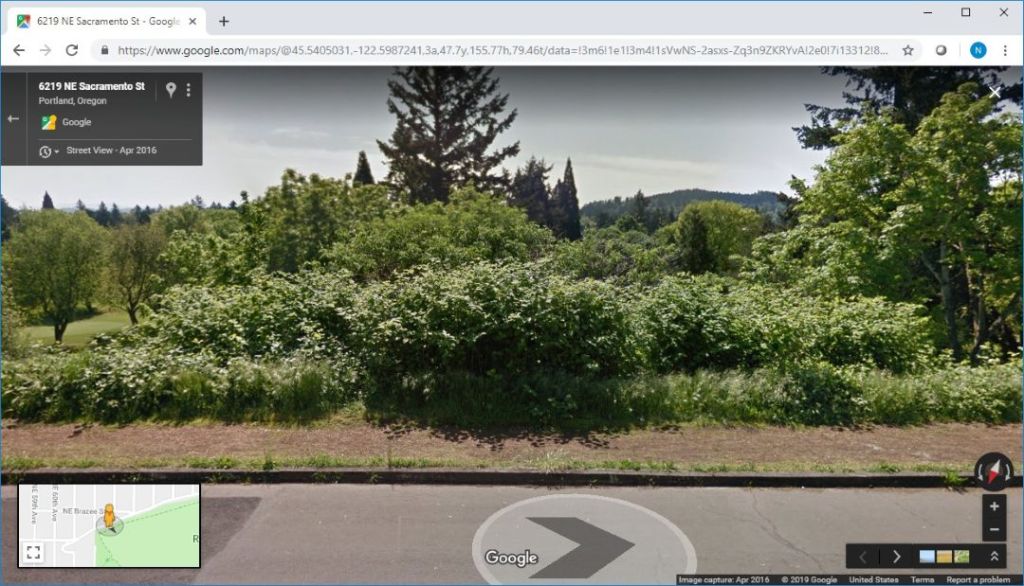
Google Street View with Japanese Knotweed, Rose City Bluff, 2016

Pendant Bars

We have a couple of images of pendant bars to share. Not being geologists ourselves, we don’t want to get too deep into the topic, but we hope you will be motivated to check out the geology of the Bluff and Rocky Butte. The Rose City Bluff ground is full of river rock as we would expect given the Bluff’s origin. The Bluff is a pendant bar formed by ice age deposits from Missoula floods that flowed around Rocky Butte.

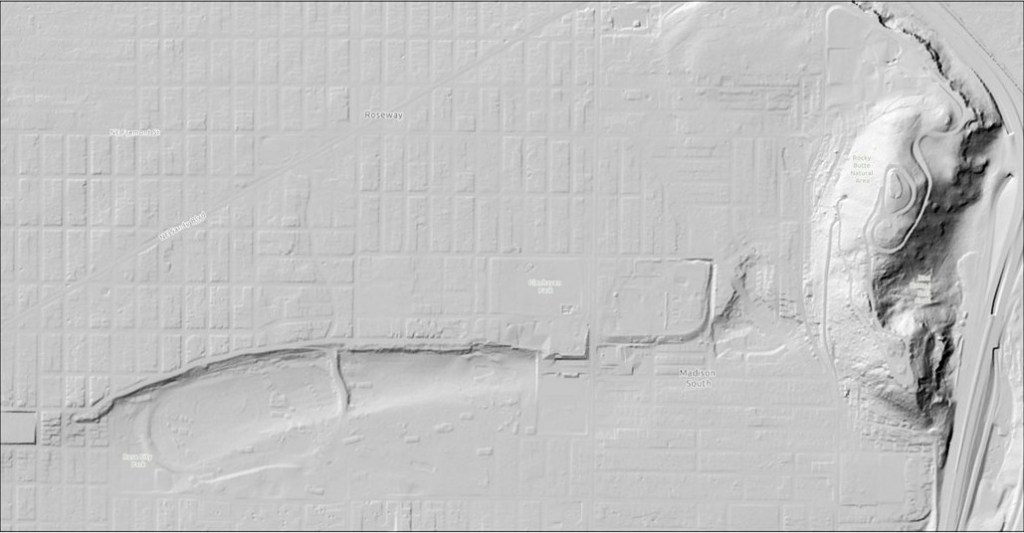
Pendant bars are large geological landforms often created by catastrophic glacial lake outburst floods. The bars are essentially elongated mounds of flood debris that form in the downstream side of obstructions, like Rocky Butte, as floodwater sweeps past. Here’s a LIDAR image of Rocky Butte and the Alameda Ridge.

Rocky Butte and the Alameda Ridge

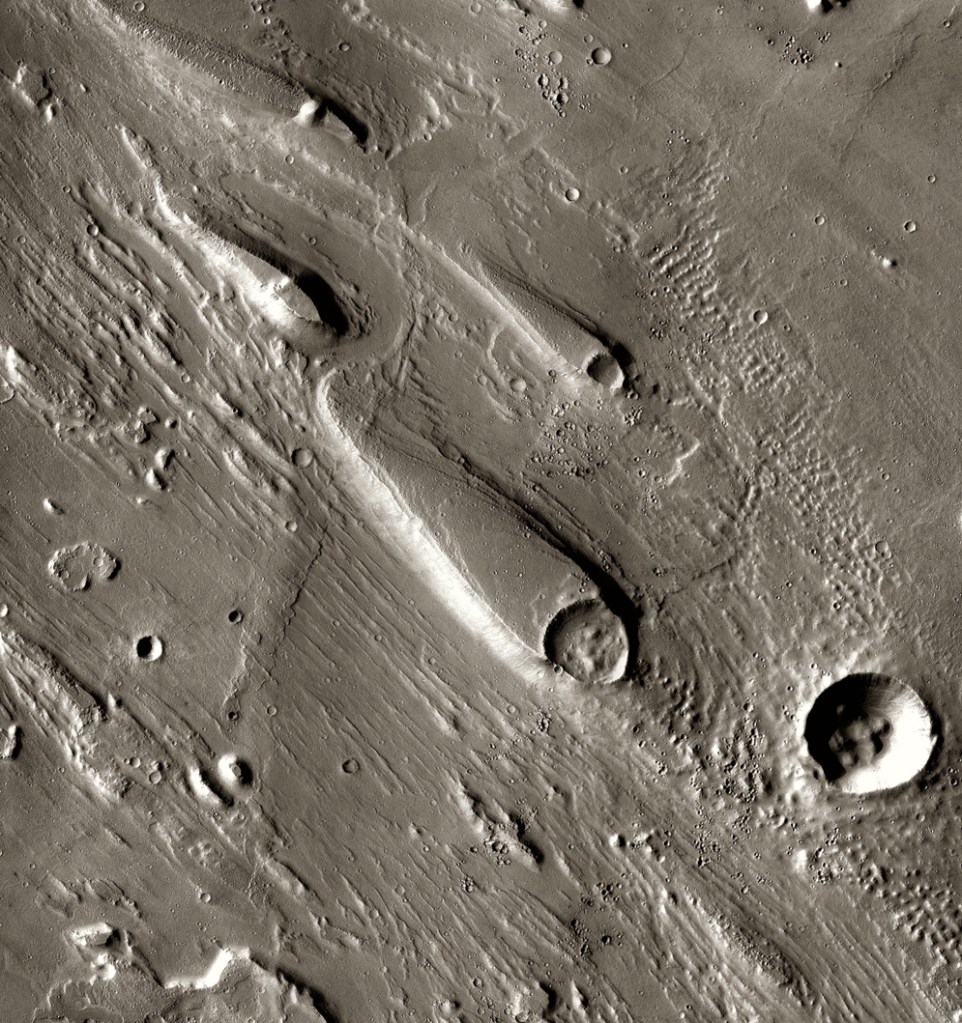
These landforms are not limited to Earth. Similar pendant bars and other flood-related structures have been observed in a large outflow system on Mars, providing evidence for ancient, large-scale flooding on the planet.

Pendant Bars on Mars

“In Ares Vallis, teardrop mesas extend like pennants behind impact craters, where the raised rocky rims diverted the floods and protected the ground from erosion. Scientists estimate the floods had peak volumes many times the flow of today’s Mississippi River.

This image was taken by the Thermal Emission Imaging System instrument on NASA’s Mars Odyssey orbiter and posted in a special December 2010 set marking the occasion of Odyssey becoming the longest-working Mars spacecraft in history.” (NASA)

Guerrilla Gardening

Rose City Bluff Restoration started in 2018 as a group of guerrilla gardeners who hoped to rescue a neglected area where native plants were threatened by Himalayan blackberries. In 2019, we took a step forward by reaching out to the landowners and forming partnerships that allowed us to work together. This transition, familiar to many grassroots organizations, has helped us deepen our impact and strengthen our ties within the community.

Once a group like RCBR is working with the permission of the land owners it is no longer guerrilla. Still, we find the whole decentralized practice of guerrilla gardening and the issues surrounding it to be of interest. Legality and property ownership, maintenance and sustainability, ecological considerations, and community relations – these issues carry over from our first years to inform our work today, actively changing how we work, prompting practices to ensure the issues are addressed. We applaud guerrilla gardeners and their ethos. Their guiding principle is still applicable to RCBR today – take neglected land and make it grow.

Guerrilla gardening uses or improves land without permission. This can conflict with property rights, municipal regulations, and zoning or land-use. The practice often occurs in vacant, blighted, or abandoned spaces, neglected public land, or areas with no active use or caretaking. Guerrilla gardeners argue that unused land is a wasted resource, and communities have a moral right to improve their environment.

Guerrilla gardening sits in a gray zone between civil disobedience, community care, and environmental stewardship. Its ethics depend heavily on intent, impact, and context. Ethical guerrilla gardening typically involves community-benefiting motives, such as beautification, food production, pollinator support, or environmental restoration. Good intentions do not guarantee good outcomes, but they influence ethical evaluation.

Poorly planned guerrilla gardening can do ecological harm. Ethical guerrilla gardening means choosing native or non-invasive species, supporting pollinators and local biodiversity, avoiding monocultures, not introducing pests or diseases, avoiding harm to urban wildlife habitats.

Guerrilla gardening should uplift communities, not impose an aesthetic or ideology on them. Ethical practice involves understanding who uses the space, respecting local cultural and aesthetic norms, asking neighbors (even informally) what they want, avoiding gentrification effects, recognizing that “beautification” can mean different things to different people.

Ethical guerrilla gardeners take responsibility for ongoing maintenance. Otherwise, plants die, succumb to weeds, or create hazards, and neighbors or city crews inherit the burden. If you plant it, you should maintain it (or ensure someone will).

Guerrilla gardening is a moral response to systemic neglect. The goal is stewardship, not control. Ethical guerrilla gardening invites community participation. In summary, ethical guerrilla gardening balances care for land and community with respect for ecology and the local social context. It is ethically strongest when driven by stewardship, inclusivity, and long-term commitment.

Before planting, guerrilla gardeners should ask:

  1. Does this help the community or environment?
  2. Does it harm anyone?
  3. Is this the right plant for the place?
  4. Will we maintain it long-term?
  5. Do neighbors or users of the space support it?
  6. Is this safe and mindful of public use?
  7. Is the action proportional to the problem?

If guerrilla gardening appeals to you, come join us on any Sunday morning. We take care of all the bureaucratic issues. Help us make the once neglected Bluff grow with native plants.

In this moment Rose City Bluff Restoration volunteers were guerrilla gardeners no longer.
SOLVE Earth Day event, 5/20/2019. Photo by Joe Saraceno.

Some of this post originated with ChatGPT.

Terminology

I have been rereading Roy Bedichek’s Adventures with a Texas Naturalist, a Texas classic published in 1947. Bedichek’s book has a mid-century optimism lacking in the sense of eco-urgency we expect of naturalist writers today. In the first two chapters about fences, Bedichek, while lamenting the loss of prairie habitat due to farming and grazing, was quite upbeat about the preservation of native species on highway and railroad rights-of-way. He extolled the benefits of native habitats along the continuous and interconnected highways, protected from grazing and plowing by the fencing that was meant to protect cars from livestock or livestock from trains. However, it struck me that he said little about the possibility that highways could become major pathways for the spread of invasive species.

When did naturalist writers begin writing about invasive biology? Henry David Thoreau does not mention the concept of invasive plants in Walden (1854). The term did not exist in his time. However, he did write extensively in journals and books, including Walden, about the local flora of Concord, Massachusetts. His detailed observations serve as a crucial historical baseline for modern scientific research. John Burroughs (1837-1921) authored essays about species that were non-native to specific areas, though he did not use the modern term “invasive species.” While John Muir (1838-1914) did not use the term as it is understood today, his writings did discuss a similar concept: the destructive impact of non-native livestock, particularly sheep and cattle. In A Sand County Almanac (1949), Aldo Leopold mentioned invasive plants, particularly cheat grass (Bromus tectorum). He discussed the negative impacts of non-native species on native ecosystems and the role of human activity in their spread. Edward Abbey mentioned invasive plants in Desert Solitaire: A Season in the Wilderness (1968). He specifically referred to the non-native Russian thistle (Salsola), commonly known as tumbleweed, as an “invasive pokey” plant that clogs paths in the desert environment. Annie Dillard mentioned the invasive European starling in her book, Pilgrim at Tinker Creek (1974). She described how the bird was introduced to the United States by people seeking to bring all birds mentioned in Shakespeare’s plays to North America.

The specific phrase “invasive species” first appeared in the September 1891 issue of The Indian Forester, a 150-year-old journal on scientific forestry and allied disciplines. The phrase was used by British forest administrator R.S. Troup in his book, Silvicultural Systems (1928), where he mentioned “Various invasive tropical species [of tree] which habitually spring up in quantity on recent clearings.” However, “invasive species” was not widely used, including by our naturalist writers, until Charles S. Elton wrote The Ecology of Invasions by Animals and Plants (1958). Elton’s book is considered a foundational text for the study of how invasive species affect ecosystems. While Elton popularized the modern concept of invasion ecology, the exact two-word phrase, “invasive species,” was first used in the forestry journal.

Coda: We have come a long way since 1958 in our understanding of invasive species. This from Wikipedia will bring you up to date on the current terminology. The preferred terms in current use include:

Native. A species that naturally occurs in a specific geographic region.

Nonnative. A species that does not naturally occur in a specific region but has been introduced.

Introduced. A species that has been brought to a new area, often by humans.

Established. An introduced species that can reproduce and sustain a population on its own without human support.

Invasive. A nonnative species that spreads aggressively and causes harm to the environment, economy, or human health.

Nuisance. An individual or a group of individuals of a species that causes problems, even if they are native. For example, a native species can become a nuisance if it grows in an undesirable location.

(Note: I stole much of the above from Google and Wikipedia, who stole it from others.)

Western Sword Fern, Native in the Western U.S.

Fall Planting 2025

Congratulations to all the Rose City Bluff Restoration volunteers who came out for our second planting day! This amazing team and the planting day one team added over a thousand native plants to the Bluff. We also want to express our immense appreciation for the growers who took care of young plants all spring and summer. A big thank you to all seventy growers and planting day volunteers! And finally, let’s have a round of applause for our planting day team leads and our amazing planners, Reed and Marcelle. Splendid work everyone!

Here is a list of the plants added to the Bluff:

Baldhip Rose (Rosa gymnocarpa)
Blue Wild Rye (Elymus glaucus)
Broad-leaved Penstemon (Penstemon ovatus)
California Oatgrass (Danthonia californica)
Cascara (Frangula purshiana)
Checkermallow, Meadow (Sidalcea campestris)
Columbia Tickseed (Coreopsis tinctoria)
Common Chokecherry (Prunus virginiana)
Common Yarrow (Achillea millefolium)
Douglas Sagewort (Artemisia douglasiana)
Elderberry (Sambucus cerulea)
Elderberry (Sambucus racemosa)
Fireweed (Chamerion angustifolium)
Fringecup (Tellima grandiflora)
Goatsbeard (Aruncus dioicus)
Large Leaf Avens (Geum macrophyllum)
Large Leaf Lupine (Lupinus polyphyllus)
Low Oregon Grape (Mahonia nervosa)
Mock Orange (Philadelphus lewisii)
Narrowleaf Milkweed (Asclepias fascicularis)
Narrow-leaved Buckbrush (Ceanothus cuneatus)
Oceanspray (Holodiscus discolor)
Oregon Grape (Mahonia aquifolium)
Osoberry (Oemleria cerasiformis)
Oval-leaved Viburnum (Viburnum ellipticum)
Pacific Dogwood (Cornus nuttallii)
Piggyback Plant (Tolmiea menziesii)
Prairie Junegrass (Koeleria macrantha)
Red Flowering Currant (Ribes sanguineum)
Red Stem Ceanothus (Ceanothus sanguineus)
River Lupine (Lupinus rivularis)
Romer’s Fescue (Festuca roemeri)
Salmonberry (Rubus spectabilis)
Shade Phacelia (Phacelia nemoralis)
Showy Milkweed (Asclepias speciosa)
Snowberry (Symphoricarpos alba)
Suksdorf’s Hawthorn (Crataegus gaylussacia)
Vine Maple (Acer circinatum)
Western Columbine (Aquilegia formosa)
Western Crabapple (Malus fusca)
Western Goldenrod (Solidago canadensis)

Southern Exposure

This is another in our series of posts about using technology to improve climate resilience. Each year around this time, one of the Bluff’s large snowberry bushes dries out, loses its leaves, and appears almost dead. Other shaded snowberry bushes remain green and healthy looking. The native snowberry (Symphoricarpos albus) grows well in sun or shade, wet or dry conditions. However, the southern facing Bluff slope, especially areas in full sun, can be difficult for plants during dry spells. When considering native plants to add to the Bluff we are increasingly aware of the potential for climate change to make things ever more challenging. Large, mature trees shade much of the Bluff, and in those areas, we expect native plants to do well. Where we must be especially careful what we plant is in our sunny southern-exposed areas.

We see our southern-exposed snowberry bush as a metaphor for climate challenged communities. In 2021, a heat dome occurred over Portland, resulting in multiple fatalities and drawing attention to the vulnerability of specific population groups. Despite the heat dome being an anomaly, Portland faced another severe heat wave in August 2023 with temperatures over 100°F, leading to multiple heat-related fatalities.

Urban heat distribution is uneven. On July 22, 2023, 125 volunteers mapped differences in temperature throughout the Portland Metro region. The area counties partnered with a Portland company, CAPA Strategies, in a groundbreaking heat mapping project that measured the unequal distribution of heat in our communities. Using special equipment, volunteers collected more than 269,000 temperature readings in neighborhoods across the area. The Portland metro project covered over four hundred square miles. Lents, Mall 205, and industrial areas near Portland International Airport were among the hottest areas. These areas have fewer trees, more roads, rooftops, parking lots, and sprawling development. The coolest areas are parks and rural forested areas.

The heat mapping technology that CAPA Strategies developed now supports communities in addressing climate change across the United States and internationally. CAPA’s team of researchers, planners, and data scientists helps cities assess hazards and identify adaptation strategies for the future. Developed in Portland, CAPA’s Heat Watch technology helps communities map and mitigate urban heat islands.

Rose City Bluff Restoration volunteers encourage you to support efforts to improve climate resilience in all our area communities.

Southern-Exposed Snowberry Bush, Rose City Bluff

Nature and Health

Nature, Health, and the Biophilia Hypothesis: Rose City Bluff Restoration volunteers and community members appreciate Portland’s open spaces, including the Bluff, for their beneficial effects on public health. In a review of the many benefits of connecting with nature, the International Journal of Environmental Research and Public Health found that “There is extensive empirical literature on the association between exposure to nature and health. . . We found evidence for associations between nature exposure and improved cognitive function, brain activity, blood pressure, mental health, physical activity, and sleep. Results from experimental studies provide evidence of protective effects of exposure to natural environments on mental health outcomes and cognitive function. . . The ‘biophilia hypothesis‘ posits that humans have evolved with nature to have an affinity for nature. . . Further, proponents of the biophilia hypothesis postulate that green spaces provide children with opportunities such as discovery, creativity, risk taking, mastery, and control, which positively influence different aspects of brain development.” [Associations between Nature Exposure and Health: A Review of the Evidence, Jimenez, DeVille, Elliott, Schiff, Wilt, Hart, James, and Tchounwou. International Journal of Environmental Research and Public Health. April 30, 2021. https://pmc.ncbi.nlm.nih.gov/articles/PMC8125471/]

Rose City Bluff Lower Trail (1 of 7)

Applications for Climate Resilience

This post may be slightly wonkish, but here goes. Two weeks ago, Rose City Bluff Restoration looked at phone applications (Merlin and iNaturalist) that ultimately send our observations to the Cornell Lab of Ornithology and the Global Biodiversity Information Facility who provide data for scientists studying climate change. This week we want to touch on how a phone app works. We increasingly use applications like Merlin and PlantNet for our edification – to better identify birds, plants and other wildlife. How does iNaturalist, for example, take our uploaded pictures and identify or suggest ranked possibilities of species?

iNaturalist provides nearly instant species identification suggestions using an advanced computer vision model, which is a type of artificial intelligence. If you use iNaturalist you know that after a user posts an observation, it is shared with the iNaturalist community for verification. Human intervention ensures the quality of iNaturalist’s data, but the original identification by the application is often spot on.

The iNaturalist computer vision model is a process that teaches the computers we interact with to recognize patterns in images. Computer vision trains computers to derive meaningful information from our images, enabling computers to interpret the visual world. When we supply an image, the system processes this visual input to identify features like edges, corners, and textures, while analyzing these features to classify objects.

The iNaturalist computer vision system is trained on users’ photos and identifications to provide taxon (a group of organisms forming a unit, such as a species, family or class) identification suggestions. The model’s identification abilities reflect the collective human expertise of the iNaturalist community. The model updates every one to two months, not in real time. Each time iNaturalist trains a new model, they use a snapshot of images with observations that have complete data (coordinates, date, and media) and a taxon. They do include images from observations of captive and cultivated organisms, as opposed to what we think of as native species. There must be at least a hundred photos and sixty observations of the species to be included in the model. Observations do not need to be “research grade” (verified by the iNaturalist community) to be used in training, but verified observations are prioritized. As iNaturalist grows, the pool of images for training grows too.

When a user submits a photo to iNaturalist for species identification, the following image processing and analysis process occurs. The submitted photo is sent to iNaturalist’s computer vision model. This model, trained on a vast dataset of research-grade observations and their associated images, analyzes the visual characteristics of the organism in the photo. It identifies patterns, shapes, colors, and other features to compare them against its learned knowledge base. Based on this analysis, the computer vision model generates a list of possible species identifications. These suggestions are ranked by likelihood, with the most probable matches appearing first. The model also considers the location where the observation was made, utilizing a “geomodel” that predicts likely species in a given area.

On August 15, 2025, the latest computer vision update included 106,407 taxa. The model is the result of millions of observations and identifications shared on iNaturalist. As additional taxa are discovered and classified, these groups — primarily species, but also including genera, families, and other taxonomic ranks — are systematically documented and analyzed. To keep up with changes, iNaturalist updates the model every month or two so that the community can benefit from the improvements.

iNaturalist’s computer vision model is powered by a convolutional neural network (CNN), a type of “deep learning” that uses multiple layers to learn complex patterns and make decisions from large datasets. CNN excels at image recognition and processing. Convolutional neural networks, modeled after the human visual cortex, are widely employed in computer vision applications such as facial recognition, medical imaging, and autonomous vehicle systems.

Making an Observation with the iNaturalist Phone App

We trust this information provides a little clarity on how applications identify species from your photographs. All this information came from simply Googling or from Wikipedia.

Technology for Climate Resilience, Birds

In this week’s post we look at some of the technology for monitoring wildlife, especially birds. We hope to send out a similar post later with an emphasis on native plants. We will attempt to show how multiple levels of technology are interconnected. How are our smartphone apps related to the study of climate change and how do they support efforts to increase climate resilience?

Hardware, Smartphones: At the most basic level we now have powerful hardware in the hands of everyday users. Many of us are familiar with Merlin for identifying birds by sound using a smartphone microphone, or PlantNet (aka Pl@ntNet) for identifying plants using a smartphone camera. Rose City Bluff Restoration hosts an iNaturalist project for the Bluff. To date 43 observers have made 275 observations of 119 species of plants and animals on the Bluff. Each of these apps use the smartphone’s GPS system as well as the camera and microphone.

BirdWeather: We recently became aware of a portable device, the BirdWeather PUC ($259), for monitoring bird songs. Typically, you set it up to listen for birds continuously, at your house or perhaps a habitat under study. While it uses acoustic detection technology like the Merlin app, BirdWeather focuses on continuous data collection and environmental monitoring. You can connect your BirdWeather PUC to your home Wi-Fi, and it will monitor the sounds at your home, identifying bird songs in real-time. You can share sounds on a global map. You can also take the device with you on a hike or on vacation. Since 2021, BirdWeather PUCs have heard 4,560 distinct species vocalize 1.6 billion times across 12 thousand locations.

Applications, Merlin: The next level up from hardware are end user applications like Merlin and eBird. The Merlin app’s primary function is to identify birds through step-by-step questions, photo analysis, or sound recognition.

eBird: While Merlin helps birders with identification, eBird is a platform for reporting and tracking bird sightings, allowing users to create life lists, view data from other birders at specific locations, and contribute to a global scientific database of bird observations. Use Merlin to help identify a bird, then add the species to your eBird list. It’s ideal for serious birding, keeping detailed records, and contributing to scientific data on bird populations. RCBR volunteer Trask has used eBird to document 100-plus bird species on the Rose City Golf Course and the Bluff.

eBird serves as a global database of bird observations. Merlin uses this data to help users identify birds in the field. Merlin relies on eBird’s extensive dataset for its bird identification features, and users can enhance Merlin’s functionality and contribute to the database by submitting their own sightings and recordings to eBird.

Data, BirdNET: A level up from end user applications we have data collection and analysis projects. Both Merlin and eBird are connected to the Cornell Lab of Ornithology’s shared data infrastructure, BirdNET

BirdNET is a research platform that aims at recognizing birds by sound at scale. BirdNET is a citizen science platform as well as an analysis software for extremely large collections of audio recordings. BirdNET can currently identify around 3,000 of the world’s most common species. The BirdNET app lets you record a file using a smartphone and will find the most probable bird species in your recording. The app uses the sound recording feature of smartphones as well as GPS to make predictions based on location and date.
eBird data contributes to the BirdNET project by providing information on bird distribution and occurrence. User-submitted sound recordings from Merlin help train and improve BirdNET’s artificial intelligence models. 

BirdWeather uses BirdNET to process audio from the PUCs. BirdNET was developed as a joint project by the Cornell Lab of Ornithology and the Chemnitz University of Technology. The Cornell Lab contributes to BirdNET’s research and development.

Ultimately much of the data from our end user applications and from research platforms like BirdNET is fed to global data archives used for research. eBird is a data collection platform, BirdNET is a mobile app for bird sound identification using AI, and the Macaulay Library is the permanent digital archive for bird media (photos, audio, video) that powers many Cornell Lab of Ornithology projects, including Merlin.

iNaturalist: iNaturalist helps with bird identification by allowing you to upload photos or sound recordings of an observed bird, which then uses AI to suggest identifications. (iNaturalist is not bird specific.) You can also get help from the iNaturalist community of users, who can provide feedback, offer their own identifications, or confirm the identification to make it “research grade”. iNaturalist does not use the Macaulay Library, but they are both major archives of biodiversity data that contribute to the Global Biodiversity Information Facility (GBIF), making their data available for global biodiversity monitoring.

Macaulay Library: The Macaulay Library is the world’s largest scientific archive of animal recordings, including a vast collection of bird sounds, housed at the Cornell Lab of Ornithology. It collects and preserves recordings of animal sounds and behaviors from around the globe, providing valuable scientific data for researchers, educators, and conservationists. The Macaulay Library offers a library of over two million sound recordings and tens of millions of photos and videos of birds and other wildlife. The recordings come from all over the world, capturing variations in sounds across distinct species, regions, and time. Each recording includes valuable information such as the species, date, time, location, and even the behavioral context of the sound. The Macaulay Library contributes to GBIF, with its data being a significant source of audio and visual biodiversity information shared through the GBIF network.

Global Biodiversity Information Facility (GBIF): GBIF is an international organization that focuses on making scientific data on biodiversity available via web services. A wide range of institutions globally provide data, which users can efficiently access and search through GBIF. GBIF sources data from a vast, international network of publishers who contribute biodiversity data, including museum specimens, citizen observations, camera trap images, and ecological surveys. The GBIF data includes distribution of plants, animals, fungi, and microbes. The mission of the GBIF is to facilitate open access to biodiversity data worldwide to underpin climate resilience.

We hope this helps us understand how our smartphones contribute to efforts of scientists to improve climate resilience. We know many of you are more knowledgeable about this topic than we are – we invite you to leave comments on this blog.

iNaturalist Project for RCBR, Observations Map