Survival Strategies

The success of any restoration project requires time and patience. All such projects are battling flowering plants (angiosperms) that have had a hundred million years to develop strategies for survival. One such strategy involves seed longevity. Seeds that remain viable for five years or more form long-term persistent seed banks.

Longevity experiments have helped determine which seeds remain viable and for about how long. One such experiment was the Michigan State University Beal Seed Experiment:  “In the fall of 1879, Professor William James Beal began an experiment to determine ‘the length of time seeds of some of our most common plants would remain dormant in the soil and yet germinate when exposed to favorable conditions.’ This experiment in seed longevity is still active today and has become one of the longest continuously monitored scientific experiments in the world.”

The Beal experiment and other similar experiments give us some idea of the seed longevity of some of our Bluff invasive species. The winner is the common mullein (Verbascum thapsus) with a seed viability of at least one hundred years. Pokeweed (Phytolacca americana) is far behind but still has a viability of at least thirty-nine years.

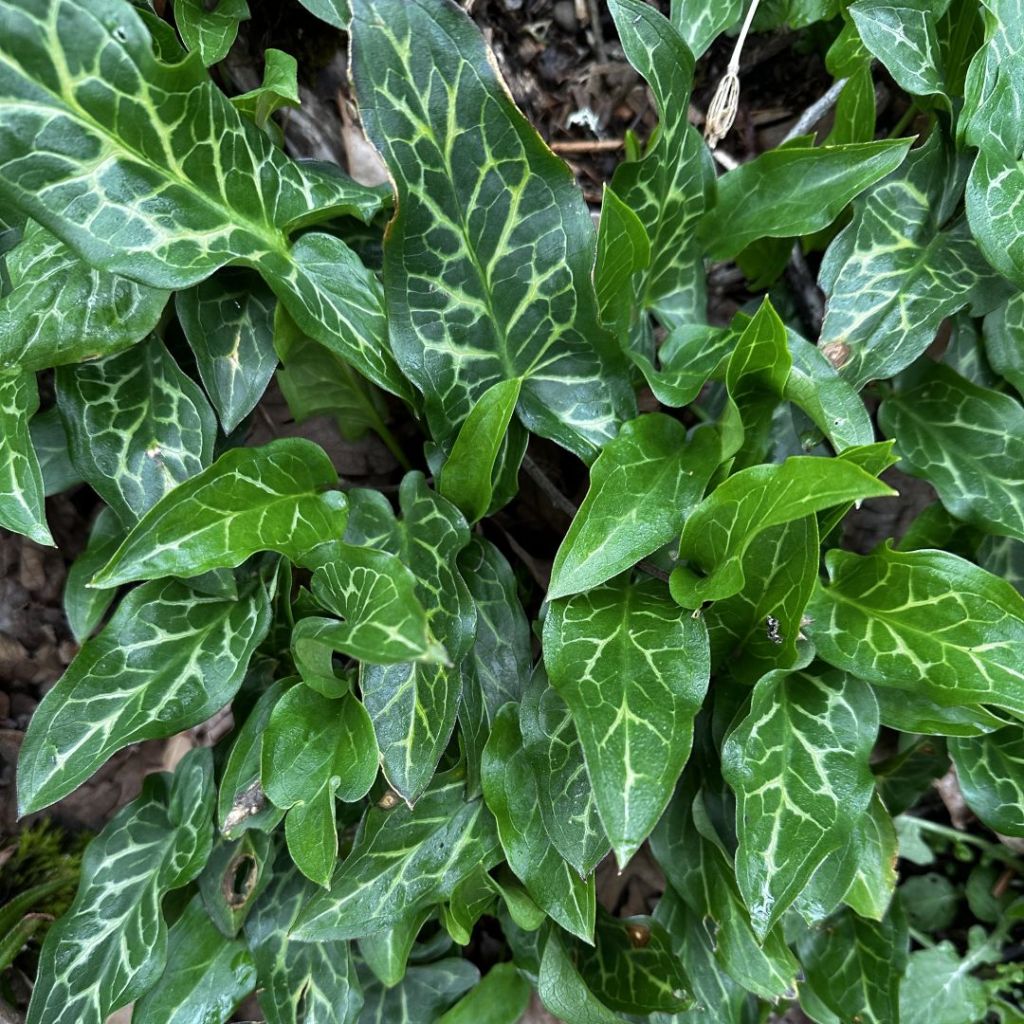
On the Bluff we had a proliferation of poison hemlock (Conium maculatum) and Italian arum (Arum italicum) in the first years following the clearing of Himalayan blackberry thickets. Poison hemlock seeds may remain viable for six years, but it also has another strategy: “Seeds are dispersed over a considerable time period, beginning in July and ending in late February. The extended period during which poison hemlock disperses its seed contributes to its long-term survival in a particular area.”

Italian arum seeds remain viable for over a year. Like poison hemlock Italian arum also relies on multiple strategies. This source explains: “More problematic for management than the species’ seeds are the copious subterranean bulblets produced by mature plants, which remain viable in the soil for many years.” Shining geranium (Geranium lucidum) seeds may remain viable for up to 2 years. Its other strategy is that it may germinate up to five generations in a single growing season.

Though the Rose City Golf Course helped clear the Bluff of Himalayan blackberries around 2001, no doubt a soil seed bank of invasives already existed and more seeds accumulated over the following years. As we have seen, invasive plants also have other strategies for survival. As with all restoration projects RCBR benefits from understanding these strategies and having the patience to counter them.

The highly successful invasive Italian arum

Pollinator Pathways

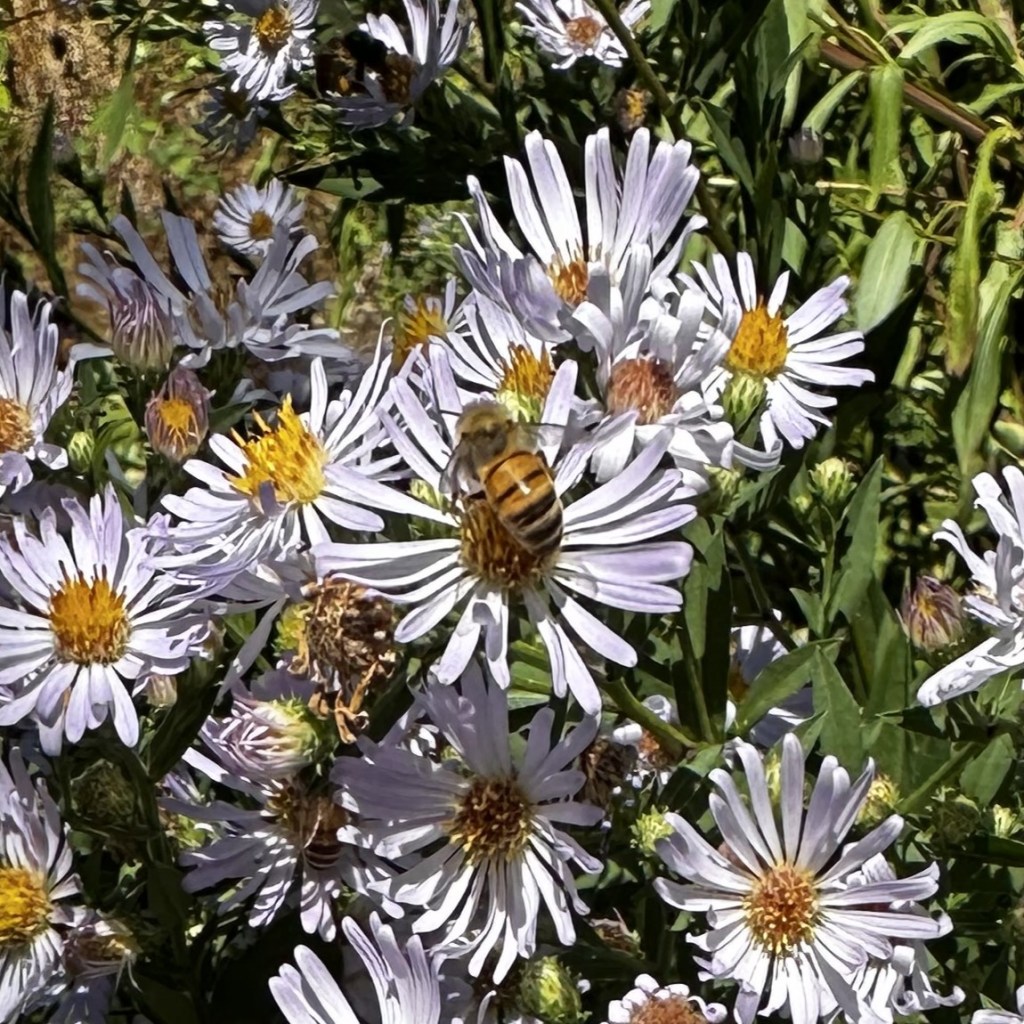
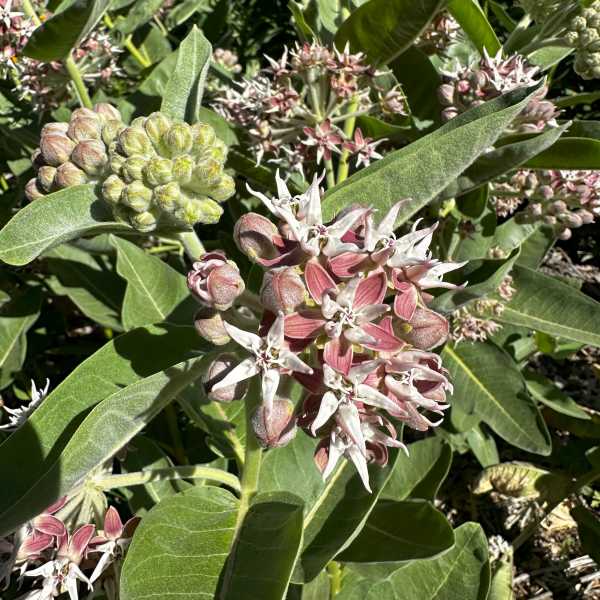
The Rose City Bluff Restoration Seed Project 2025 plant selection includes a variety of pollinator-friendly plants. The half-mile long Bluff is already somewhat of a natural pollinator pathway so the addition of more native flowering species will only help to make it more so.

Pollinator pathways aim to create a network of habitats that support pollinators like bees, butterflies, birds, and bats. These pathways are crucial because they help sustain biodiversity and support the health of ecosystems by facilitating pollination. Pathways are habitat corridors that connect fragmented habitats. These pathways provide pollinators with the resources they need: nectar-rich plants for food; wildflowers, trees, and shrubs for nesting and shelter; and patches of undisturbed habitat where pollinators can safely reproduce.

Creating these connected pathways helps ensure that pollinators can move between areas, find food, and reproduce. This reduces the risk of inbreeding and increases genetic diversity, which is important for species resilience. Pollinator pathways are part of larger efforts to restore and conserve ecosystems. By improving the connectivity between natural areas through the creation of these pathways, we can help reverse the negative impacts of fragmentation and help maintain biodiversity.

Caterpillars and Keystones

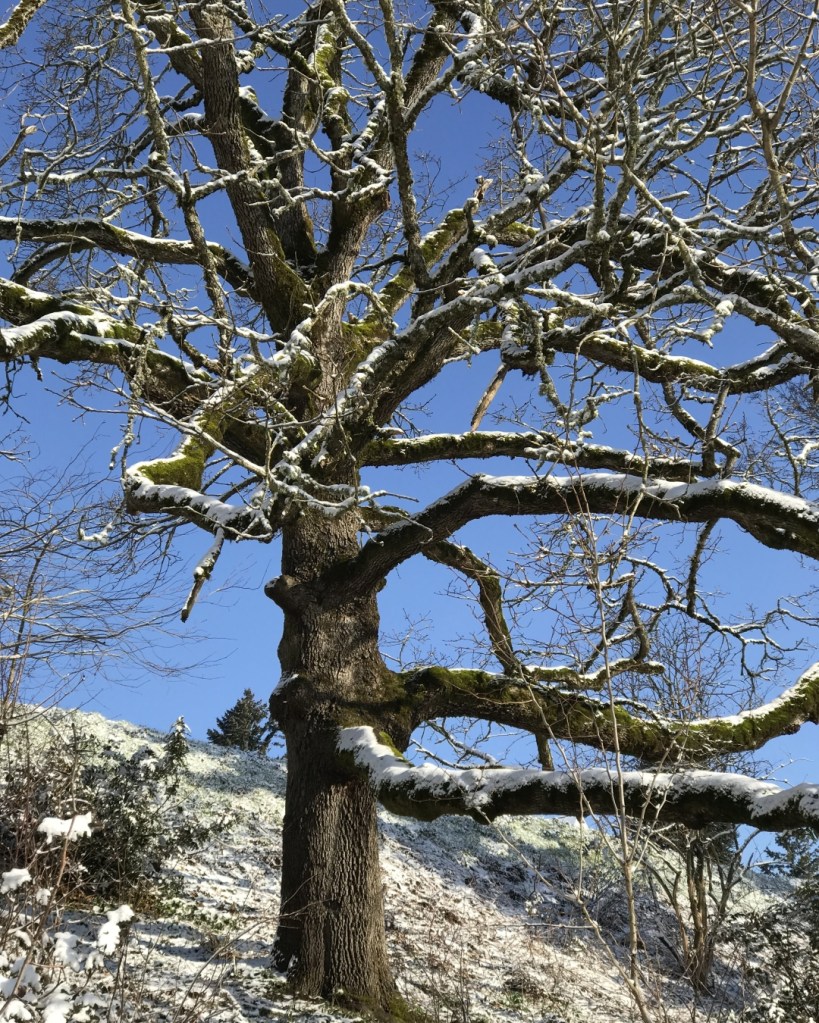
Rose City Bluff Restoration volunteers with our Seed Project are currently fostering at least two plants for our fall planting that have been identified by the National Wildlife Federation (1) as host species plants: the vine maple (Acer circinatum) and the western crabapple (Malus fusca). These species host or feed some 200 beneficial caterpillars and pollinators. One of the largest trees on the Bluff is our huge Oregon white oak (Quercus garryana) next to the 62nd Avenue stairs. The Oregon white oak is a commensal plant hosting as many as 400 beneficial insect species. The Bluff has over a dozen much smaller ones that we hope will be equally impressive someday.

Though Rose City Bluff Restoration would gladly tout the Bluff’s Oregon white oak and our Seed Project’s vine maple and crabapple as keystone plants, the term keystone species is controversial among biologists (2). A keystone species is one that has a disproportionately large effect on its natural environment relative to its abundance. Botanists identify plant species as keystones based on the number of insects such as caterpillars that they host or the number of native pollinator species the plant feeds. Almost sixty years after Washington zoologist and educator Bob Paine introduced the concept it is still a matter for debate among ecologists. Our massive Oregon white oak would likely qualify as a keystone in its natural environment, but it lives between a public park, a road, residential property, and a golf course. So, our oak has a different role to play on the Bluff. As beneficial as host species are, we especially enjoy our native plants for their beauty and educational value. They are simply great assets to our community.

Oregon White Oak, Rose City Bluff

(1) National Wildlife Federation. “Keystone Native Plants Marine West Coast Forests – Ecoregion 7.” https://www.nwf.org/-/media/Documents/PDFs/Garden-for-Wildlife/Keystone-Plants/NWF-GFW-keystone-plant-list-ecoregion-7-marine-west-coast-forest.ashx

(2) Ogden, Lesley. “Ecologists Struggle to Get a Grip on ‘Keystone Species’.” Quanta Magazine. April 24, 2024.https://www.quantamagazine.org/ecologists-struggle-to-get-a-grip-on-keystone-species-20240424

Bare Root Potting Party

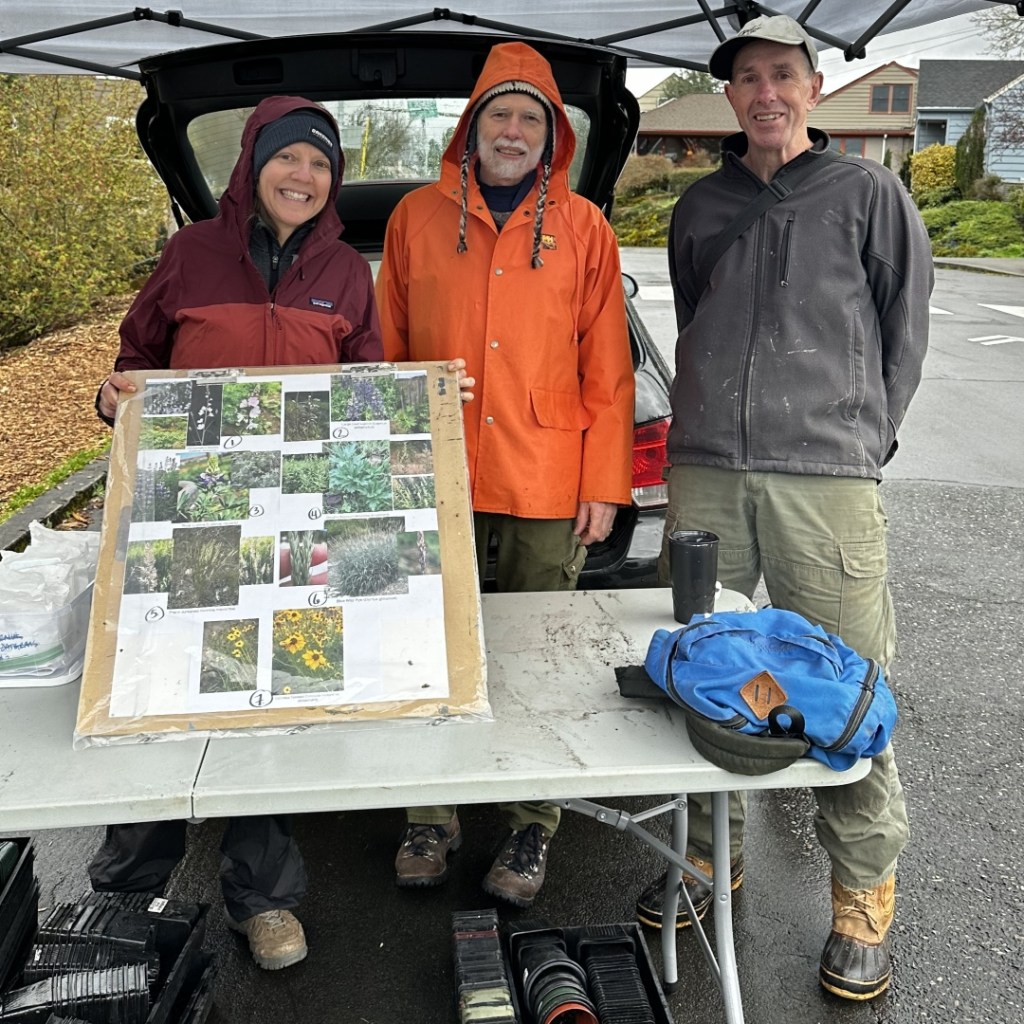
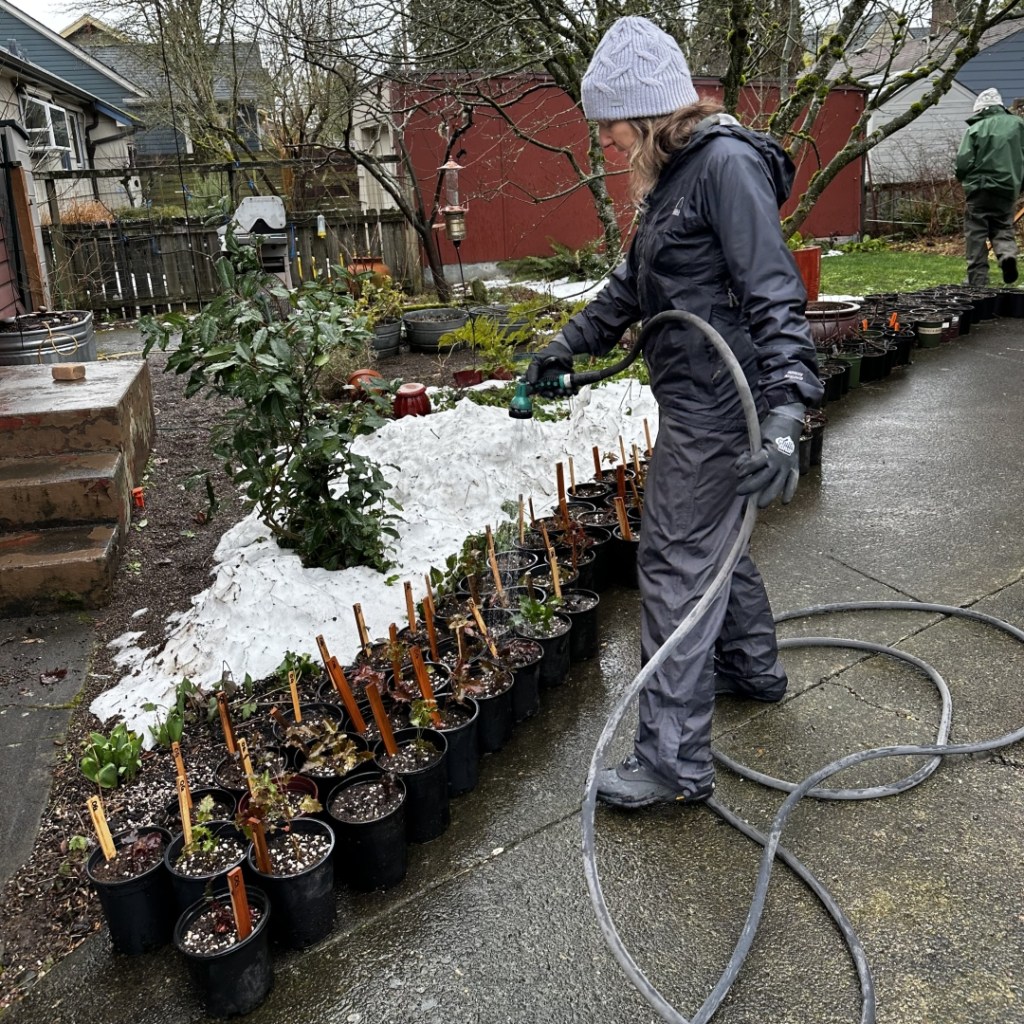
Rose City Bluff Restoration held its second annual potting party on February 16, 2025. Twenty-six volunteers potted over four hundred Northwest native plants that they will add to the Bluff next fall. Those same volunteers kindly took home a selection from the twenty species of plants and will care for them until the fall planting. These plants potted from bare roots are in addition to plants raised from seeds. Thanks to all our volunteers who participated on Sunday! We extend a special thanks to Reed and Marcelle for all their preparation. They spent weeks selecting and acquiring plants and supplies, then organized the complex process of bringing them all together with our volunteers.

We’re really excited about the plant selection as this will enhance the Bluff understory:

  • Baldhip Rose (Rosa gymnocarpa)
  • Blue Elderberry (Sambucus cerulea)
  • Narrow-leaved Buckbrush (Ceanothus cuneatus)
  • Cascara (Rhamnus purshiana)
  • Common Chokecherry (Prunus virginiana)
  • Mock Orange (Philadelphus lewisii)
  • Ocean Spray (Holodiscus discolor)
  • Oregon Grape (Mahonia aquifolium)
  • Oregon White Oak (Quercus garryana)
  • Osoberry (Oemleria cerasiformis)
  • Oval-leaved Viburnum (Viburnum elipticum)
  • Red Elderberry  (Sambucus racemosa)
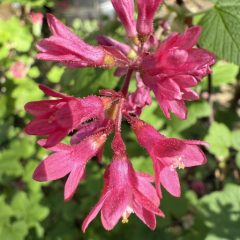
  • Red Flowering Currant (Ribes sanguineum)
  • Red Stem Ceanothus (Ceanothus sanguineus)
  • Salmonberry  (Rubus spectabilis)
  • Serviceberry (Amelanchier alnifolia)
  • Snowberry (Symphoricarpos alba)
  • Suksdorf’s Hawthorn  (Crataegus suksdorfii)
  • Vine Maple (Acer circinatum)
  • Western Crabapple (Malus fusca)
Bare Root Plant Potting 2025

Phenology

Plant phenology refers to the study of the timing of recurring biological events in plants, such as leafing, flowering, fruiting, and germination. Seasonal temperature and day length changes influence these events. Phenology is a crucial aspect of ecology because it affects various ecological interactions, including plant-pollinator relationships, species competition, and the synchronization of plant life cycles with those of herbivores. Phenological observations provide valuable insights into how plants respond to climate change. For example, earlier leafing and flowering times can indicate warming temperatures. By tracking phenological events, scientists can better understand and predict the impacts of climate change on ecosystems.

This is the time of year that our Rose City Bluff Restoration seed project volunteers are planning on what to add to the bluff, when to plant, and where plants will have the best chance to thrive. Additionally, these volunteers give much consideration to seed germination, a key factor in plant phenology. Our RCBR seed project leaders also ponder the question of environmental change. What plants might do well or not so well as the Pacific Northwest climate evolves? They are in effect engaged in the practical application of plant knowledge overlapping one of the goals of phenology, to understand how a changing environment impacts plants.

You can participate in phenology research by making phenological observations in the iNaturalist application. Your observations with phenology annotations can assist researchers who use phenology data to study climate change. You can observe plant phenology events specifically for the Bluff; RCBR maintains its own iNaturalist project. You can also make observations for plants in your yard. Since each observation has a location and date your annotation becomes phenology data for researchers.

If you would like more in-depth information on phenology, iNaturalist has a webinar which covers why phenology is so important, examples of phenology research using iNaturalist data, and how you can help by adding flower and leaf annotations.

iNaturalist Phenology Annotation: Flowers

Seed Project 2025

As we enter the new year, let’s resolve to grow more native plants for the Bluff! Many of you participated last Spring in sowing a variety of native seeds which resulted in over 800 plants added to the Bluff in November. To ready us for this year’s seed sowing, check out this informative podcast: https://joegardener.com/podcast/easiest-way-start-grow-native-flower-seeds-winter/

While it is based out of the east coast, the tips are relevant, including, native seeds:

  • are easier to work with vs domesticated/cultivated/vegetable seeds.
  • do not need to be sown under lights or in a greenhouse.
  • are overall less fussy in their soil requirements (do not require compost, manure, weeding to thrive).
  • can be sown in a small 4″ pot and transplanted to a larger pot when needed. Separating individual starts is discouraged as it disturbs root growth. If needed, divide in half or quarter sections.
  • once established, starts can benefit from a weak seaweed solution fertilizer.

Check out the podcast. We’re sure you’ll capture even more helpful suggestions.

We will have seeds and supplies again this Spring. If you are interested in growing native plants from seed this year, please contact Marcelle directly at marcelle1212@gmail.com.

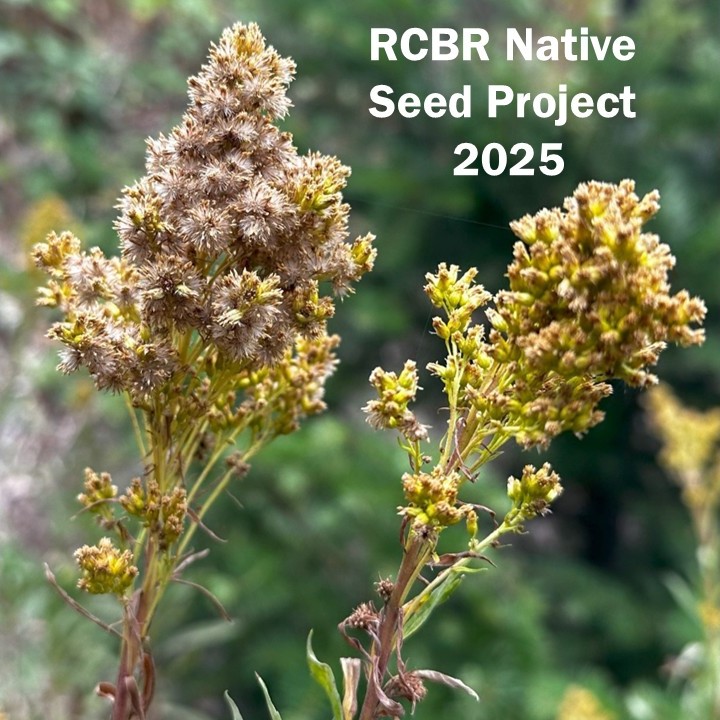
Rose City Bluff Restoration, Native Seed Project, 2025

2025 Resolution 

Make your New Year’s Resolution to get up close and personal with the beautiful bluff. Please consider joining the RCBR volunteers in 2025. Work off some holiday calories with other amazing folks. In 2024 our volunteers contributed 900-plus hours to the bluff restoration. Over seventy volunteers participated. On planting day, forty volunteers added eight hundred native plants to the bluff’s “natural” areas. Please join us in 2025 and fulfill your New Year’s Resolution.

Rose City Bluff Madrone 2024
Harefoot Mushroom

Please check out more bluff close-ups on Instagram.

Marcescence

Rose City Bluff has about ten small oak trees east of what we call the Overlook, at NE 66th Street. In December, when other trees have dropped or will soon drop their leaves, these oaks hang on to their leaves. The name for this phenomenon is marcescence. Oak leaf marcescence is senescence without abscission. Why this happens we don’t really know. Is it stubbornness? Defiance? Maybe reluctance, as suggested by Robert Frost’s poem, Reluctance, published in 1913:


Out through the fields and the woods
   And over the walls I have wended;
I have climbed the hills of view
   And looked at the world, and descended;
I have come by the highway home,
   And lo, it is ended.

The leaves are all dead on the ground,
   Save those that the oak is keeping
To ravel them one by one
   And let them go scraping and creeping
Out over the crusted snow,
   When others are sleeping.

And the dead leaves lie huddled and still,
   No longer blown hither and thither;
The last lone aster is gone;
   The flowers of the witch hazel wither;
The heart is still aching to seek,
   But the feet question ‘Whither?’

Ah, when to the heart of man
   Was it ever less than a treason
To go with the drift of things,
   To yield with a grace to reason,
And bow and accept the end
   Of a love or a season?

Oak Leaf Marcescence, Rose City Bluff, 12/24
Rose City Bluff, 12/24

The High Line

We recently had the pleasure of walking the High Line in New York City, once one of the most unnatural spaces imaginable. It was an abandoned elevated rail line 30 feet above street level. It is now a 1.4-mile-long linear park with natural landscaping. It’s not limited to native plants, but the plant selection was inspired by plants which grew on the disused track. The High Line is only 30–50 ft wide and 18–24 inches deep, but it features about 400 species of plants. It attracts millions of visitors annually and has inspired cities throughout the US to create public spaces from obsolete infrastructure. The High Line’s creation was community driven. A nonprofit organization called Friends of the High Line was formed in 1999 by Joshua David and Robert Hammond, who advocated its reuse as public open space. They completed the first phase in 2009.

Walking the High Line on a busy fall afternoon the dry and browning plants were captivating. One of the informative signs says High Line horticulturists prioritize plant form and structure: “Rather than selecting plants for their short-lived blooms in peak season, the full annual lifecycle of the plant is considered — including the beauty of their skeletal forms in winter.” We’re often struck by how great our bluff looks in winter, as well.

Trailing Blackberry

Rose City Bluff Restoration is lucky to have at least two areas with a healthy coverage of trailing blackberry (Rubus ursinus). We don’t know if it was seeded by birds, nor do we know if it appeared before or after 2001 when former Rose City Golf superintendent, Jim Heck, spearheaded a significant restoration of the bluff. Though we haven’t planted any trailing blackberry ourselves, we encourage it by managing the Armenian blackberry that wants to take over. Thankfully, we have the space for this native blackberry.

Rose City Bluff trailing blackberry (Rubus ursinus)
Rubus ursinus