Farm Kids Go Rogue

Several of our Rose City Bluff Restoration volunteers were fortunate enough to grow up on or near farmland. Two of our volunteers had the following surprisingly comparable stories to tell about participating in the farm community as kids. Farm kids grow up to be some of the hardest working restoration volunteers.

Wendell Berry had this to say about farm kids: “An important source of instruction and pleasure to a child growing up on a farm was participation in the family economy. Children learned about the adult world by participating in it in a small way, by doing a little work and making a little money — a much more effective, because pleasurable, and a much cheaper method than the present one of requiring the adult world to be learned in the abstract in school.” [Wendell Berry. “Sanitation and the Small Farm.” The Gift of Good Land: Further Essays on the Culture of Agriculture. Counterpoint Press. 1977.]

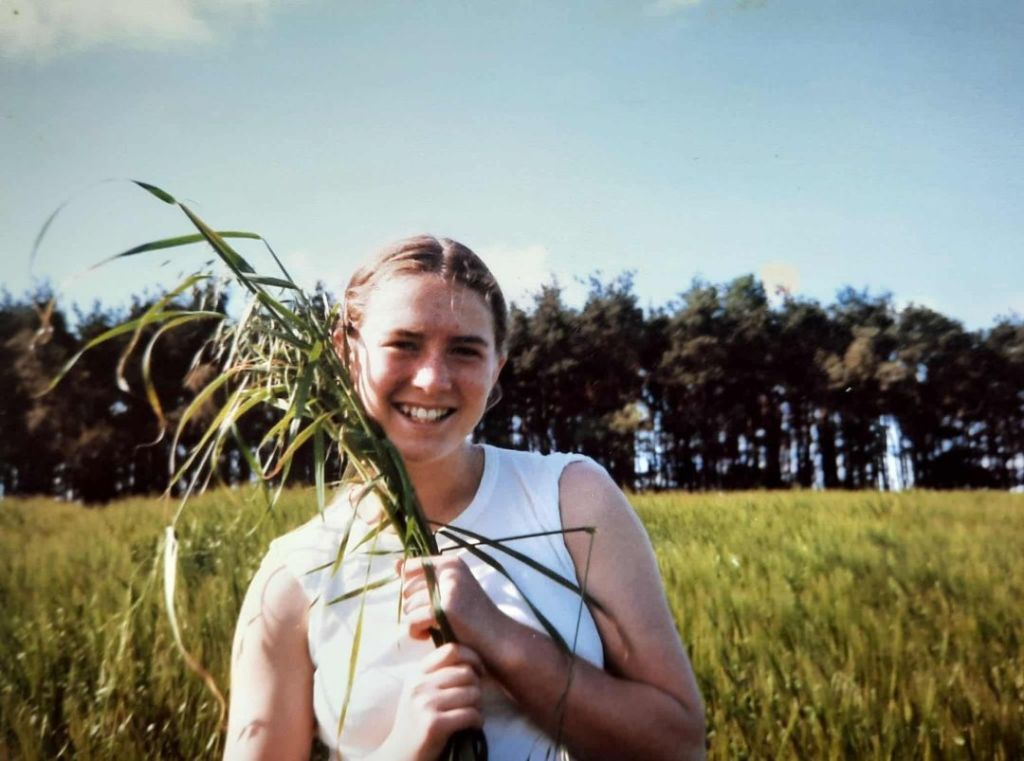
As told by an RCBR volunteer from their experience in the 1960s: A group of Gore Hill farmers in central Montana routinely had their winter wheat cleaned at their local grain elevator before the Fall planting season. In the summer of 1960, they discovered that rye, which grows taller than wheat, was showing up in their wheat fields. Upon further investigation, they learned that there was a hole between the granary’s wheat and rye bins. The only way to get top dollar for their crop was to walk the fields and pull the rye by hand.

Between 1961 to 1966, a farmer’s wife turned this unfortunate grain elevator mishap into a collaborative working opportunity for her four kids, the neighbor kids and friends from town. Every July the Rye Crew, ages 10 to 18, earned 50 cents an hour walking and pulling rye out of 1200 acres of wheat fields. The morning shift was 6:00 to 9:00 before it got hot and then they were back in the fields from 5:30 to dark. Each year the crew members returned, often bringing more of their friends, and eventually the fields had less and less rye. It was a win-win for the kids who loved getting paychecks and the farmer who received full price for his winter wheat.

As told by another RCBR volunteer from their experience in the early 1970s: I believe “roguing” is the general verb for what we’re talking about. [In agriculture, roguing is manually removing undesirable plants (rogues) from a crop field to ensure the quality and uniformity of the crop.] Seed crops are usually worth more than crops grown for other purposes (milling, malting, stock feed, etc.), but the purity must be good. Roguing out the wild oats from crops of wheat or barley was done to maintain the purity of the harvest, to give the possibility of selling it as seed.

Wild oats are a particular problem because they ripen among the intended crop, and the grain size is similar enough that they’re difficult to separate out mechanically. Fortunately, they stand a little higher than the wheat and barley, and catch the light a little differently, so they’re visible. Any available kids were corralled and given the job of walking the fields, about ten yards apart, scanning for and pulling out any wild oat plants before they could ripen. We’d each have a big plastic fertilizer bag strung over one shoulder with baler twine, and we’d stuff the wild oats into the sack as we waded through the grain crops. It was after doing that for a day that we could close our eyes and still see after-images of wild oats, swaying in the breeze.

I was doing this in the early 70’s, but I expect it’s an ongoing practice. Our gang of kids were aged 10-15, I’d guess. The farm was our employer. (The hourly rate was not good, but we did it.) The wild oats were probably introduced in contaminated seed. Once in the soil, the seeds can lay dormant for several years, so roguing a crop one year wouldn’t ensure a clean crop the next time.

Roguing Wild Oats

Strategies for Survival

We recently came across some new-to-us terminology for and concepts about plant strategies to ensure the continuation of their species. Dichogamy and herkogamy, for example, are key plant adaptations that prevent self-pollination (inbreeding) and promote outcrossing (outbreeding). Dichogamy is separation in time of male pollen dispersal and female pollen reception functions in a flower. Herkogamy is the spatial separation of male-female reproductive parts. Understanding these strategies helps us understand how native plants survive in restoration projects.

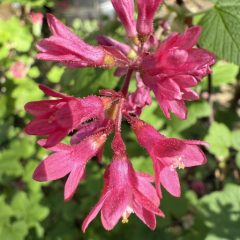
Several native Pacific Northwest plants exhibit dichogamy, including species of maple like vine maple (Acer circinatum) and bigleaf maple (Acer macrophyllum). The red-flowering currant (Ribes sanguineum) is protogynous, meaning the female reproductive parts are receptive to pollen before the male parts are ready to release pollen. Oregon grape (Mahonia aquifolium) flowers are often protogynous. Western columbine (Aquilegia formosa) also exhibits protandry.

Delving into how this becomes relevant to restoration on the Bluff, we quickly realized that we might be in over our heads. Certainly, we are curious about what increases or impedes the success of native plants we add to the Bluff. However, the science behind native plant propagation, restoration, and conservation is complex. Some of the terminology only applies to projects much larger than our own. Relatively small urban restoration projects like the Bluff, or even backyard habitats, isolate areas of native plants such that they respond differently than they would in much larger areas. So, rather than suggest this post is about Bluff restoration, we want to emphasize that we’re pulling from sources and concepts that apply to the broader field of native plant restoration.

Outcrossing, allogamy, and xenogamy are terms that describe how plants cross-pollinate. The advantage of outcrossing versus selfing is that over generations it introduces new unrelated genetic material to increase diversity and reduce harmful recessive traits. A small, isolated restoration site may include plants that exhibit dichogamy but have few opportunities to be exposed to pollen with different genetic material.

Inbreeding depression in native plants occurs when closely related individuals cross-pollinate, reducing genetic diversity, leading to lower survival due to the expression of harmful recessive traits, and affecting everything from germination to defense against enemies. It can be a critical factor in conservation biology for small, isolated populations.

Domestication in plants describes the selection of source plants with desirable traits that may make them easier to grow (like holding onto seeds) rather than traits needed for survival in nature (like dispersing seeds effectively). The ability to produce large amounts of source seed is good for large restoration projects but may lower genetic variability, potentially making the plants less able to adapt to a changing environment. Domestication transforms plants for human benefit, creating distinct varieties from wild ancestors, but it can negatively impact the long-term viability of plant populations.

Ecotypic variations are the genetic differences found in large geographic populations of a single species, adapting them to distinct environmental conditions. This variation in survival traits arises from natural selection acting on different environments, creating genetically distinct, locally adapted populations. Ecotypic variation is the evolutionary response to local conditions including climate, soil, or altitude. Ecotypic variations can impact restoration projects because locally adapted ecotypes may perform better under specific environmental conditions. Using non-local sources that are not adapted to the specific restoration site can reduce fitness and survival rates.

Rose City Bluff Restoration is currently in the process of sourcing plants for next fall’s planting. None of the above considerations specifically concern small restoration projects like ours. The factors that increase or impede our success rates are basic – adequate rainfall, foraging rabbits, competition from invasive species. Factors under our control are simply how well we prepare and protect our native plants. Beyond that we do strongly encourage our neighbors to help us create a wider restoration project by planting natives in their own yards.

Western Columbine (Aquilegia formosa)

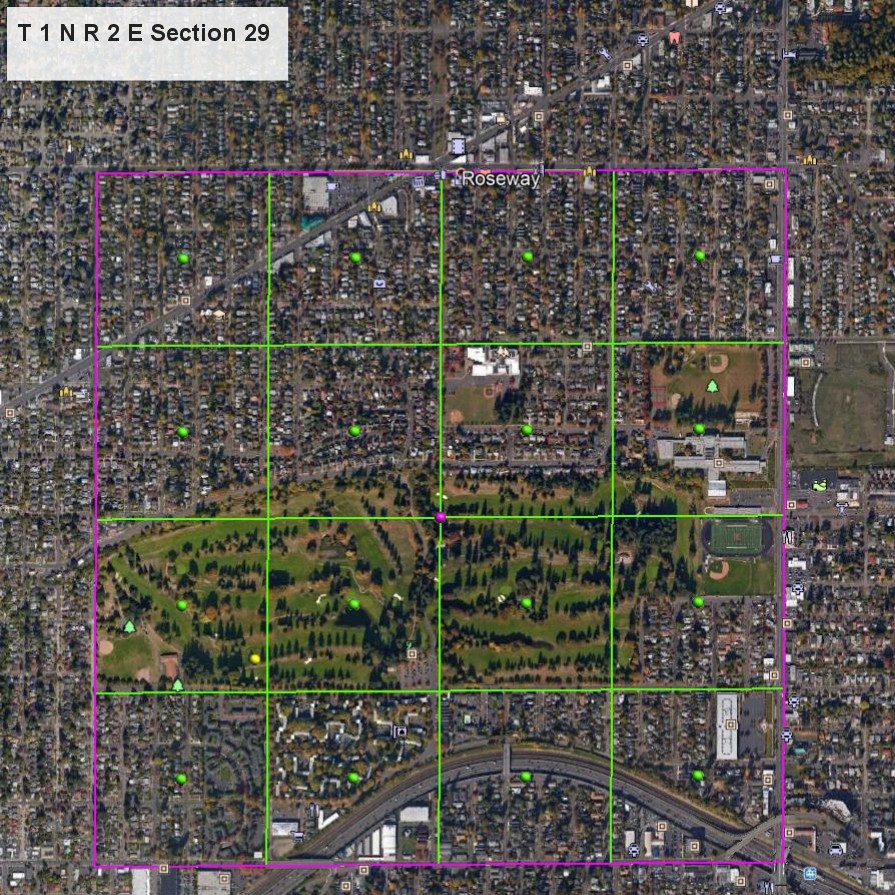
Section 29, T1N, R2E

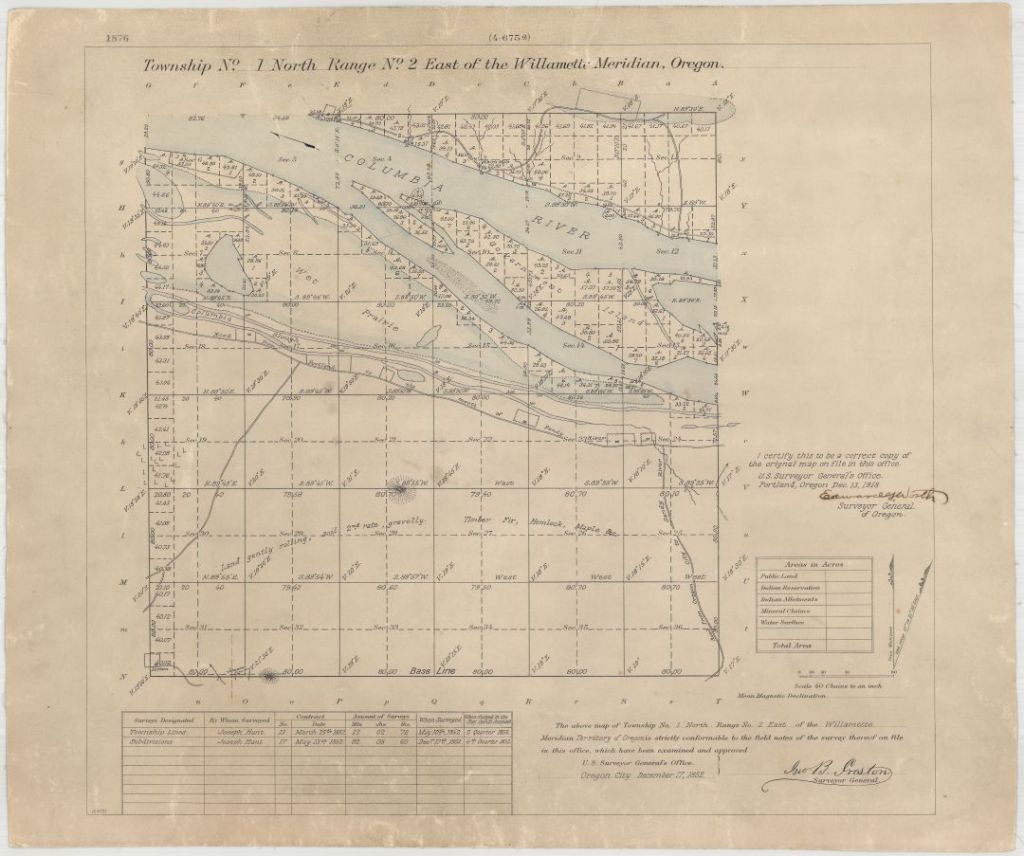
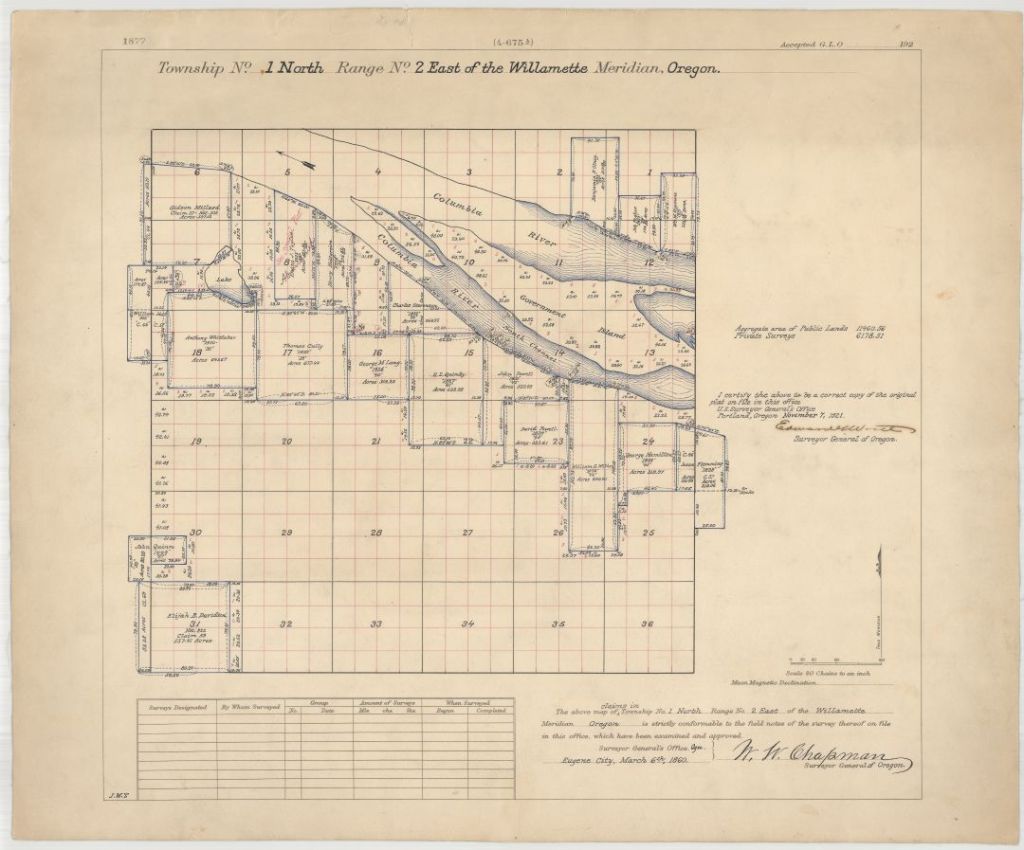
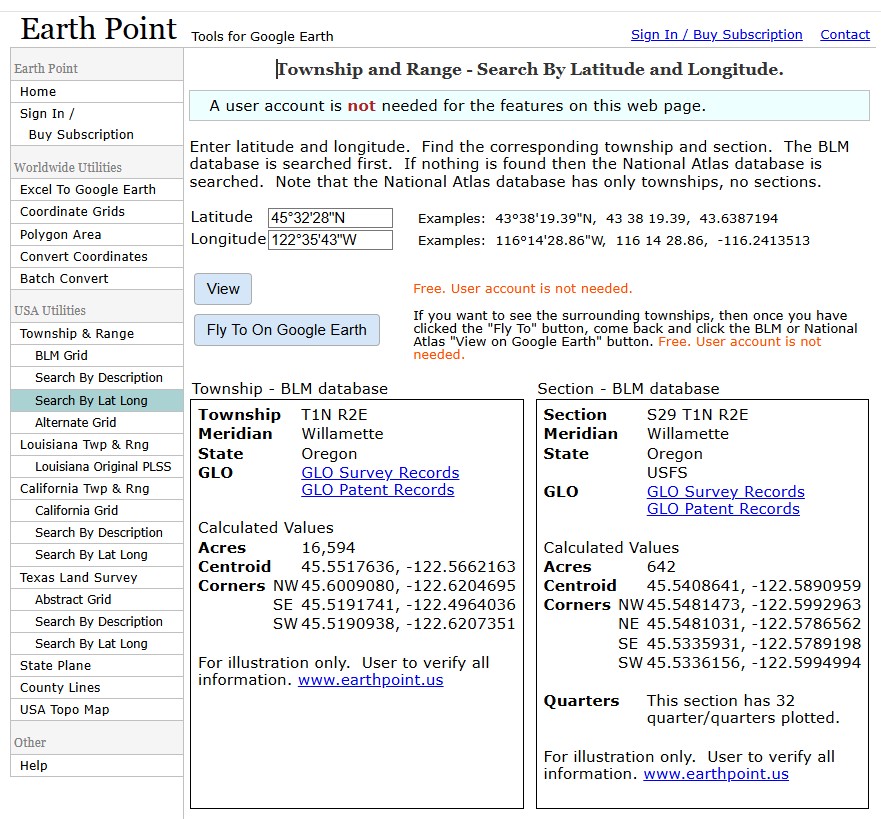
Though we covered this six years ago, we thought it might be worthwhile to revisit the topic. In 1855, what we now call the Rose City Bluff would have been just recently determined by survey to be in Section 29, Township 1 North, Range 2 East. The Section, Township, and Range (STR) system for surveying and documenting land ownership begins at a designated starting point from which a baseline runs east-west, and a meridian runs north-south. Townships are square, six by six miles, north or south of the baseline, and east or west of the meridian. They are divided into thirty-six sections, each of which is one mile square or 640 acres (more or less). We can determine the section, township, and range from latitude and longitude positions with this Earthpoint tool.

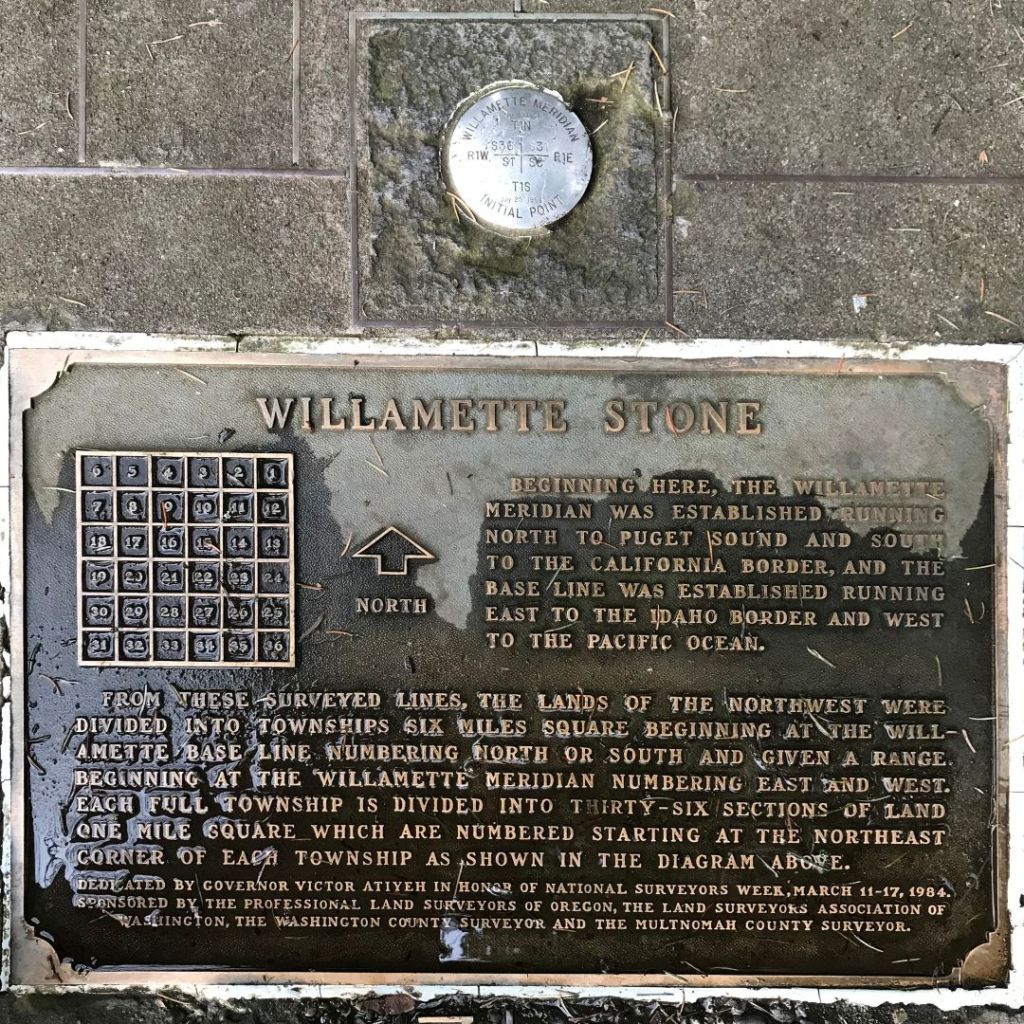
The designated starting point for the Oregon and Washington STR system may be found at the Willamette Stone State Heritage Site on Skyline Drive in West Portland. The original point was marked by a cedar stake placed by the Surveyor General of the Oregon Territory in 1851. The east-west baseline became Base Line Road, later renamed Stark Street. SE Division Street in Portland (formerly Section Line Road) follows the division between the first and second rows of the sections south of the baseline. NE Tillamook Street follows the first and second rows of sections north of the baseline.

The need for the STR system was precipitated by the Donation Land Act of 1850, offering 320 acres of free land to white male settlers (640 for married couples) who arrived by a deadline, lived on, and cultivated the land for four years. This significantly boosted migration but also displaced Native Americans.

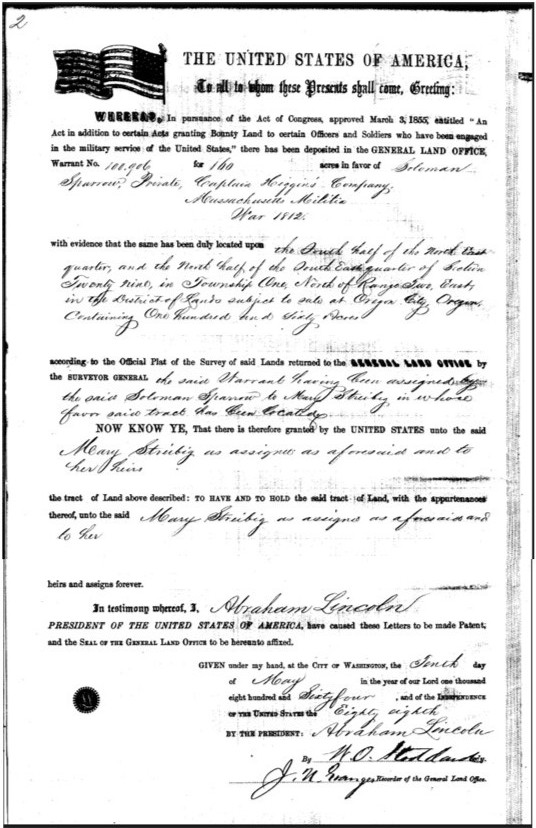
The Donation Land Act established a system whereby veterans of the Revolutionary War and the War of 1812, along with their heirs, were granted land by the U.S. government through Bounty Land Warrants to encourage enlistment and reward service, with the practice continuing until 1855. Veterans who received bounty land warrants but didn’t want to settle on the land sold these warrants or assigned their rights to land speculators or settlers, who then used the warrants to claim land in Oregon, effectively transferring ownership to actual settlers who fulfilled the residency requirement that they live on and cultivate the land. One such warrant granted 160 acres of Section 29, T1N, R2E to a veteran of the War of 1812, Soloman Sparrow, who assigned it to Mary Streibig (b. 1832, d. 1897). This land now includes the back nine of the golf course, Glenhaven Park, and McDaniel High. A plat map of the T1N, R2E township from 1929 describes this land as “. . .2nd rate, gravelly. . .”

The land occupied by the Rose City Golf Course was acquired under two separate acquisitions. The first one pertained to land west of NE 72nd Ave. between NE Sacramento St. and NE Tillamook St. and is described in the deed to the City of Portland as the N 1/2 of the SW 1/4 of Section 29, T1N, R2E, lying south of the center line of NE Sacramento St, formerly Hillcrest Drive.

Under the Donation Land Act, over 7,000 settlers acquired more than 2.5 million acres of land, especially in the Willamette Valley. Wives could hold their half of the land in their own name. The act excluded non-whites and treated tribal lands as vacant, accelerating the dispossession of Native peoples. Oregon history continued to be fraught with racial equality issues for at least the next 150 years.

Please check out a few more photos for this post at our website.

Township No. 1 North, Range No. 2 East of the Willamette Meridian, Oregon
Section 29, Township 1 North, Range 2 East
Willamette Stone
Earthpoint Latitude/Longitude to Township/Section
Bounty Land Warrant Assigned to Mary Streibig, 1855

Holdover Species

“Holdover species” is an informal descriptive term with slightly different meanings in evolutionary biology or conservation to describe organisms that survive extinctions or persist after habitat degradation. Holdover species is not a formal biological term but generally refers to animals or plants that survived an era during which many other species did not, such as woolly mammoths surviving an Ice Age in isolated spots. In the era of the Columbian Exchange, the massive transfer of plants and animals between the Americas (New World) and Afro-Eurasia (Old World), holdover species may refer to species that survive aggressive invaders that outcompete native plants. Other related terms for areas with holdover species include remnant natural area and refugium. In conservation and restoration work, a holdover native species may persist at low abundance through disturbance or invasion, maintaining the capacity to re-expand once suppressive pressures are removed.

Though the current Rose City Bluff time frame is short (twenty-five years since the first restoration), we are co-opting the term holdover species to describe our experience with Berberis aquifolium (Oregon grape). Starting in 2018, as Rose City Bluff Restoration volunteers began to clear the Bluff of Himalayan blackberry, they repeatedly found surviving Oregon grape shrubs under blackberry thickets. In 2001–2002, the golf course maintenance supervisor, Jim Heck, initiated a project to remove blackberry from the Bluff and replace it with native plants, including Oregon grape. Unfortunately, the necessary maintenance was not done and the blackberry came back. Seventeen years later the impetus for the first RCBR work party was to clear blackberry thickets from around the remnants of Jim Heck’s project. Over the next few years volunteers found Holodiscus discolor (ocean spray), Ribes sanguineum (red flowering currant), Symphoricarpos (snowberry), and other native plants surviving amongst the blackberry. The most common holdover species, though, was Berberis aquifolium, the Oregon grape.

That Oregon grape would be the Bluff’s most successful holdover species (other than the fact that Heck may have planted more of them) is not hard to understand because it is built for long-term survival under stress rather than rapid competition. Certain traits explain their continued presence in blackberry thickets. Oregon grape evolved as a forest understory shrub. Its thick, leathery evergreen leaves photosynthesize efficiently at low light levels, so it tolerates shade. A little filtered light under a blackberry thicket is enough to keep it alive though not thriving. Tough evergreen leaves resist abrasion from canes and drought stress created by blackberry’s shallow but aggressive roots. Oregon grape spreads slowly via woody rhizomes. Above ground stems may be suppressed or shaded for years, but the underground system can stay alive. Once light returns, it responds quickly. Blackberry dominates by exploiting disturbed, nutrient rich soils. Oregon grape, by contrast, tolerates poor, compacted, and dry soils, letting it survive where competition is intense but resources are scarce. Oregon grape is a high value holdover species. If blackberry is removed carefully, these suppressed plants can rebound and help anchor the native shrub layer. If the blackberry canopy is removed, Oregon grape can send out new shoots, flower within one to two seasons, and expand into newly opened space.

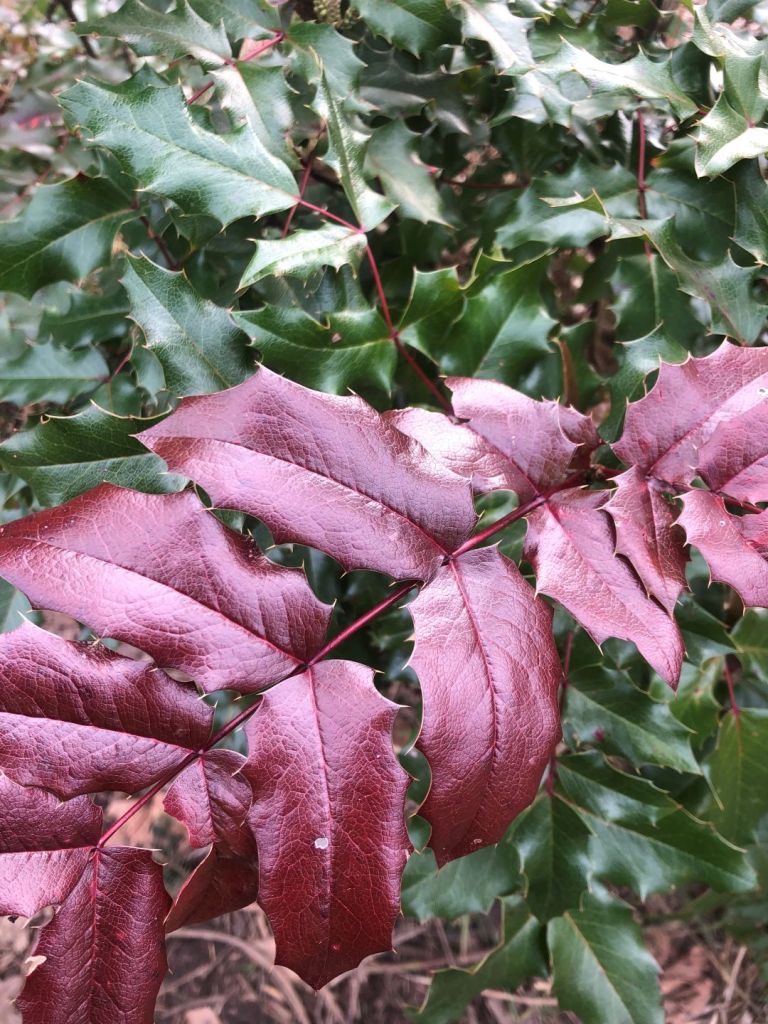
Berberis aquifolium (photo by Greg Shepherd)

Knotweed vs. Blackberry

Although the City of Portland does not include Japanese knotweed (Reynoutria japonica) on its Required Eradication List, Portland is nevertheless concerned about its spread because it is so extraordinarily difficult to eradicate. Knotweed is spread primarily by fragments, especially of roots and stem nodes. Frequent cutting helps but requires that every fragment be removed and disposed of. Digging is not recommended since it can regrow from small fragments. Under the right circumstances, licensed professionals may apply glyphosate-based herbicides, but this is not an option for our volunteers. A Rose City Bluff Restoration volunteer has been tackling our single patch of knotweed without using chemicals for seven years.

Knotweed is native to Japan and other parts of Asia where it is not a nuisance because it has natural predators and grows in a highly competitive ecosystem. A range of native soil fungi and plant diseases attack various parts of the knotweed plant, suppressing its spread. Grass like bamboo limits knotweed’s ability to form dense monocultures seen elsewhere. Over 186 species of insects feed on knotweed.

For example, the sap-sucking insect, Aphalara itadori (Japanese knotweed psyllid), feeds only on knotweed and damages the leaves and stems. This highly specific insect co-evolved with knotweed, making it a promising, long-term solution to reduce the invasive plant’s dominance. Aphalara itadori has been deliberately released in the UK and North America (including Oregon and Washington) as a biological control agent to manage knotweed without harming native flora.

When RCBR began working on the Bluff, the Himalayan blackberry (Rubus armeniacus) was so widespread that the patch of knotweed was not everyone’s first concern. Perhaps it should have been. Blackberry spreads fast, but knotweed spreads even faster (especially along waterways). Blackberry is hard to eradicate, but doable. Knotweed is extremely difficult to eradicate. In some localities there can be financial and legal risks for failing to manage Japanese knotweed. In the UK, British Columbia, and parts of the US (MA, OH, MI, MN) there can be risks concerning property devaluation, mortgage issues, costly eradication, and legal liability for spread to neighbors, with the UK having strict disclosure laws and fines for misrepresentation. Many areas of the US have general “duty to disclose defects” laws, meaning you could still be liable if you hide a known problem that affects the property’s value, even without specific knotweed laws.

Since herbicide is not an option for RCBR, careful repeated cutting is the only option for the Bluff. It is possible to eradicate knotweed without chemicals, but it is a long, labor-intensive process requiring extreme persistence, focusing on repeatedly cutting stems to starve the roots or covering large areas to block sunlight. Thankfully, Neil accepted the job of eradicating our patch of knotweed. Seven years later, the knotweed persists, but each spring less of it comes back.

We will leave you with these thoughts: Blackberry is a nuisance, but knotweed is a nightmare. Blackberry is aggressive, but knotweed is relentless. Blackberry is hard to remove, but knotweed is almost impossible. Blackberry takes over land, but knotweed takes over everything.

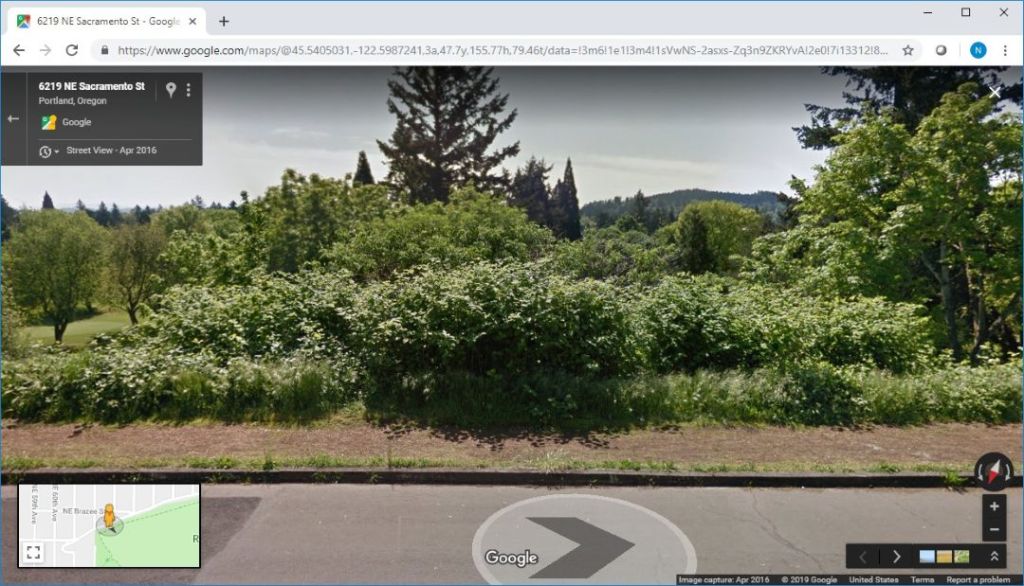
Google Street View with Japanese Knotweed, Rose City Bluff, 2016

Pendant Bars

We have a couple of images of pendant bars to share. Not being geologists ourselves, we don’t want to get too deep into the topic, but we hope you will be motivated to check out the geology of the Bluff and Rocky Butte. The Rose City Bluff ground is full of river rock as we would expect given the Bluff’s origin. The Bluff is a pendant bar formed by ice age deposits from Missoula floods that flowed around Rocky Butte.

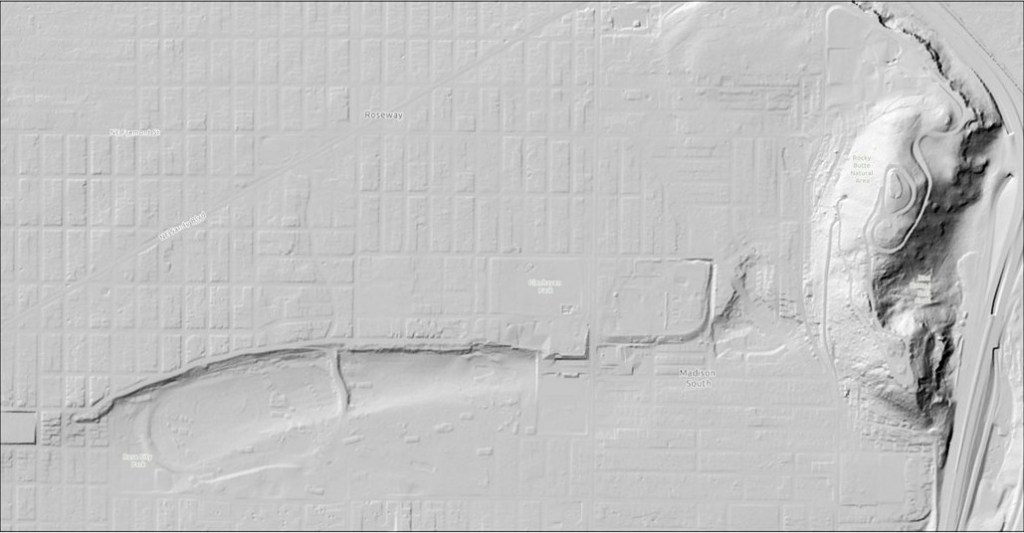
Pendant bars are large geological landforms often created by catastrophic glacial lake outburst floods. The bars are essentially elongated mounds of flood debris that form in the downstream side of obstructions, like Rocky Butte, as floodwater sweeps past. Here’s a LIDAR image of Rocky Butte and the Alameda Ridge.

Rocky Butte and the Alameda Ridge

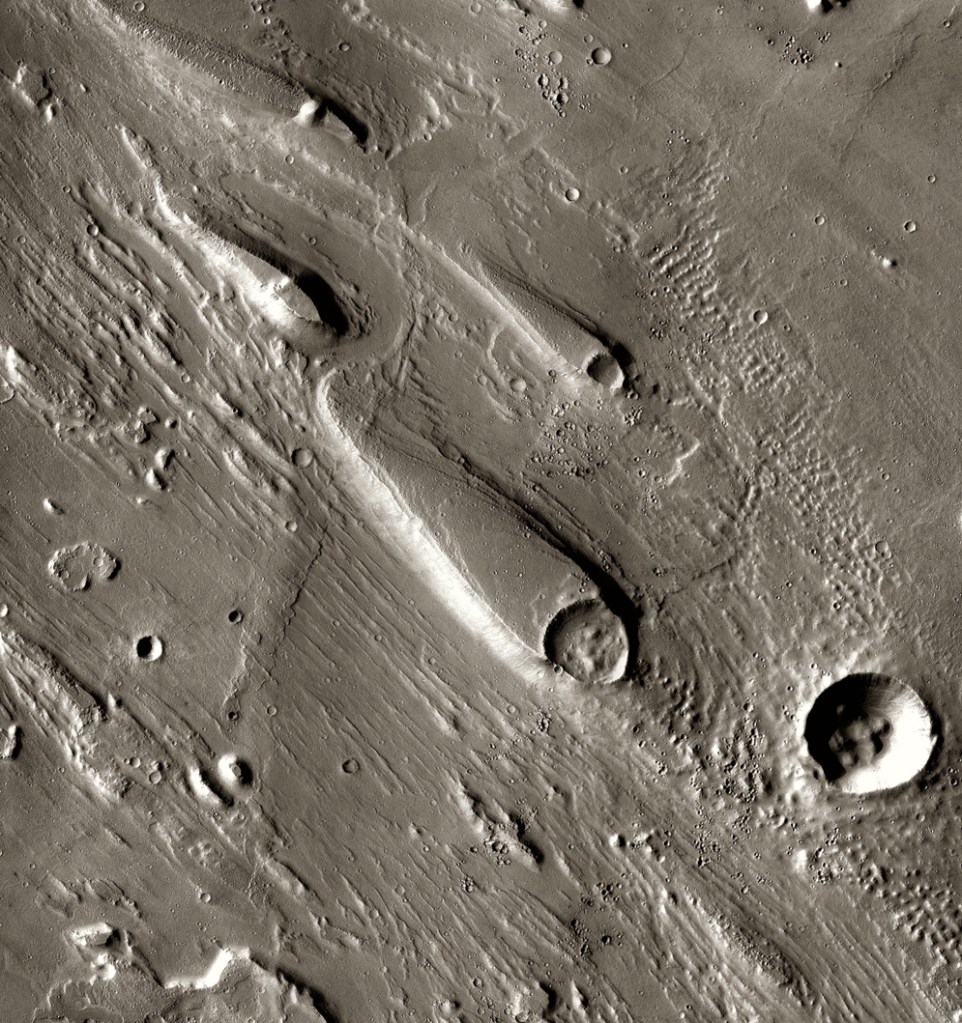
These landforms are not limited to Earth. Similar pendant bars and other flood-related structures have been observed in a large outflow system on Mars, providing evidence for ancient, large-scale flooding on the planet.

Pendant Bars on Mars

“In Ares Vallis, teardrop mesas extend like pennants behind impact craters, where the raised rocky rims diverted the floods and protected the ground from erosion. Scientists estimate the floods had peak volumes many times the flow of today’s Mississippi River.

This image was taken by the Thermal Emission Imaging System instrument on NASA’s Mars Odyssey orbiter and posted in a special December 2010 set marking the occasion of Odyssey becoming the longest-working Mars spacecraft in history.” (NASA)

Guerrilla Gardening

Rose City Bluff Restoration started in 2018 as a group of guerrilla gardeners who hoped to rescue a neglected area where native plants were threatened by Himalayan blackberries. In 2019, we took a step forward by reaching out to the landowners and forming partnerships that allowed us to work together. This transition, familiar to many grassroots organizations, has helped us deepen our impact and strengthen our ties within the community.

Once a group like RCBR is working with the permission of the land owners it is no longer guerrilla. Still, we find the whole decentralized practice of guerrilla gardening and the issues surrounding it to be of interest. Legality and property ownership, maintenance and sustainability, ecological considerations, and community relations – these issues carry over from our first years to inform our work today, actively changing how we work, prompting practices to ensure the issues are addressed. We applaud guerrilla gardeners and their ethos. Their guiding principle is still applicable to RCBR today – take neglected land and make it grow.

Guerrilla gardening uses or improves land without permission. This can conflict with property rights, municipal regulations, and zoning or land-use. The practice often occurs in vacant, blighted, or abandoned spaces, neglected public land, or areas with no active use or caretaking. Guerrilla gardeners argue that unused land is a wasted resource, and communities have a moral right to improve their environment.

Guerrilla gardening sits in a gray zone between civil disobedience, community care, and environmental stewardship. Its ethics depend heavily on intent, impact, and context. Ethical guerrilla gardening typically involves community-benefiting motives, such as beautification, food production, pollinator support, or environmental restoration. Good intentions do not guarantee good outcomes, but they influence ethical evaluation.

Poorly planned guerrilla gardening can do ecological harm. Ethical guerrilla gardening means choosing native or non-invasive species, supporting pollinators and local biodiversity, avoiding monocultures, not introducing pests or diseases, avoiding harm to urban wildlife habitats.

Guerrilla gardening should uplift communities, not impose an aesthetic or ideology on them. Ethical practice involves understanding who uses the space, respecting local cultural and aesthetic norms, asking neighbors (even informally) what they want, avoiding gentrification effects, recognizing that “beautification” can mean different things to different people.

Ethical guerrilla gardeners take responsibility for ongoing maintenance. Otherwise, plants die, succumb to weeds, or create hazards, and neighbors or city crews inherit the burden. If you plant it, you should maintain it (or ensure someone will).

Guerrilla gardening is a moral response to systemic neglect. The goal is stewardship, not control. Ethical guerrilla gardening invites community participation. In summary, ethical guerrilla gardening balances care for land and community with respect for ecology and the local social context. It is ethically strongest when driven by stewardship, inclusivity, and long-term commitment.

Before planting, guerrilla gardeners should ask:

  1. Does this help the community or environment?
  2. Does it harm anyone?
  3. Is this the right plant for the place?
  4. Will we maintain it long-term?
  5. Do neighbors or users of the space support it?
  6. Is this safe and mindful of public use?
  7. Is the action proportional to the problem?

If guerrilla gardening appeals to you, come join us on any Sunday morning. We take care of all the bureaucratic issues. Help us make the once neglected Bluff grow with native plants.

In this moment Rose City Bluff Restoration volunteers were guerrilla gardeners no longer.
SOLVE Earth Day event, 5/20/2019. Photo by Joe Saraceno.

Some of this post originated with ChatGPT.

Terminology

I have been rereading Roy Bedichek’s Adventures with a Texas Naturalist, a Texas classic published in 1947. Bedichek’s book has a mid-century optimism lacking in the sense of eco-urgency we expect of naturalist writers today. In the first two chapters about fences, Bedichek, while lamenting the loss of prairie habitat due to farming and grazing, was quite upbeat about the preservation of native species on highway and railroad rights-of-way. He extolled the benefits of native habitats along the continuous and interconnected highways, protected from grazing and plowing by the fencing that was meant to protect cars from livestock or livestock from trains. However, it struck me that he said little about the possibility that highways could become major pathways for the spread of invasive species.

When did naturalist writers begin writing about invasive biology? Henry David Thoreau does not mention the concept of invasive plants in Walden (1854). The term did not exist in his time. However, he did write extensively in journals and books, including Walden, about the local flora of Concord, Massachusetts. His detailed observations serve as a crucial historical baseline for modern scientific research. John Burroughs (1837-1921) authored essays about species that were non-native to specific areas, though he did not use the modern term “invasive species.” While John Muir (1838-1914) did not use the term as it is understood today, his writings did discuss a similar concept: the destructive impact of non-native livestock, particularly sheep and cattle. In A Sand County Almanac (1949), Aldo Leopold mentioned invasive plants, particularly cheat grass (Bromus tectorum). He discussed the negative impacts of non-native species on native ecosystems and the role of human activity in their spread. Edward Abbey mentioned invasive plants in Desert Solitaire: A Season in the Wilderness (1968). He specifically referred to the non-native Russian thistle (Salsola), commonly known as tumbleweed, as an “invasive pokey” plant that clogs paths in the desert environment. Annie Dillard mentioned the invasive European starling in her book, Pilgrim at Tinker Creek (1974). She described how the bird was introduced to the United States by people seeking to bring all birds mentioned in Shakespeare’s plays to North America.

The specific phrase “invasive species” first appeared in the September 1891 issue of The Indian Forester, a 150-year-old journal on scientific forestry and allied disciplines. The phrase was used by British forest administrator R.S. Troup in his book, Silvicultural Systems (1928), where he mentioned “Various invasive tropical species [of tree] which habitually spring up in quantity on recent clearings.” However, “invasive species” was not widely used, including by our naturalist writers, until Charles S. Elton wrote The Ecology of Invasions by Animals and Plants (1958). Elton’s book is considered a foundational text for the study of how invasive species affect ecosystems. While Elton popularized the modern concept of invasion ecology, the exact two-word phrase, “invasive species,” was first used in the forestry journal.

Coda: We have come a long way since 1958 in our understanding of invasive species. This from Wikipedia will bring you up to date on the current terminology. The preferred terms in current use include:

Native. A species that naturally occurs in a specific geographic region.

Nonnative. A species that does not naturally occur in a specific region but has been introduced.

Introduced. A species that has been brought to a new area, often by humans.

Established. An introduced species that can reproduce and sustain a population on its own without human support.

Invasive. A nonnative species that spreads aggressively and causes harm to the environment, economy, or human health.

Nuisance. An individual or a group of individuals of a species that causes problems, even if they are native. For example, a native species can become a nuisance if it grows in an undesirable location.

(Note: I stole much of the above from Google and Wikipedia, who stole it from others.)

Western Sword Fern, Native in the Western U.S.

Fall Planting 2025

Congratulations to all the Rose City Bluff Restoration volunteers who came out for our second planting day! This amazing team and the planting day one team added over a thousand native plants to the Bluff. We also want to express our immense appreciation for the growers who took care of young plants all spring and summer. A big thank you to all seventy growers and planting day volunteers! And finally, let’s have a round of applause for our planting day team leads and our amazing planners, Reed and Marcelle. Splendid work everyone!

Here is a list of the plants added to the Bluff:

Baldhip Rose (Rosa gymnocarpa)
Blue Wild Rye (Elymus glaucus)
Broad-leaved Penstemon (Penstemon ovatus)
California Oatgrass (Danthonia californica)
Cascara (Frangula purshiana)
Checkermallow, Meadow (Sidalcea campestris)
Columbia Tickseed (Coreopsis tinctoria)
Common Chokecherry (Prunus virginiana)
Common Yarrow (Achillea millefolium)
Douglas Sagewort (Artemisia douglasiana)
Elderberry (Sambucus cerulea)
Elderberry (Sambucus racemosa)
Fireweed (Chamerion angustifolium)
Fringecup (Tellima grandiflora)
Goatsbeard (Aruncus dioicus)
Large Leaf Avens (Geum macrophyllum)
Large Leaf Lupine (Lupinus polyphyllus)
Low Oregon Grape (Mahonia nervosa)
Mock Orange (Philadelphus lewisii)
Narrowleaf Milkweed (Asclepias fascicularis)
Narrow-leaved Buckbrush (Ceanothus cuneatus)
Oceanspray (Holodiscus discolor)
Oregon Grape (Mahonia aquifolium)
Osoberry (Oemleria cerasiformis)
Oval-leaved Viburnum (Viburnum ellipticum)
Pacific Dogwood (Cornus nuttallii)
Piggyback Plant (Tolmiea menziesii)
Prairie Junegrass (Koeleria macrantha)
Red Flowering Currant (Ribes sanguineum)
Red Stem Ceanothus (Ceanothus sanguineus)
River Lupine (Lupinus rivularis)
Romer’s Fescue (Festuca roemeri)
Salmonberry (Rubus spectabilis)
Shade Phacelia (Phacelia nemoralis)
Showy Milkweed (Asclepias speciosa)
Snowberry (Symphoricarpos alba)
Suksdorf’s Hawthorn (Crataegus gaylussacia)
Vine Maple (Acer circinatum)
Western Columbine (Aquilegia formosa)
Western Crabapple (Malus fusca)
Western Goldenrod (Solidago canadensis)

Southern Exposure

This is another in our series of posts about using technology to improve climate resilience. Each year around this time, one of the Bluff’s large snowberry bushes dries out, loses its leaves, and appears almost dead. Other shaded snowberry bushes remain green and healthy looking. The native snowberry (Symphoricarpos albus) grows well in sun or shade, wet or dry conditions. However, the southern facing Bluff slope, especially areas in full sun, can be difficult for plants during dry spells. When considering native plants to add to the Bluff we are increasingly aware of the potential for climate change to make things ever more challenging. Large, mature trees shade much of the Bluff, and in those areas, we expect native plants to do well. Where we must be especially careful what we plant is in our sunny southern-exposed areas.

We see our southern-exposed snowberry bush as a metaphor for climate challenged communities. In 2021, a heat dome occurred over Portland, resulting in multiple fatalities and drawing attention to the vulnerability of specific population groups. Despite the heat dome being an anomaly, Portland faced another severe heat wave in August 2023 with temperatures over 100°F, leading to multiple heat-related fatalities.

Urban heat distribution is uneven. On July 22, 2023, 125 volunteers mapped differences in temperature throughout the Portland Metro region. The area counties partnered with a Portland company, CAPA Strategies, in a groundbreaking heat mapping project that measured the unequal distribution of heat in our communities. Using special equipment, volunteers collected more than 269,000 temperature readings in neighborhoods across the area. The Portland metro project covered over four hundred square miles. Lents, Mall 205, and industrial areas near Portland International Airport were among the hottest areas. These areas have fewer trees, more roads, rooftops, parking lots, and sprawling development. The coolest areas are parks and rural forested areas.

The heat mapping technology that CAPA Strategies developed now supports communities in addressing climate change across the United States and internationally. CAPA’s team of researchers, planners, and data scientists helps cities assess hazards and identify adaptation strategies for the future. Developed in Portland, CAPA’s Heat Watch technology helps communities map and mitigate urban heat islands.

Rose City Bluff Restoration volunteers encourage you to support efforts to improve climate resilience in all our area communities.

Southern-Exposed Snowberry Bush, Rose City Bluff