ENSO Neutral

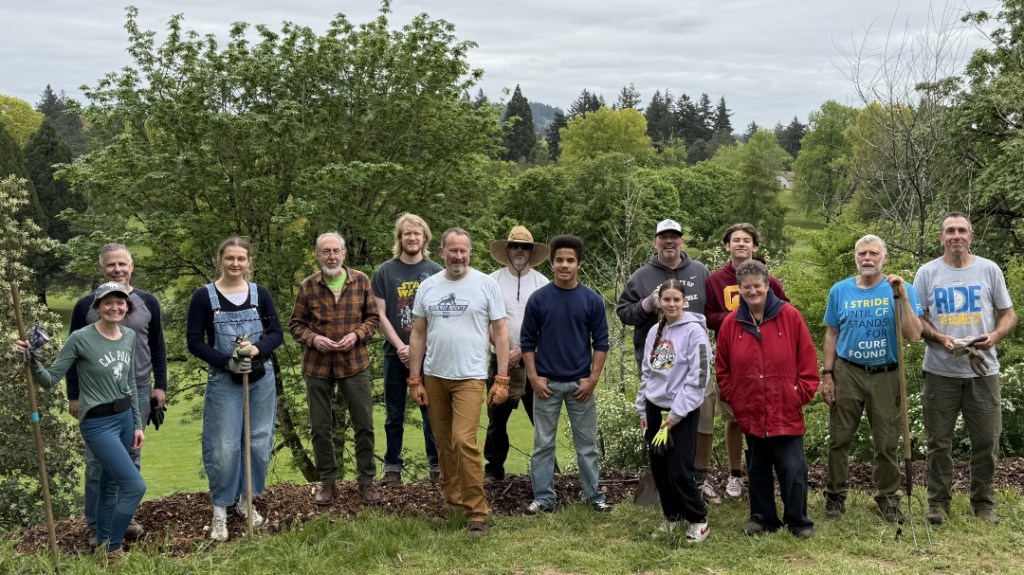
Rose City Bluff Restoration adds native plants to small areas of the five-acre Bluff each fall, giving new plants a head start on the following growing season. Currently, forty volunteers are tending hundreds of young plants grown from seeds or bare roots for planting when the rain returns in October. The summers following planting and the south-facing Bluff slope create a challenge for plants trying to establish. Since we do not have a permanent watering system, two of our volunteers, Reed and Neil, have helped get new plants through the last few summers.

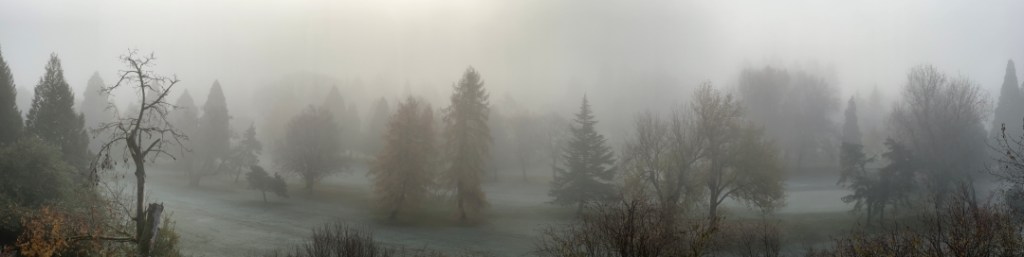
Like pretty much everyone we would like to know what the weather prognosticators are predicting. We are currently experiencing an ENSO neutral weather pattern, which stands for El Niño Southern Oscillation neutral. This pattern occurs when neither El Niño nor La Niña conditions are present in the Pacific Ocean, leading to average sea surface temperatures and an absence of the extremes associated with either phenomenon. Does the absence of extreme weather patterns result in rainfall levels close to average, without the spikes or drops that characterize El Niño or La Niña years? Unfortunately, no. During ENSO neutral years, the rainfall in Portland can vary significantly, as there is no strong influence from either El Niño or La Niña.

The water year, from October 1st to September 30th of the following year, is a period used by meteorologists to measure precipitation. This timeframe captures the complete cycle of rainfall. So where are we in the current water year which began on October 1, 2024, and will end on September 30, 2025? This year, Portland has seen a moderate amount of precipitation – 35 inches to date. Over the last few years ENSO neutral years occurred in 2012, 2013, 2014, 2017, 2018, 2019, and 2020. The Portland water years for each ENSO neutral year were: 2012/46.57, 2013/47.99, 2014/34.51, 2017/58.79, 2018/36.33, 2019/35.54, 2020/32.01 (water year/total rainfall). So that is not much help. ENSO neutral years have not been good predictors of water year totals. The best we can say is that during the current ENSO neutral pattern the water year for Portland (35 inches to date, 5/16/25) brings us close to the total water year average of about 36 inches.

Many thanks to Reed and Neil, and sorry we cannot prognosticate any better than this.

Seed Banks

There are 1700 seed banks worldwide ranging from large, secure facilities like the Svalbard Global Seed Vault to smaller, community-based seed libraries. Seed banks play a crucial role in conserving plant biodiversity, ensuring that native species are protected for future generations. In the Pacific Northwest, where diverse ecosystems support a rich variety of flora, seed banks help safeguard rare and endangered plants.

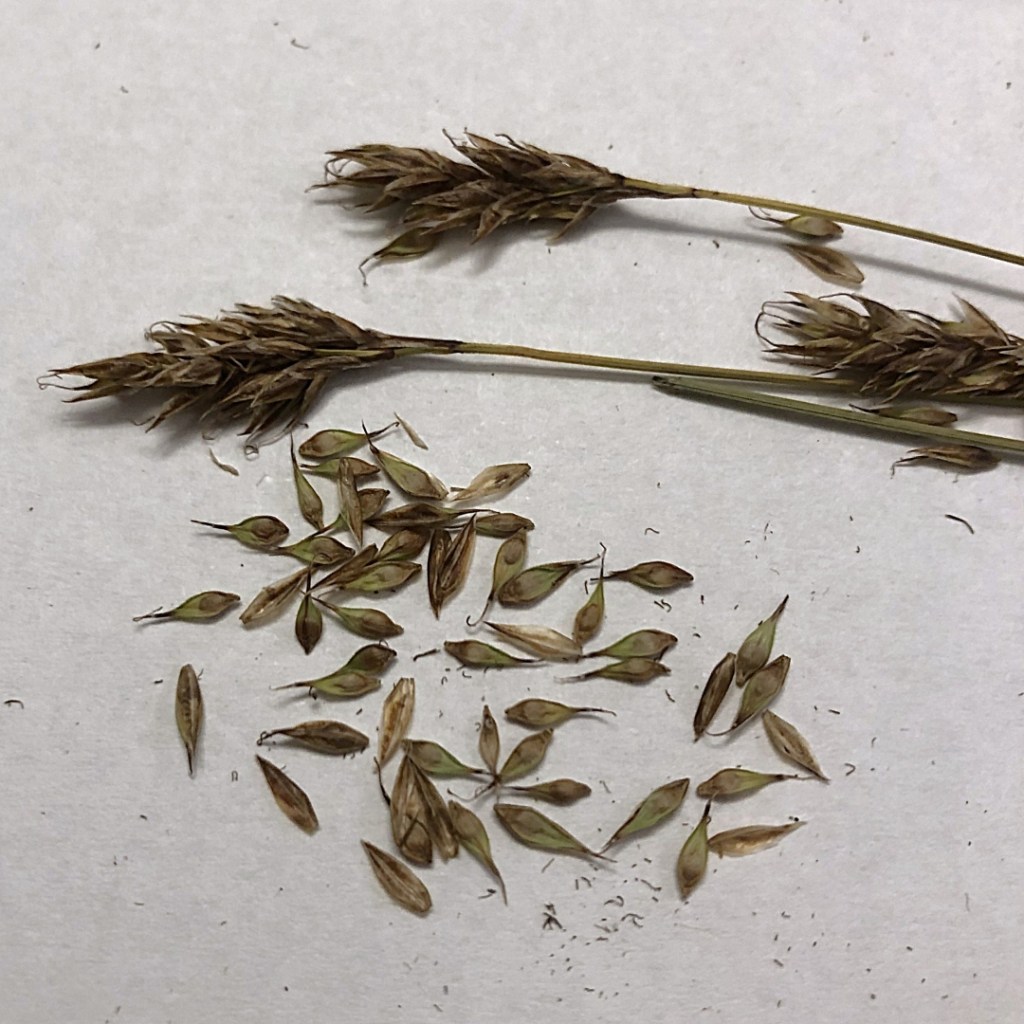
Carex (Sedge). Photo by G. Shepherd

The Miller Seed Vault is the largest facility of its kind in the Pacific Northwest. It focuses on collecting and conserving seeds from more than 320 rare plant species in Washington, ensuring their survival in the face of habitat loss and climate change. The vault also stores seeds for restoration projects, helping to rebuild native plant communities after natural disasters.

At Portland State University, the Rae Selling Berry Seed Bank is committed to the conservation and restoration of Pacific Northwest native plants, with a particular emphasis on rare and threatened species in Oregon. The seed bank supports research, germination trials, and educational programs, providing valuable resources for scientists and conservationists working to protect regional biodiversity.

Beyond the Pacific Northwest, seed banks worldwide contribute to the preservation of genetic diversity. The Svalbard Global Seed Vault (aka the “doomsday” vault), located in Norway, serves as a secure backup facility for the world’s crop diversity. Carved into the Arctic permafrost, it stores duplicates of seeds from gene banks across the globe, ensuring that vital plant species are protected against threats such as war, natural disasters, and climate change.

In the United States, the National Laboratory for Genetic Resources Preservation in Fort Collins, Colorado, plays a similar role in safeguarding agricultural genetic resources. Built to withstand earthquakes, floods, long-term power outages, and fires, this facility houses more than 500,000 accessions from 12,000 plant species, providing critical support for agricultural research and conservation. (In seed collections, an “accession” refers to a distinct, uniquely identified sample of seeds.)

Seed banks are essential for maintaining biodiversity, supporting ecological restoration, and ensuring food security. By preserving native plants of the Pacific Northwest and beyond, these institutions help protect the genetic heritage of plant species, ensuring their survival for future generations. As climate change and habitat destruction continue to threaten ecosystems, the work of seed banks remains more important than ever.

Pacific Dogwood

On a recent bird walk Trask spotted a rare find. Not a bird but a tree, Cornus nuttallii, our native Pacific Dogwood. It is midway down the bluff near the intersection of Sacramento and 68th. Pacific Dogwoods bloom both in the spring and late summer. Look for white flowers peeking out through the surrounding trees. Once the trees around it leaf out, they will hide our dogwood, so it will not be visible for long. If you miss it now, you may have another chance in August. Beware of the poison oak at its base!

Pacific Dogwood, Rose City Bluff, 2025

According to a 1955 map of trees on the golf course and bluff there were six Pacific Dogwoods present. We think none of those other trees exist today. Pacific Dogwoods are threatened by the fungal disease Anthracnose caused by the fungus Discula destructiva. The name says it all! We are lucky that our tree still exists.

The flower structure consists of small florets surrounded by larger white bracts. The bracts are modified leaves, rather than true petals. Since the flowers are so very small the bracts announce their presence to potential pollinators. In the fall look for pink-red or orange drupelets in clusters containing 20-40 drupelets each containing two seeds. Drupelets are a food source for birds and mammals.

The name “dogwood” comes from the wood of Cornus sanguinea which was used for nails, “dags” in medieval Europe. There are two other native dogwoods in our area: Red-stem Dogwood (Cornus sericea) and Bunchberry (Cornus unalaschkensis). Red-stem Dogwood is a multi-stem plant growing to nine feet tall typically in wet or riparian areas. Bunchberry forms a low growing groundcover in moist shaded woodlands. The range of Pacific Dogwood extends from British Columbia to the very south of California. It is also in Idaho.

Spring Bird Walk

April 13, 2025

Thank you to everyone who joined us for our bird walk last Sunday! We were lucky to have a picture-perfect day for birding. This time of year, on the bluff, you can expect to see many of our native species preparing for nesting, a few overwintering birds fattening up for migration, and the first spring migrants passing through — some even pausing to sing.

We observed Red-breasted Nuthatches at two locations, each working on nesting cavities. Spotted Towhees were calling and collecting nesting materials, as were Juncos and Song Sparrows. Golden-crowned Sparrows were singing before their journey north to Alaska, while Cackling Geese were still grazing on the golf course grass, preparing to head for the Arctic. Migratory Yellow-rumped and Orange-crowned Warblers were moving through and occasionally singing, along with a few vocal Ruby-crowned Kinglets.

Now is a fantastic time to visit the bluff with a pair of binoculars and the Merlin Bird ID app on your phone. With birds singing constantly, it’s a terrific opportunity to gain experience identifying their calls. Migration will be in full swing until late May, though some migrants will stick around to nest and raise young through the summer.

In the next few weeks, look for more warblers — Nashville, Wilson’s, and Black-throated Gray among them, with the occasional Yellow or MacGillivray’s Warbler mixed in. Cassin’s Vireos, Western Tanagers, and various flycatchers arrive in May. Have you spotted any migrants on the bluff? Let us know!

Rose City Bluff, 4/13/25

An Affinity for Symmetry

The bracken fern (Pteridium aquilinum) is emerging. We are struck by the exquisite symmetry of the new stalks with their fiddleheads. This prompted a brief investigation into plant symmetry. Here’s what we found. The article “Nature’s Affinity for Symmetry” from AskNature explores the prevalence of symmetrical forms in nature, attributing this phenomenon to the efficiency of genetic coding. Symmetrical structures require less genetic information to produce, making them more likely to arise through random mutations. Once these structures demonstrate functional advantages, natural selection favors their retention. Evolutionary simulations support these observations, showing a higher occurrence of symmetrical shapes between symmetrical and asymmetrical forms.

Notably, Bracken has been around for about fifty-five million years. We encourage its growth simply by managing the blackberry amongst the bracken. It’s good to know that a Western bracken fern’s aggressive rhizome system can be hundreds of years old, and some alive today may be over 1,000 years old.

Bracken Fern on the Bluff

Off and Running!

The Native Seed and Plant Project 2025 is now officially off and running! Forty-six growers are either tending bare roots that were potted up in February, have sown seeds early for cold stratification, or recently picked up seeds to sow now. We appreciate every one of our growers for getting involved! We would also like to thank everyone who contributed funds to Rose City Bluff Restoration last year. Your contributions helped us purchase the plants and seeds for this community project.

Each year we distribute seeds or potted bare root plants to be cared for until our fall planting. Dozens of our neighbors participated in the project over the last two years which resulted in hundreds of new native plants for the Bluff. The Seed Project is a terrific way to support the Bluff restoration and share in our community of native plant enthusiasts!

Survival Strategies

The success of any restoration project requires time and patience. All such projects are battling flowering plants (angiosperms) that have had a hundred million years to develop strategies for survival. One such strategy involves seed longevity. Seeds that remain viable for five years or more form long-term persistent seed banks.

Longevity experiments have helped determine which seeds remain viable and for about how long. One such experiment was the Michigan State University Beal Seed Experiment:  “In the fall of 1879, Professor William James Beal began an experiment to determine ‘the length of time seeds of some of our most common plants would remain dormant in the soil and yet germinate when exposed to favorable conditions.’ This experiment in seed longevity is still active today and has become one of the longest continuously monitored scientific experiments in the world.”

The Beal experiment and other similar experiments give us some idea of the seed longevity of some of our Bluff invasive species. The winner is the common mullein (Verbascum thapsus) with a seed viability of at least one hundred years. Pokeweed (Phytolacca americana) is far behind but still has a viability of at least thirty-nine years.

On the Bluff we had a proliferation of poison hemlock (Conium maculatum) and Italian arum (Arum italicum) in the first years following the clearing of Himalayan blackberry thickets. Poison hemlock seeds may remain viable for six years, but it also has another strategy: “Seeds are dispersed over a considerable time period, beginning in July and ending in late February. The extended period during which poison hemlock disperses its seed contributes to its long-term survival in a particular area.”

Italian arum seeds remain viable for over a year. Like poison hemlock Italian arum also relies on multiple strategies. This source explains: “More problematic for management than the species’ seeds are the copious subterranean bulblets produced by mature plants, which remain viable in the soil for many years.” Shining geranium (Geranium lucidum) seeds may remain viable for up to 2 years. Its other strategy is that it may germinate up to five generations in a single growing season.

Though the Rose City Golf Course helped clear the Bluff of Himalayan blackberries around 2001, no doubt a soil seed bank of invasives already existed and more seeds accumulated over the following years. As we have seen, invasive plants also have other strategies for survival. As with all restoration projects RCBR benefits from understanding these strategies and having the patience to counter them.

The highly successful invasive Italian arum

Pollinator Pathways

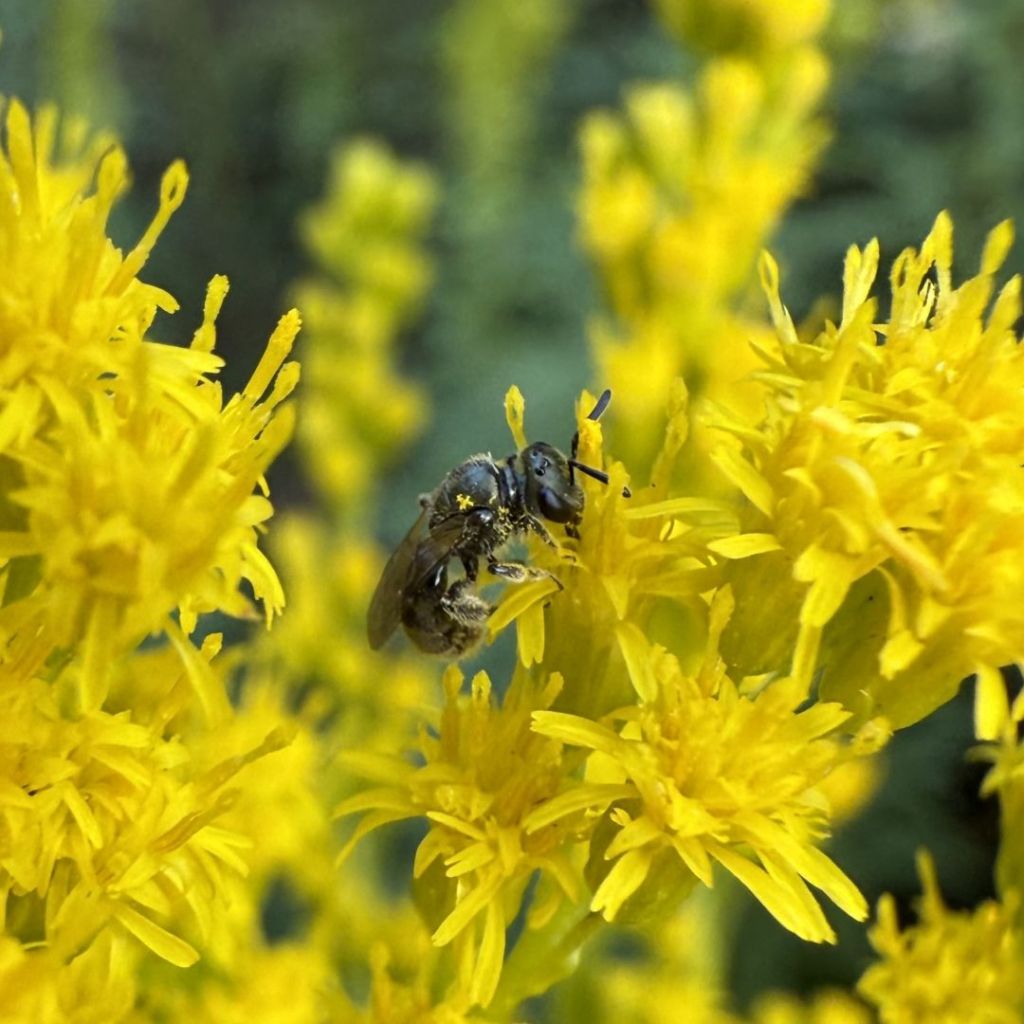
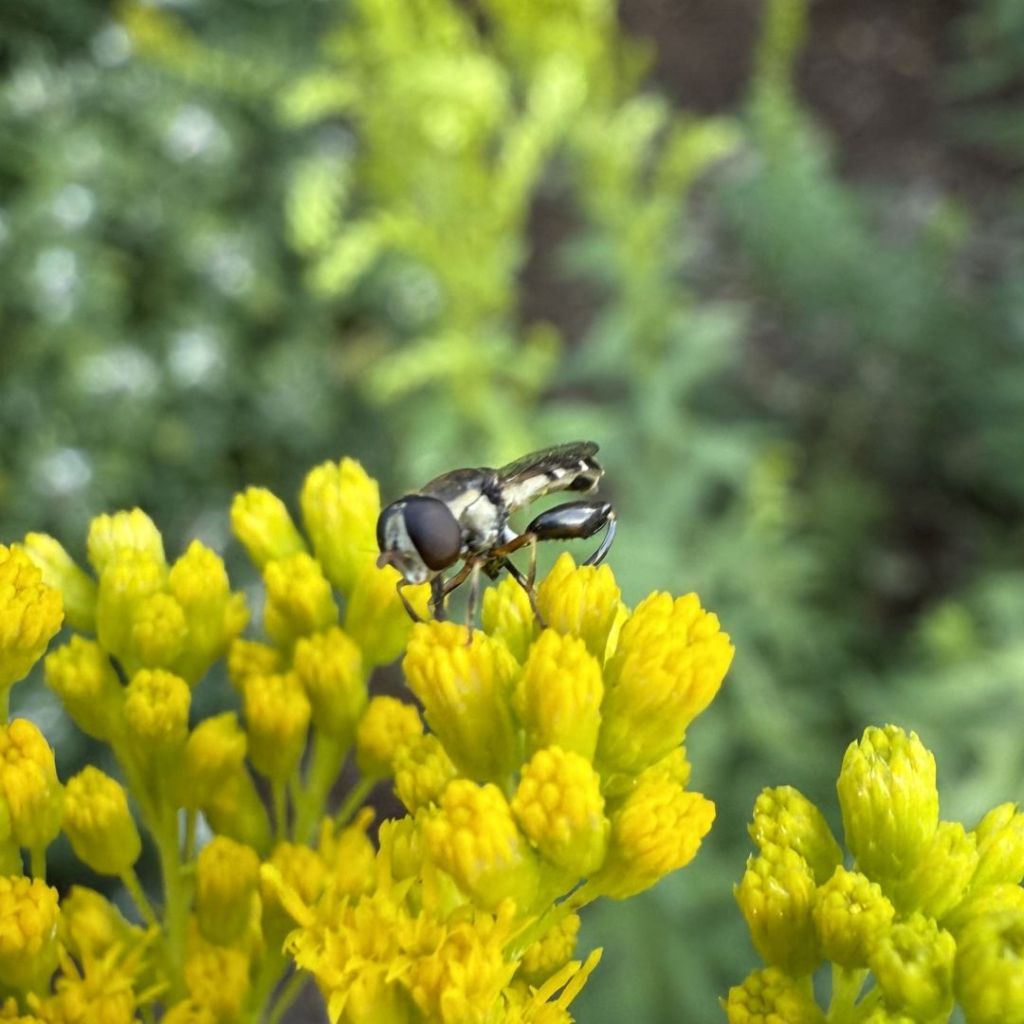
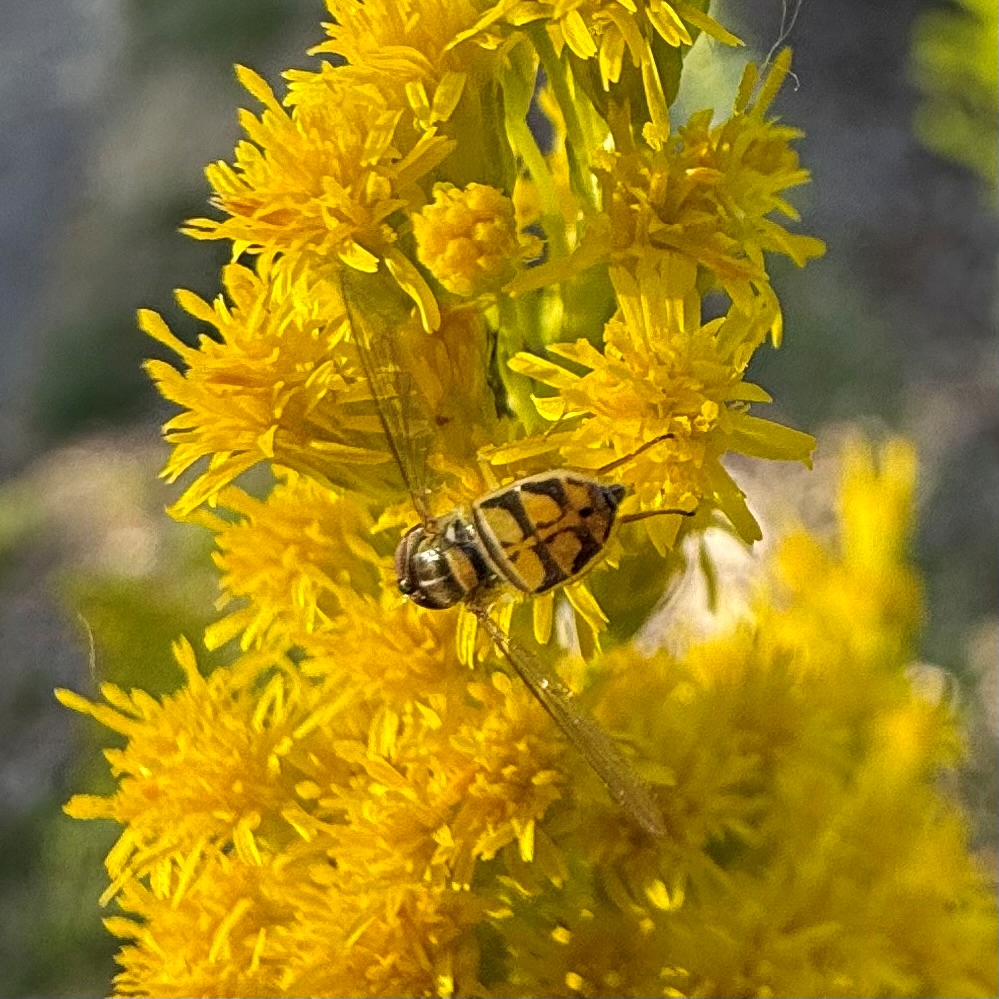
The Rose City Bluff Restoration Seed Project 2025 plant selection includes a variety of pollinator-friendly plants. The half-mile long Bluff is already somewhat of a natural pollinator pathway so the addition of more native flowering species will only help to make it more so.

Pollinator pathways aim to create a network of habitats that support pollinators like bees, butterflies, birds, and bats. These pathways are crucial because they help sustain biodiversity and support the health of ecosystems by facilitating pollination. Pathways are habitat corridors that connect fragmented habitats. These pathways provide pollinators with the resources they need: nectar-rich plants for food; wildflowers, trees, and shrubs for nesting and shelter; and patches of undisturbed habitat where pollinators can safely reproduce.

Creating these connected pathways helps ensure that pollinators can move between areas, find food, and reproduce. This reduces the risk of inbreeding and increases genetic diversity, which is important for species resilience. Pollinator pathways are part of larger efforts to restore and conserve ecosystems. By improving the connectivity between natural areas through the creation of these pathways, we can help reverse the negative impacts of fragmentation and help maintain biodiversity.

Caterpillars and Keystones

Rose City Bluff Restoration volunteers with our Seed Project are currently fostering at least two plants for our fall planting that have been identified by the National Wildlife Federation (1) as host species plants: the vine maple (Acer circinatum) and the western crabapple (Malus fusca). These species host or feed some 200 beneficial caterpillars and pollinators. One of the largest trees on the Bluff is our huge Oregon white oak (Quercus garryana) next to the 62nd Avenue stairs. The Oregon white oak is a commensal plant hosting as many as 400 beneficial insect species. The Bluff has over a dozen much smaller ones that we hope will be equally impressive someday.

Though Rose City Bluff Restoration would gladly tout the Bluff’s Oregon white oak and our Seed Project’s vine maple and crabapple as keystone plants, the term keystone species is controversial among biologists (2). A keystone species is one that has a disproportionately large effect on its natural environment relative to its abundance. Botanists identify plant species as keystones based on the number of insects such as caterpillars that they host or the number of native pollinator species the plant feeds. Almost sixty years after Washington zoologist and educator Bob Paine introduced the concept it is still a matter for debate among ecologists. Our massive Oregon white oak would likely qualify as a keystone in its natural environment, but it lives between a public park, a road, residential property, and a golf course. So, our oak has a different role to play on the Bluff. As beneficial as host species are, we especially enjoy our native plants for their beauty and educational value. They are simply great assets to our community.

Oregon White Oak, Rose City Bluff

(1) National Wildlife Federation. “Keystone Native Plants Marine West Coast Forests – Ecoregion 7.” https://www.nwf.org/-/media/Documents/PDFs/Garden-for-Wildlife/Keystone-Plants/NWF-GFW-keystone-plant-list-ecoregion-7-marine-west-coast-forest.ashx

(2) Ogden, Lesley. “Ecologists Struggle to Get a Grip on ‘Keystone Species’.” Quanta Magazine. April 24, 2024.https://www.quantamagazine.org/ecologists-struggle-to-get-a-grip-on-keystone-species-20240424