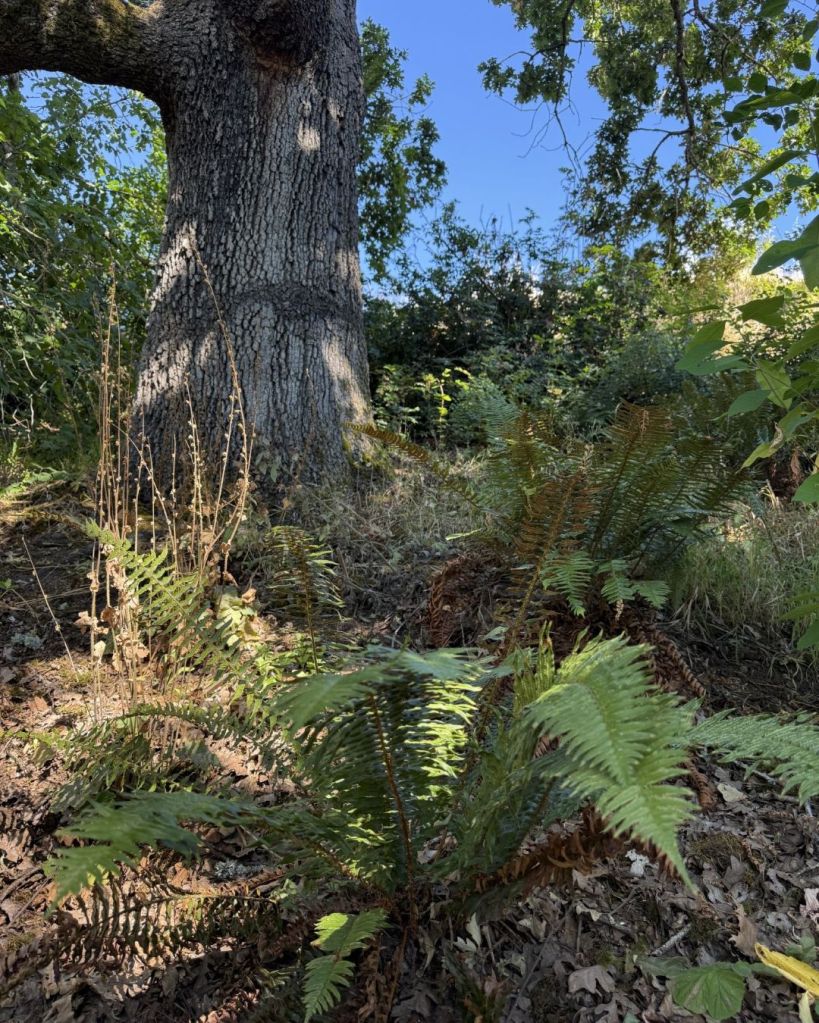
We owe the idea for this post to Homegrown National Park and to Heather Holm in consultation with Desiree Narango, Ph.D. for developing the concept of soft landings. Soft landings are diverse native plantings under keystone trees (or any other regionally appropriate native tree). These plantings provide critical shelter and habitat for one or more life cycle stages of moths, butterflies, and beneficial insects. In addition to plants, soft landings also include leaf litter, duff, and plant debris.
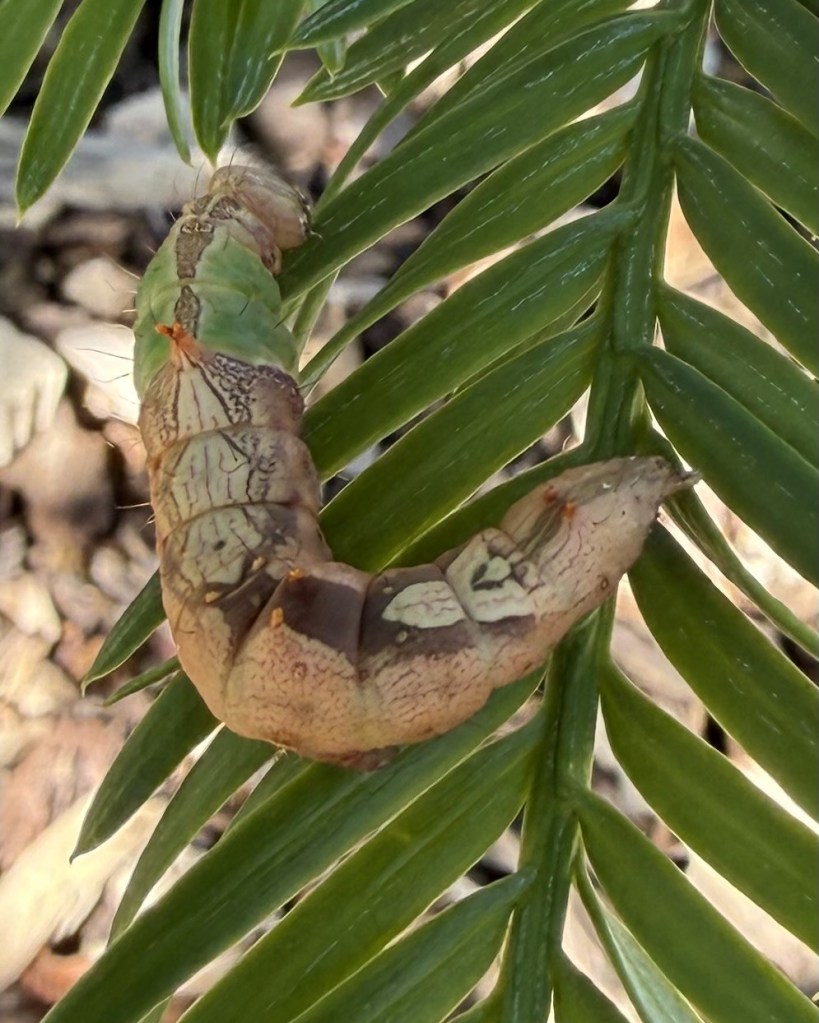
One critical step in the life cycle of moths and butterflies is caterpillar dispersal and soft-landing spots make successful dispersal possible. Many caterpillars disperse almost immediately after emerging from the egg. Some species simply crawl to another leaf or nearby plant. Others use “ballooning” (also called silk dispersal), where they release a silk thread and are carried by the wind. Most land only a few meters away, although some can travel tens or even hundreds of meters under favorable conditions. Caterpillar dispersal is extremely risky. Caterpillars face high mortality from birds, predatory insects, spiders, ants, and failure to locate another suitable host. For many species, well over half of all larvae die before becoming adults.
Even though adult butterflies are adept at long-distance movement, the arrangement of vegetation around host plants can influence caterpillar survival, especially during short-distance dispersal and pupation. Native host plants should ideally not be planted as isolated specimens. Instead, restoration designs can improve habitat quality by planting clusters of host plants rather than single individuals, providing nearby native shrubs, grasses, and leaf litter for pupation, and creating a mosaic of vegetation that allows larvae and newly emerged adults to move through the landscape with lower risk.
A restoration site should enable insects to locate suitable habitat to maintain viable populations over time. The Society for Ecological Restoration emphasizes restoring ecological processes, not just species or vegetation. A restored plant community achieves its full ecological function when the insects and other animals that interact with it can also complete their life cycles.
The Oregon white oak is one of the most important native host plants in the Portland area. More than two hundred insect species have been documented using it in some part of its range, and well over one hundred occur in the Willamette Valley. While Douglas fir dominates much of western Oregon, Oregon white oak supports a disproportionately high diversity of insects because it has coevolved with many native herbivores over thousands of years. The Rose City Bluff has many soft landings under its oaks, big leaf maples, pines, and firs. There is one huge oak and many smaller ones that we hope will become major keystone host plants for our insects and birds.