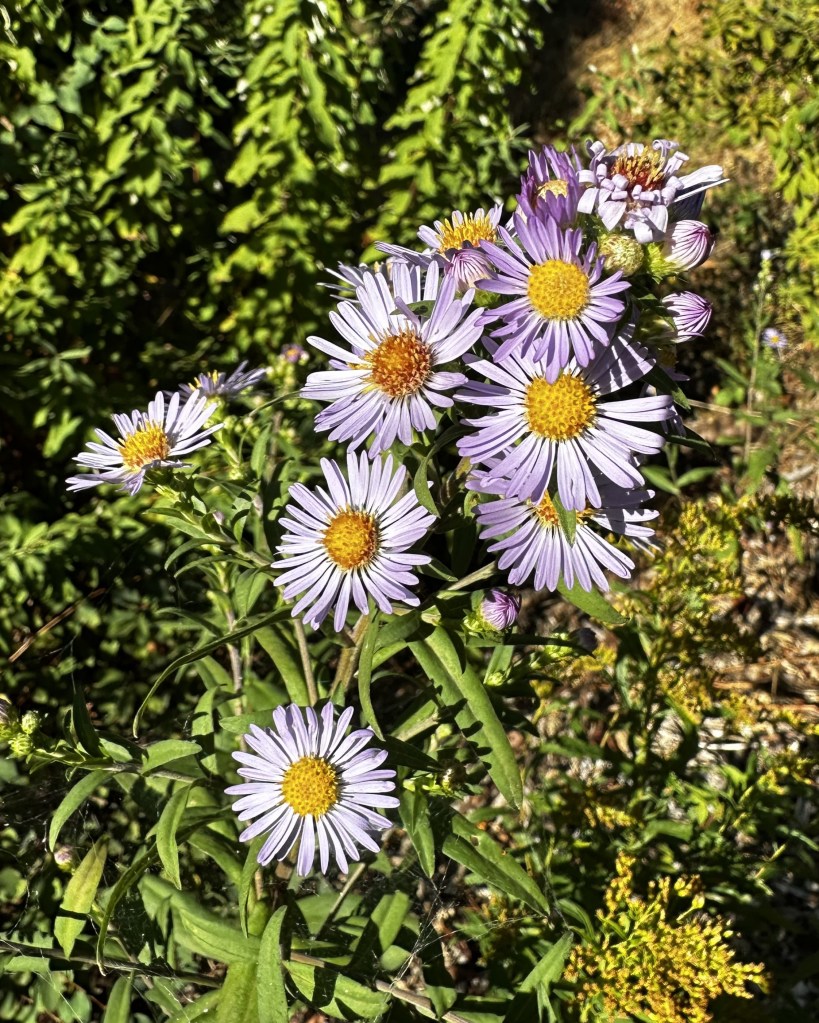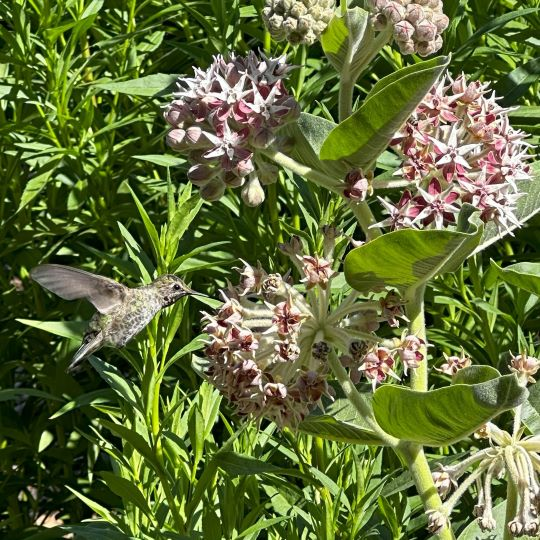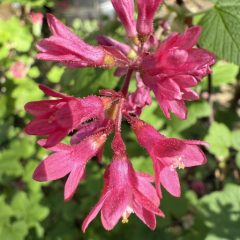
Late Summer Blooms: The asters are peaking just when some of our other plants for pollinators fade. In just about two months Rose City Bluff Restoration volunteers will plant more pollinator friendly native plants.

RoseCityBluff.org
Late Summer Blooms: The asters are peaking just when some of our other plants for pollinators fade. In just about two months Rose City Bluff Restoration volunteers will plant more pollinator friendly native plants.

We’re not all patient gardeners or restoration volunteers — some of us, including this “gardener,” are apt to buy a plant, plant it, and done except for occasional watering. As restoration volunteers some are better at clearing blackberries than we are at creating native plant spaces. Patient restoration work takes long range planning, cultivation, and caring for fickle plants. As Greg says, “native plants ain’t tomatoes!” Thank goodness many volunteers that are attracted to projects like Rose City Bluff Restoration have the patience to think and act long term.
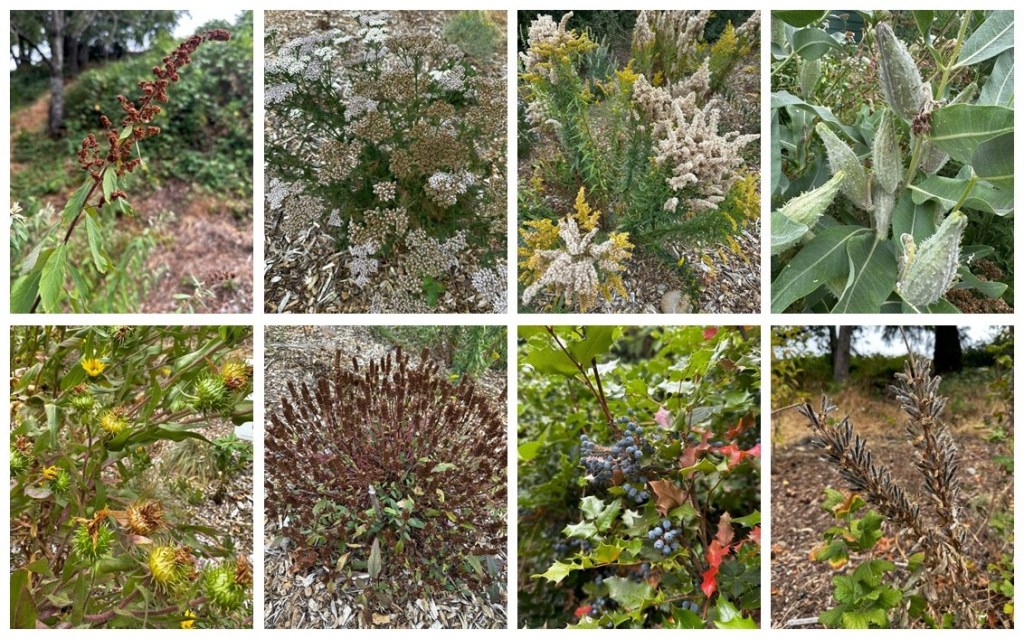
Seed collecting and propagation is a perfect example of a restoration project requiring patience — waiting for the right times to gather different seeds, then caring for them properly. As the flowers on our established native plants turn to seed some of us will be looking to save some. Here are a few bluff plants in various stages of making seed. (Check out Going to Seed on Instagram.)

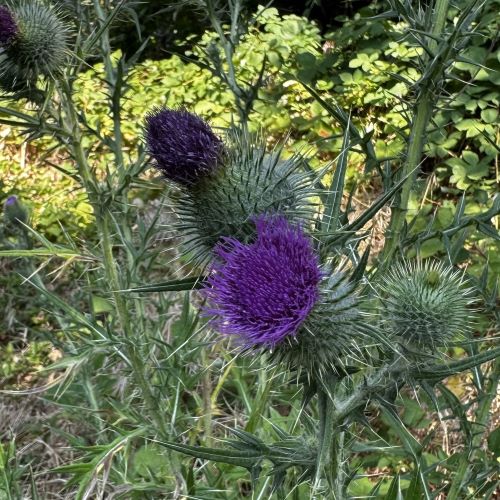
Not all thistles are weeds. The Portland Plant List includes at least one, Cirsium hallii, or Hall’s thistle. Cirsium hallii seems to be a synonym for Cirsium edule. According to WeedWise, an invasive weed management program in Clackamas County, there are at least four thistles that are native to western Oregon, including Cirsium edule. Before you pull up a thistle in Portland you might want to use your handy plant app to make sure it’s not Cirsium hallii, Cirsium edule, or one of the other three that are native to Western Oregon (see WeedWise). Native thistles are beneficial especially for pollinators, other insects, and birds. If your thistle is Cirsium arvense or Cirsium vulgare then pull it up. They’re on the Portland Plant Nuisance List.

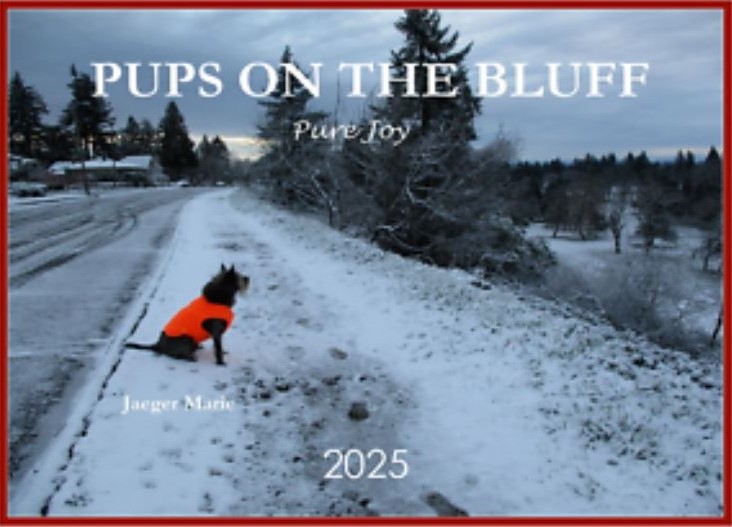
PUPS ON THE BLUFF 2025 Calendar: We want to thank Melanie and Ginger for their Pups on the Bluff 2025 calendar fundraiser. Due to their hard work and the support of many individuals and businesses in the community, RCBR now has two thousand dollars in funding to continue our restoration efforts. These funds, currently held by our fiscal sponsor, will be used in upcoming years to purchase plants, seeds, wood chips, and occasionally tools. Thank you Melanie, Ginger, and the amazing community we live in!
Original Post: Help support Rose City Bluff Restoration and Oregon Friends of Shelter Animals (OFOSA) by purchasing the Pups on the Bluff 2025 Calendar. The $25 calendar features pups and owners who regularly walk the bluff.
Proceeds will be donated to Rose City Bluff Restoration and Oregon Friends of Shelter Animals. Green Dog Pet Supply, 4327 NE Fremont St, has the Pups On The Bluff Calendar for sale at their store,
or you can contact wildpups-2025@yahoo.com. Green Dog Pet Supply provides holistic dog and cat food, organic treats, and items made from recycled materials. Support the wildlife and flora along the bluff and give a helping hand to animals who need a forever home. RCBR thanks Melanie and Ginger for their generosity to RCBR and OFOSA!

This year the Rose City Bluff has really come into its own. (Here are just a few examples of the progress.) We want to thank all of the many dozens of volunteers that have worked so hard to make this happen. We also thank our supporters who have given so generously to Rose City Bluff Restoration. Thanks everyone!

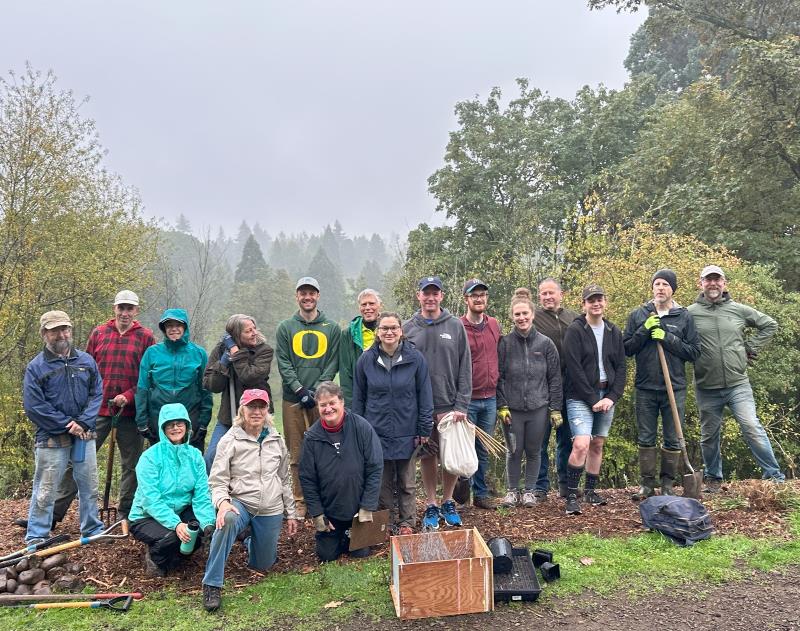
Thanks to all 30-plus folks who came out for the Rose City Bluff Restoration Fall Planting Day, and to all those who grew and donated some 400 small plants!

Birders take note! Thanks to Trask for the following great story about a rare (for us) bird.
Last weekend (10/7/23) a new bird, the Pygmy Nuthatch, was seen at Rose City Golf Course. Our bluff is home to many Red-Breasted Nuthatches. Listen for their “neeern neeern neern” call as they look for food. They’re quite common at bird feeders in the neighborhood. There are also two White-Breasted Nuthatches that hang out at our bluff, though they are rarer in the city and always a good find. The Pygmy Nuthatch, however, has only been seen in Multnomah County once before. Last weekend as many as five Pygmy Nuthatches found their way to our bluff and the nearby homes, a remarkable discovery by visiting birder Brian MacDonald!
What caused this bird to show up here? Irruptions. Irruptions are periodic autumn/winter invasions of birds in search of food. Perhaps the most famous of these irruptive birds is the Snowy Owl, which every few years heads south from the Arctic in search of food. There are also finches, like Pine Siskins, Evening Grosbeaks, Common Redpolls, and Pine Grosbeaks. However, it seems this year the valley is getting some birds that normally live on the east side of the state to come over here. We should expect more Pygmy Nuthatches through Western Oregon.
The Pygmy Nuthatch likes long-needled pine trees, like Ponderosa Pines, and actively calls with a high-pitched squeak. Keep your eyes and ears open, and you may find them too. They may stay all winter, or they may be gone by the time you read this. It can be tough with irruptive birds, but for now we’ll enjoy the excitement as dozens of birders visit our bluff in search of the Pygmy Nuthatch.
Thanks to Audrey Addison for the photo of the Pygmy Nuthatch.

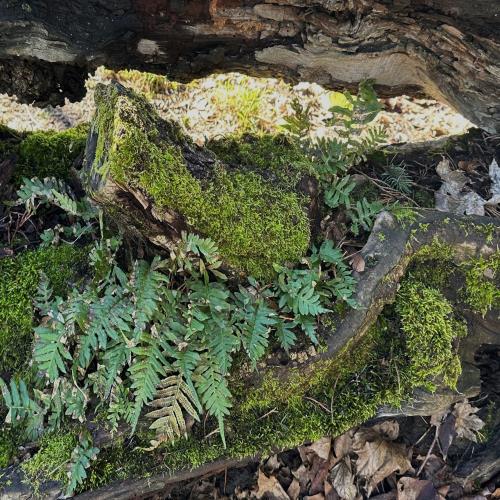
Here’s another new (to us) phrase: the nurse log. A nurse log or nurse stump is a fallen, decaying tree that supports seedlings, moss, mushrooms and other small plants. The Rose City Bluff has a number of fallen trees and the recent weather has added a few more. We hate to lose trees but love that even when fallen they provide for new growth. When Rose City Bluff Restoration volunteers receive piles of wood chips we often take a few logs as well. These are then placed on the bluff to serve as nurse logs. The coarse woody debris, plant litter, and nurse logs distinguish areas like the bluff from manicured park settings.

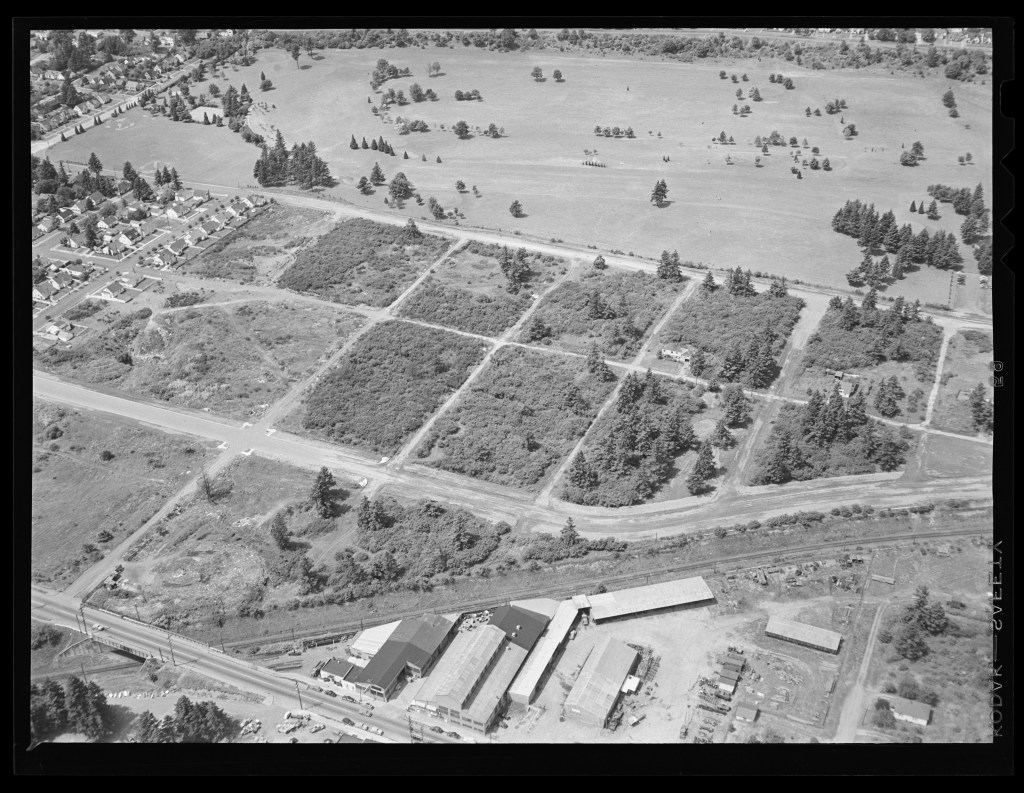
Thanks to Graham for providing this image of the Rose City Golf Course with the entire bluff, and undeveloped Madison South, in 1947. You can see this and one other great aerial shot here: Aerial Views 1947. Zoom in. The level of detail is amazing.

Thanks again to Trask for another cool photo! This time he captured a banded alder borer, BAB for short. This Northwest native is not a pest; its presence in the bluff ecosystem is to be appreciated. The larvae eat dead and dying wood. Adults feed on nectar and pollen, and occasionally on fruit. In the larval stage they are food for woodpeckers.