Oregon Invasive Species Hotline

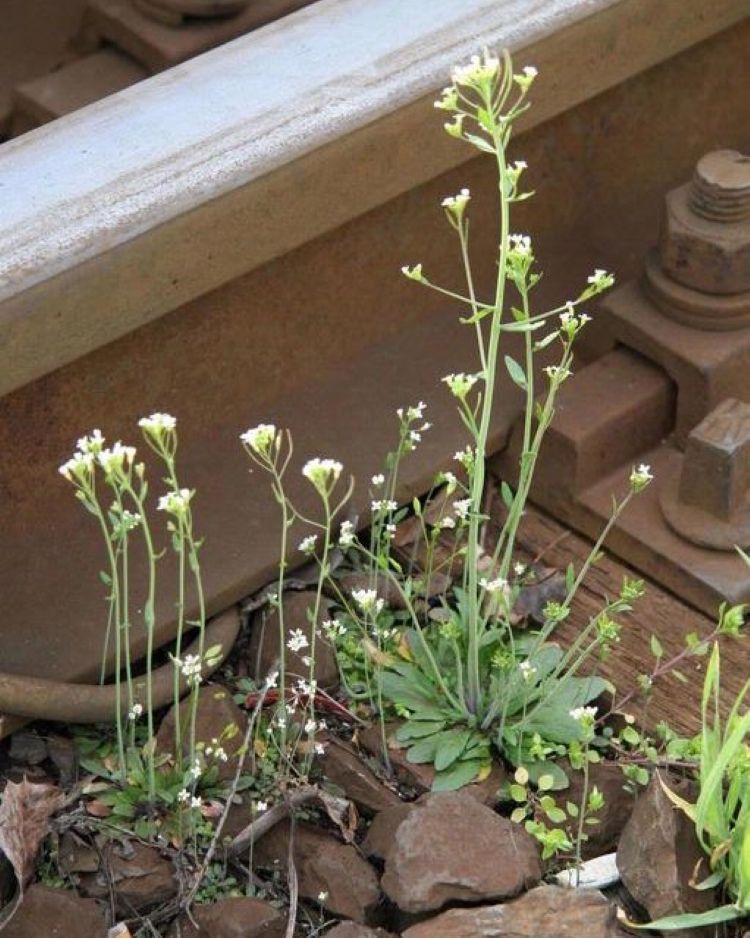
Euphorbia oblongata, Rose City Bluff, 2026

This spring we noticed a new patch of dozens of spurge (Euphorbia) on the Bluff along NE 72nd Drive. iNaturalist told us it was eggleaf or oblong spurge (Euphorbia oblongata) which is highly invasive. Once established it aggressively displaces native vegetation. It spreads rapidly via creeping roots and seed pods that shoot seeds up to six feet away. It also produces biochemicals that inhibit the growth of surrounding plants. Seeds can remain viable in the soil for up to 8 years. The plant’s milky white sap is toxic, a strong skin and eye irritant.


Eggleaf spurge is a Rank B plant on the Portland Nuisance Plant List. The site along NE 72nd Drive also contains a native plant community (Rubus ursinus and Toxicodendron diversilobum) so patches of invasive plants should be removed to prevent further degradation and allow the native species to re-colonize. There’s also the potential for introducing another appropriate native species.


We decided to contact (our first time) the Oregon Invasive Species Hotline. As their website explains, invasive species experts in Oregon face the daunting challenge of tracking hundreds of potential new invaders across millions of acres of farms, forests, and waterways. They need the help of Oregonians to be their eyes in the field. By using the Online Hotline to report suspected invasive species in your area you are contributing vital early detection information. The Online Hotline lets you connect with experts to get positive identifications and answers to your questions.


So last week we used the hotline to report our spurge. We heard from a Portland Bureau of Environmental Services employee and he paid a visit to the site the same day. Currently, BES doesn’t seem to have the resources, so we agreed to remove the eggleaf spurge ourselves. They were able to provide us with large bags and Rose City Golf Course maintenance allowed us to put the bags in their dumpster. We have sheet mulched the area with cardboard and a thick layer of wood chips.


We do recommend contacting the Oregon Invasive Species Hotline if you suspect a problem species. You may end up handling it yourself, but it’s still a good idea to make them aware of problems like ours.

The Importance of Telling Stories

In our last post we talked about Oregon white oaks and fire suppression. We got an extremely helpful response from longtime supporters of the Bluff, Lenny and Gisela. We’d like to share it with you because it gets across the point of last week’s post so much better than our mere recitation of facts:

“RCB folks,

My wife, Gisela, and I have enjoyed our walks along the Bluff for a bunch of years now and deeply appreciate all the work you have done. We have some land in Klickitat County near Goldendale, WA and suffered a wildfire a few years ago. A fine grove of grand old Oregon White Oaks was lost. See the photo attached. Here’s the story: we have a spring which not only led these Oaks to grow to immense size but also produced a lush understory of native Willow and Hawthorn. We removed some dead Hawthorn from one fine Oak, but it was very tough work sawing 4″ trunks by hand. But we got some fine firewood for our wood stove, but alas there was so much Willow and Hawthorn, especially dead, that when wildfire struck, they burn with such intensity that the big Oaks were simply cooked.

Keep up the good work!

Lenny & Gisela”

Photo compliments of Lenny and Gisela

Thank you Lenny and Gisela! Storytelling is such an effective way to inspire and influence. Rose City Bluff Restoration has not set out to merely clear blackberries and other invasive plant species, or to only restore native plants to our neighborhood – we have a long-term goal to build a connected, sustainable community centered around nature, wildlife, and neighborhoods. Storytelling is essential to creating this community. With the return of the Bird’s Eye Café this Sunday, we invite all our neighbors to come out to volunteer or to tell stories. If you have a story you’d like to share, please tell us.

Oregon White Oaks and Fire Suppression

One area of the Bluff just about a city block long has fifteen relatively young Oregon white oaks (Quercus garryana). In 2018 the oaks were overtopped by Himalayan blackberry. Perhaps the most important step Rose City Bluff Restoration volunteers have taken in the past eight years is removing most of the old dry Himalayan blackberry brambles. As the Clackamas Soil and Water Conservation District notes, Himalayan blackberry forms dense, impenetrable thickets, with cane densities sometimes exceeding 100 per square yard. Thickets not only inhibit the growth of native plants, but they also create the type of fire hazard that can kill an Oregon white oak.
Oregon white oaks evolved to withstand the region’s dry summers, poor rocky soils, heat, and long summer droughts. It’s also fire-resistant; mature trees have thick bark and deep taproots. Though Oregon white oak is fire-resistant, it will succumb to the intense, continuous, fuel bed of burning blackberry thickets in dry conditions, especially when mixed with dead vegetation like grasses. The oaks will not, however, be bothered by the low intensity fire suppression once practiced by Indigenous peoples and now by land managers.

In Oregon, land managers are actively restoring oak ecosystems because they are considered more resilient under future climate conditions. These projects aim to reduce wildfire fuel, support pollinators and wildlife, and create landscapes better able to tolerate heat and drought. Historically, Indigenous burning maintained Oregon oak savannas and woodlands. Fire suppression allowed Douglas-fir and other conifers to invade many oak habitats. Climate adaptation efforts on large scales now often include prescribed burning and conifer removal.

Fifteen Young Oregon White Oaks on the Bluff

Managing the blackberry on the Bluff and removing it completely when practical is an ongoing effort. For oak protection, the next step will be removing much of the invasive English hawthorn which is particularly abundant around our fifteen young oaks. Besides competing with the oaks for sometimes scarce water resources the hawthorns are potential fire fuel ladders. We look forward to the day our oaks aren’t threatened by thickets, invasive trees or damaging fires.

The Extinction of Experience

Fifteen students from the Beverly Cleary Middle School came to the Bluff this month to clip blackberry. The thirteen-year-olds all participate in the school environmental education club. Accompanied by their teacher Jennifer Edler and several Bluff volunteers, the students eagerly helped clear a swath of invasive blackberry. They learned how to use loppers, the difference between invasive and native blackberry, and what the stuff that looks like spit on the stems of plants is.

Beverly Cleary Middle School on the Bluff

Fewer and fewer people, and especially children, have daily contact with nature, an ongoing alienation that in the late 1970s Robert M Pyle termed the “extinction of experience.” Consequences of the loss of interaction with nature include deteriorating public health and well-being, reduced emotional affinity toward nature, and a decline in pro-environmental attitudes and behavior. If you ask adults what they remember from their own childhood outdoors experiences they would respond with stories involving climbing trees, building huts, hiding in woods, rolling in grass, making campfires.

Photo (ca. 1920) by Ansel Miller (1888-1946), Somerset County, PA

The joyful memories of adventurous and unsupervised play are almost universal among adults alive today. How do we give that to children now? What do we owe the next generation, and what are we actually doing about it? The Beverly Cleary Middle School offers a splendid example of what we as educators, parents and volunteers can do to reverse the extinction of experience.

Making Parks Out of Open Space

As of 2025, Portland has approximately 13,000 acres of land dedicated to parks, natural areas, and open space, or 15.8% of the city’s total area. Portland Parks & Recreation works with over fifty friends-of groups and park partners who provide valuable volunteer support for maintaining and beautifying these areas. PBOT, Metro, the State and various other entities work with other volunteer organizations. Though well established by now, these organizations often arose spontaneously out of neighbors’ concern for their open space.

While we recognize the inadvisability of creating new parks when the ones we have face a significant maintenance backlog, we support the grassroots organizations that, like Rose City Bluff Restoration, see a neglected open space and envision a park or natural area. Here are five examples that we hope you will visit, especially if they are in your neighborhood.

Sumner Association of Neighbors, SAN Lot. Leveraging thePBOT Adopt a Landscape Program, Sumner residents clean, spread native plant seeds, and incrementally improve the SAN Lot, while growing relationships with each other.

Ainsworth Linear Arboretum and Habitat. When the Ainsworth Linear Arboretum started in 2005, there were only six species of trees represented in the median. Concordia residents set out to rejuvenate it with a bold idea. In 2005, they successfully petitioned Urban Forestry to designate the Ainsworth median as a city arboretum. Since then, the median was transformed from a near monoculture to a place where the diversity of trees that can be grown in Portland is celebrated.

Roseway Parkway Plaza. The idea for a community street plaza was born eight years ago when a handful of Roseway neighbors dreamed about creating a permanent plaza along the 72nd Avenue greenway. This dedicated group reached out to the Portland Bureau of Transportation and PBOT expressed interest in it as part of its larger neighborhood greenway project. To help make the project a reality, the Roseway Neighborhood Association formed a Placemaking Committee. There is now a pedestrian plaza with a beautiful street mural. Several picnic benches and planted pollinator patches along the edges make the plaza a gathering spot and ideal place for events like the annual Earth Day Celebration.

Friends of Baltimore Woods. Baltimore Woods, just north of Cathedral Park, stands as a buffer between riverside industry and downtown St. Johns residents. Friends of Baltimore Woods (FOBW) formed in 1998 as a group of neighbors who set out to protect this mature canopy cover from increasing pressure of development in the neighborhood. Recognizing the vital importance of this upland deciduous habitat as a corridor connecting large green spaces of Willamette Cove, Smith and Bybee Lakes, and Kelley Point Park, FOBW embraced the challenge of removing invasive plants and restoring native trees and shrubs to this remnant Oregon White Oak habitat.

Friends of Rocky Butte. The Friends of Rocky Butte seeks to take an existing mature forest land that is currently not publicly accessible and open it to the public. The project emphasizes creating recreational opportunities for all: walkers, cyclists, rock climbers, runners, and sightseers. Their main goal is to provide recreational and public access to the Rocky Butte eastern side by unifying the land under one entity. With coordination, Rocky Butte can be developed into a wonderful public asset that gives outdoor recreation opportunities to a part of Portland currently lacking such access.

SAN Lot

Madrones and Manzanitas

Eight years ago, when Rose City Bluff Restoration volunteers began clearing blackberry from around significant native trees and shrubs, some of the first areas cleared were around the Arbutus menziesii (Pacific madrones). The mature madrones on the Bluff were probably planted in 2001 and left to fend for themselves. “Madrones often thrive where other trees struggle — in rocky, arid soil, on dry slopes, or even clinging to inhospitable roadside banks. If you do coax a madrone to grow in your garden, water it infrequently and deeply, if at all, once it’s well established.” (OSU Extension Service).

We’ve been wondering about the madrones and their similarity to another Pacific Northwest native, Arctostaphylos Columbiana (hairy manzanita). (Note, the manzanita pictured below is not the hairy manzanita native to this area.) Belonging to the Ericaceae (heath) family, we assume madrones and manzanitas have a common ancestor. Both plants have thick, leathery leaves. Besides sharing smooth, peeling bark, they have small urn-shaped flowers and red berries. Both may have twisting, branching growth habits. Both species may be found on rocky, windy coastal bluffs or steep sunny slopes. But what’s up with the unusual convoluted forms? And why do they both shed bark?

Here’s a summary of why they may have similar forms. This was second sourced from Google AI (Gemini). I wouldn’t take this as proven fact but rather as helpful speculation. Madrones and manzanitas have convoluted forms to maximize survival in challenging, competitive, and often dry environments. Their gnarled appearance is a result of their growth habits, which favor finding light, resisting harsh weather, and managing resources efficiently. Their branches twist, turn and bend to optimize exposure to light in brushy habitats. Or the convoluted growth habit is due to environmental pressures such as steep terrain and windy conditions as well as heavy snow loads. Or it’s a fire related strategy – they often grow in areas prone to fire and develop a woody tuberous burl at the base, allowing them to resprout even if the main trunk dies. This results in clumped, multi-stemmed, and crooked forms as they regenerate. So, the convoluted form of madrones and manzanitas may be a combination of genetic, adaptive and environmental factors due to challenging, light-limited, or high-stress environments. In these locations, they adapt to high wind and low water by becoming short, stocky, and convoluted to reduce drag and prevent toppling.

Why do madrones and manzanitas have exfoliating bark? Possibly as a pest and disease defense. The shedding removes accumulated fungi, bacteria, and insects. Or during the annual summer drought, shedding exposes green bark so it can photosynthesize, allowing the tree to continue producing energy. Or as the tree expands in girth the old bark peels away to make room for new growth. Or the smooth and sometimes slippery new bark prevents epiphyte growth (like lichen or moss) that could damage the tree. Or the exfoliating bark promotes fires and allelopathic qualities to reduce surrounding competition for light. Or it’s for temperature regulation. The madrone is sometimes referred to as a “refrigerator tree” because it feels cool to the touch on hot summer days.

Something to ponder when clearing blackberry around the madrone or manzanita.

Arbutus menziesii
Arctostaphylos

Moss Appreciation Week – Portland Japanese Garden in Winter

Last week was Moss Appreciation week at the Portland Japanese Garden. In winter, the moss takes center stage. The deciduous and flowering plants recede, letting the abundant mosses stand out.

Moss is the unifying element of a Japanese Garden. Japanese gardens are designed with four essential elements: stones (ishi), water (sui), plants (shokubutsu), and ornaments (tenkeibutsu). Moss connects these elements, creating a sense of age, tranquility, and wabi-sabi (beauty in imperfection).

“When visiting some of the best moss gardens in Japan, expectations of the equivalent elsewhere are high, to say the least. Are there any gardens in other countries that can match these wonders? Portland Japanese Garden can do just that.” (Ulrica Nordström, Moss: From Forest to Garden, 2019)

“Whether it’s the swaths of green that appear in its Tea Garden and Natural Garden, the incidental growth seen in the Sand and Stone Garden, or the artful arrangement into cup and gourd in its Flat Garden, moss is a unifying and reassuring element of Portland Japanese Garden. Described as “the essence of the Japanese garden” by Josho Toga, formerly Head Priest of Tenryu-ji Temple in Kyoto, the Garden’s tranquility is, in part, expressed by this cherished plant.” (Will Lerner, An Exploration of Moss: The Rhythm of Portland Japanese Garden)

A recent study published in Nature Geoscience suggests that moss might also be important to climate change mitigation. Moss contributes to carbon sequestration, is a soil stabilizer, a water retainer, and a habitat for small creatures.

Columbia Plateau Prickly Pear

The Rose City Bluff has several thorny plants, both native and invasive: two species each of blackberry and hawthorn, as well as the occasional thistle. There are, however, no cacti. Having lived in the Southwest for years we kind of miss cactus. So, when we read that a native cactus grows within a hundred miles of here, we had to find it.

Opuntia columbiana (Columbia plateau prickly pear) is native to the Columbia River Gorge. It’s one of the few native cacti in Oregon and Washington. We found it growing in low, spreading mats east of The Dalles. The most conspicuous characteristic we saw was the crazy abundance of long thorns for such a small cactus. The pads were only about an inch long and the numerous spines were as long as the pads. We would need to return later in the year to observe its yellow flowers.

Airy Humus

Between 2002 and 2018, the Rose City Bluff remained largely undisturbed, allowing humus to accumulate beneath the blackberry thickets. The Bluff is steep, rocky, full of blackberry roots, and has a persistent seed bank of invasive plants. Nevertheless, we think the soil quality throughout the Bluff is generally favorable. We’ll speculate that it has to do with humus.

According to Wikipedia: “It is difficult to define humus precisely because it is a very complex substance which is still not fully understood . . . Fully formed humus is essentially a collection of very large and complex molecules formed in part from lignin and other polyphenolic molecules of the original plant material (foliage, wood, bark), in part from similar molecules that have been produced by microbes. During decomposition processes these polyphenols are modified chemically so that they are able to join up with one another to form very large molecules.”

“Airy Humus” by Lynn Tudor Deming

So it goes on a good afternoon, screening
this top soil by the drive, jostling it
over the mesh so the clean loam drops
through, sifting out delicate cobwebs of roots,
tendrils of weeds limp in slime, my sweat salting
the collards of this stew until everything unwanted—
little green bowls of splintered pignut, broken
twigs, earth-caked stone, is left behind;
better still to sift the head’s glut—
its sticky detritus—reaching at last the airy
humus, so the tune of the wind blows fresh
into the dull mind, its chaff scattering,
the way a breeze moves over marsh grass,
and winnows it, in the haze of far-flung deltas.

Lynn Tudor Deming’s “Airy Humus” is featured by A Room of Her Own Foundation (AROHO): https://aroomofherownfoundation.org/airy-humus-by-lynn-tudor-deming/

Broadleaf Litter Destined to Become Humus