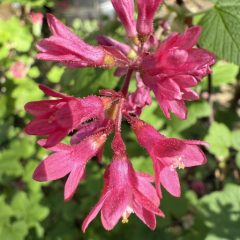
One area of the Bluff just about a city block long has fifteen relatively young Oregon white oaks (Quercus garryana). In 2018 the oaks were overtopped by Himalayan blackberry. Perhaps the most important step Rose City Bluff Restoration volunteers have taken in the past eight years is removing most of the old dry Himalayan blackberry brambles. As the Clackamas Soil and Water Conservation District notes, Himalayan blackberry forms dense, impenetrable thickets, with cane densities sometimes exceeding 100 per square yard. Thickets not only inhibit the growth of native plants, but they also create the type of fire hazard that can kill an Oregon white oak.
Oregon white oaks evolved to withstand the region’s dry summers, poor rocky soils, heat, and long summer droughts. It’s also fire-resistant; mature trees have thick bark and deep taproots. Though Oregon white oak is fire-resistant, it will succumb to the intense, continuous, fuel bed of burning blackberry thickets in dry conditions, especially when mixed with dead vegetation like grasses. The oaks will not, however, be bothered by the low intensity fire suppression once practiced by Indigenous peoples and now by land managers.
In Oregon, land managers are actively restoring oak ecosystems because they are considered more resilient under future climate conditions. These projects aim to reduce wildfire fuel, support pollinators and wildlife, and create landscapes better able to tolerate heat and drought. Historically, Indigenous burning maintained Oregon oak savannas and woodlands. Fire suppression allowed Douglas-fir and other conifers to invade many oak habitats. Climate adaptation efforts on large scales now often include prescribed burning and conifer removal.
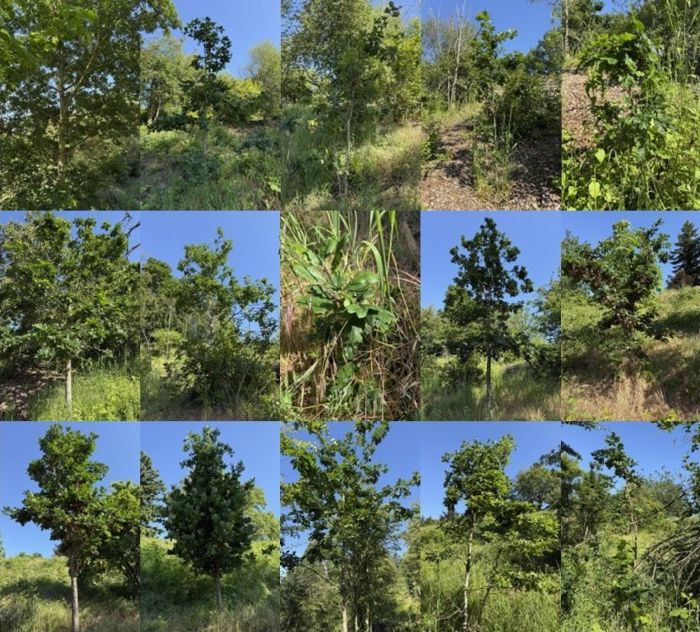
Managing the blackberry on the Bluff and removing it completely when practical is an ongoing effort. For oak protection, the next step will be removing much of the invasive English hawthorn which is particularly abundant around our fifteen young oaks. Besides competing with the oaks for sometimes scarce water resources the hawthorns are potential fire fuel ladders. We look forward to the day our oaks aren’t threatened by thickets, invasive trees or damaging fires.


Fire wise trees: https://www.instagram.com/p/DYs1HTLj1Qp/?utm_source=ig_web_copy_link&igsh=NTc4MTIwNjQ2YQ==
LikeLike
This post was also sent to the RCBR email list and we’d like to share a response we received from two regular visitors to the Bluff, Lenny and Gisela:
“My wife, Gisela, and I have enjoyed our walks along the Bluff for a bunch of years now and deeply appreciate all the work you have done. We have some land in Klickitat county near Goldendale, WA and suffered a wildfire a few years ago. A fine grove of grand old Oregon White Oaks were lost. see the photo attached. Here’s the story: we have a spring which not only led these Oaks to grow to immense size, but also produced a lush understory of native Willow and Hawthorn. We removed some dead Hawthorn from one fine Oak, but it was very tough work sawing 4″ trucks by hand. But we got some fine firewood for our wood stove, but alas there was so much Willow and Hawthorn, especially dead, that when wildfire struck they burn with such intensity that the big Oaks were simply cooked. Keep up the good work! Lenny & Gisela”
LikeLike