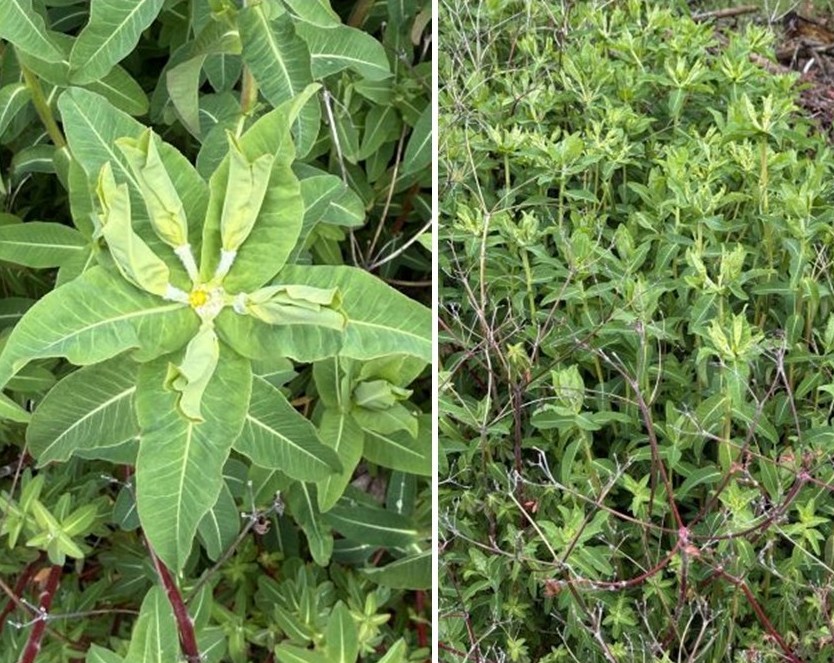
This spring we noticed a new patch of dozens of spurge (Euphorbia) on the Bluff along NE 72nd Drive. iNaturalist told us it was eggleaf or oblong spurge (Euphorbia oblongata) which is highly invasive. Once established it aggressively displaces native vegetation. It spreads rapidly via creeping roots and seed pods that shoot seeds up to six feet away. It also produces biochemicals that inhibit the growth of surrounding plants. Seeds can remain viable in the soil for up to 8 years. The plant’s milky white sap is toxic, a strong skin and eye irritant.
Eggleaf spurge is a Rank B plant on the Portland Nuisance Plant List. The site along NE 72nd Drive also contains a native plant community (Rubus ursinus and Toxicodendron diversilobum) so patches of invasive plants should be removed to prevent further degradation and allow the native species to re-colonize. There’s also the potential for introducing another appropriate native species.
We decided to contact (our first time) the Oregon Invasive Species Hotline. As their website explains, invasive species experts in Oregon face the daunting challenge of tracking hundreds of potential new invaders across millions of acres of farms, forests, and waterways. They need the help of Oregonians to be their eyes in the field. By using the Online Hotline to report suspected invasive species in your area you are contributing vital early detection information. The Online Hotline lets you connect with experts to get positive identifications and answers to your questions.
So last week we used the hotline to report our spurge. We heard from a Portland Bureau of Environmental Services employee and he paid a visit to the site the same day. Currently, BES doesn’t seem to have the resources, so we agreed to remove the eggleaf spurge ourselves. They were able to provide us with large bags and Rose City Golf Course maintenance allowed us to put the bags in their dumpster. We have sheet mulched the area with cardboard and a thick layer of wood chips.
We do recommend contacting the Oregon Invasive Species Hotline if you suspect a problem species. You may end up handling it yourself, but it’s still a good idea to make them aware of problems like ours.


