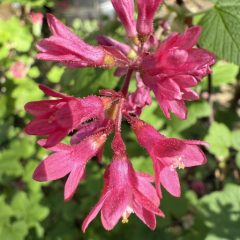
We have wondered if the efforts of Rose City Bluff Restoration should or could be adjusted in anticipation of climate change. Do ecologists know enough yet to offer advice on what to plant now in anticipation of the climate of the future? Currently we’re focused on planting species that worked in the past (native plants that evolved for our environment), but that may not be the right thing to do in the future. Wouldn’t it be nice to know what native plants might have the best chance for survival in the coming decade(s) and beyond?
A small weed, the mouse-ear cress (Arabidopsis thaliana), has become an important plant for studying how varied species respond to climate change. Arabidopsis thaliana is native to Eurasia and Africa. It’s naturalized in many other countries, including the U.S. It’s commonly found along the shoulders of roads and in disturbed soils. A quick look at iNaturalist found two hundred observations in the Portland Metro area for mouse-ear cress since 2016. We don’t know if it’s been seen on the Bluff, but it was found just a few blocks north in our Roseway neighborhood.
Arabidopsis thaliana is the most widely used model organism in plant biology. Its small genome makes it ideal for experimental genetics. It was the first plant to have its genome sequenced and is a valuable tool for understanding the molecular biology of many plant traits, including flower development and light sensing.
A recent article by Robert Sanders (UC Berkeley), “Plant Evolution in Response to Climate Change,” summarizes a research study from a worldwide team lead by evolutionary ecologist and geneticist Moisés Expósito-Alonso: “For decades, ever since biologists recognized the potential environmental harms from climate change, they have worried that plants will not be able to evolve fast enough to adapt to a rapidly warming planet. But the pace of research to understand how species respond has been slow, typically based on single, stand-alone experiments by isolated research groups around the world.
“Moisés (Moi) Expósito-Alonso grew frustrated with that approach. Instead, he and his colleagues created a network of fellow scientists to plant simultaneous experiments in 30 different climate zones around Western Europe, the Mediterranean, the Middle East, and North America and allow them to evolve for five years, untended except for weeding. The goal of this unique experiment was to tease out how fast these plants — a genetically diverse mix of the common lab plant Arabidopsis thaliana, an annual within the mustard family — would evolve under different climate stresses, ranging from the snowy Alps to the heat of the Negev Desert.”
The study concluded that although rapid (as in just a few years) climate adaptation is possible, understanding which environmental, genetic, or species-specific conditions limit evolutionary survival capabilities will be critical for predicting biodiversity responses to climate change. Though practical applications for restoration work are not imminent, it is encouraging that the research has begun.
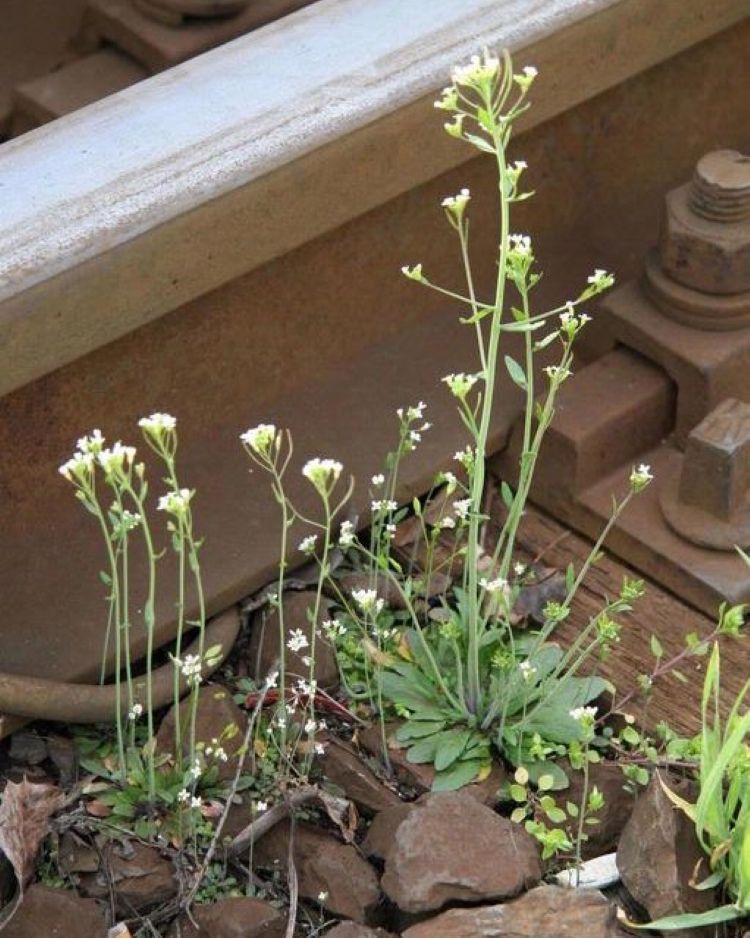
Photo: Robert Vidéki, Doronicum Kft., Bugwood.org


1 Comment